Summarise this page 9 key points · 1 minute
- Who was Saint Basil, and why is the cake named after him?Saint Basil the Great was born around 329 in Caesarea, in Cappadocia (in today's Turkey), became its bishop and died there on 1 January 379.
- How do Cypriots cut the vasilopita?Families cut it either just after midnight as the year changes or on New Year's Day, usually after it has been baked on New Year's Eve.
- What makes a Cypriot vasilopita different?Cyprus traditionally kept a simpler version than the rich brioche-style cakes of other regions: a lightly scented cake of flour, oil and sugar.
- Why do offices, schools and clubs cut a vasilopita in January?This is the custom that surprises many expats.
- Does Agios Vasilis bring the presents?In Cyprus Agios Vasilis, rather than Father Christmas, visits each house on New Year's Eve and leaves presents under the tree for 1 January.
- What other New Year customs will you see in Cyprus?New Year carols: on New Year's Eve children go from door to door singing New Year carols, and are given sweets or coins.
- Where can you buy a vasilopita in Cyprus?Bakeries, patisseries and supermarkets all sell vasilopites over the festive season.
- How do you make a vasilopita at home?Cream roughly equal weights of soft butter and sugar (around 200–250 g each for a 25–28 cm tin) until pale.
- Tips if you are invited to a Cypriot New YearArrive with something sweet (a box of pastries, chocolates or a bottle of wine), not a vasilopita: the host will have their own.
Quick answer
Vasilopita is the New Year cake of Cyprus, named after Saint Basil (Agios Vasilis), whose feast day is 1 January. A coin, the flouri, is hidden inside; the head of the household cuts it at midnight or on New Year's Day, setting aside the first slices for Christ, Saint Basil, the house or the poor, and whoever finds the coin is lucky for the year. Offices, schools, sports bodies and associations then hold their own vasilopita cuttings through January and often into February, and in Cyprus it is Agios Vasilis, not Santa, who traditionally brings children's presents for New Year.
- Saint Basil the Great, Bishop of Caesarea, died on 1 January 379; the Orthodox Church celebrates him on 1 January, which is why vasilopita is cut then.
- The first slices go to Christ and the saint (and often the house or the poor), then the rest are served from the eldest down; the coin brings luck for the year.
- Cyprus's older versions were simple: a lightly scented cake of flour, oil and sugar, or in villages a large round sesame bread; today mastic, mahlepi, orange and almonds are common.
- Vasilopita season runs well past New Year: workplaces, schools and associations cut theirs from early January, often until the end of February.
- Friday 1 January 2027 is a public holiday; if you need a large vasilopita for an office or club, order it well before Christmas.
Vasilopita is the cake (or, in older village versions, the bread) that Cypriots cut to welcome the New Year, with a coin hidden inside for the luckiest person at the table. It is named after Saint Basil, Agios Vasilis, whose feast falls on 1 January, and in Cyprus he, rather than Santa, is the one who traditionally brings children's presents. This guide explains the story, how the cake is cut, the other customs of the night, and where to buy or how to bake one.
Last checked: 19 October 2026. In 2026–27, New Year's Eve is Thursday 31 December and New Year's Day is Friday 1 January 2027, a public holiday. Public schools are off from 24 December 2026 to 6 January 2027.
For the wider festive season (Christmas villages, markets, Christmas food) see our guide to Christmas in Cyprus; for parties, fireworks and countdowns see New Year's Eve 2026 in Cyprus. This page focuses on vasilopita and the quieter family customs of 31 December and 1 January.
Who was Saint Basil, and why is the cake named after him?
Saint Basil the Great was born around 329 in Caesarea, in Cappadocia (in today's Turkey), became its bishop and died there on 1 January 379. Orthodox churches keep his feast on 1 January, which is why the New Year and Saint Basil are bound together in Cyprus and Greece, and why everyone called Vasilis or Vasiliki celebrates their name day that day.
The legend behind the cake has several versions. In the best-known one, Basil's city was threatened (by an enemy siege or by an emperor's tax, depending on who tells it), and its people handed over their gold and jewellery to pay. When the money was not needed after all, Basil could not tell whose valuables were whose, so he had them baked into loaves and shared out, and each family found its own treasure in its slice. Other tellings say he hid coins in bread to help the poor without embarrassing them. The story travelled from Greece into Cypriot folk tradition.
How do Cypriots cut the vasilopita?
Families cut it either just after midnight as the year changes or on New Year's Day, usually after it has been baked on New Year's Eve. The routine is much the same everywhere:
- The head of the household, often the eldest, makes the sign of the cross over the cake with the knife.
- The first slices are dedicated, not eaten: to Christ, then to Saint Basil or the Virgin Mary, to the house, and in many families to the poor. Some households also cut pieces for absent relatives and, in farming areas, even for the animals.
- Everyone present then gets a slice, normally from the eldest to the youngest, with guests included in the round.
- Whoever finds the flouri (the coin) is the lucky one of the year and keeps it as a talisman, often in a pocket or purse, until the next New Year.
It is a friendly competition, and children in particular take it seriously.
What makes a Cypriot vasilopita different?
Cyprus traditionally kept a simpler version than the rich brioche-style cakes of other regions: a lightly scented cake of flour, oil and sugar. In villages it was often a large round bread covered in sesame, and Paphos villages made unsweetened sesame loaves. In rural homes the dough was once made with flour from that year's harvest.
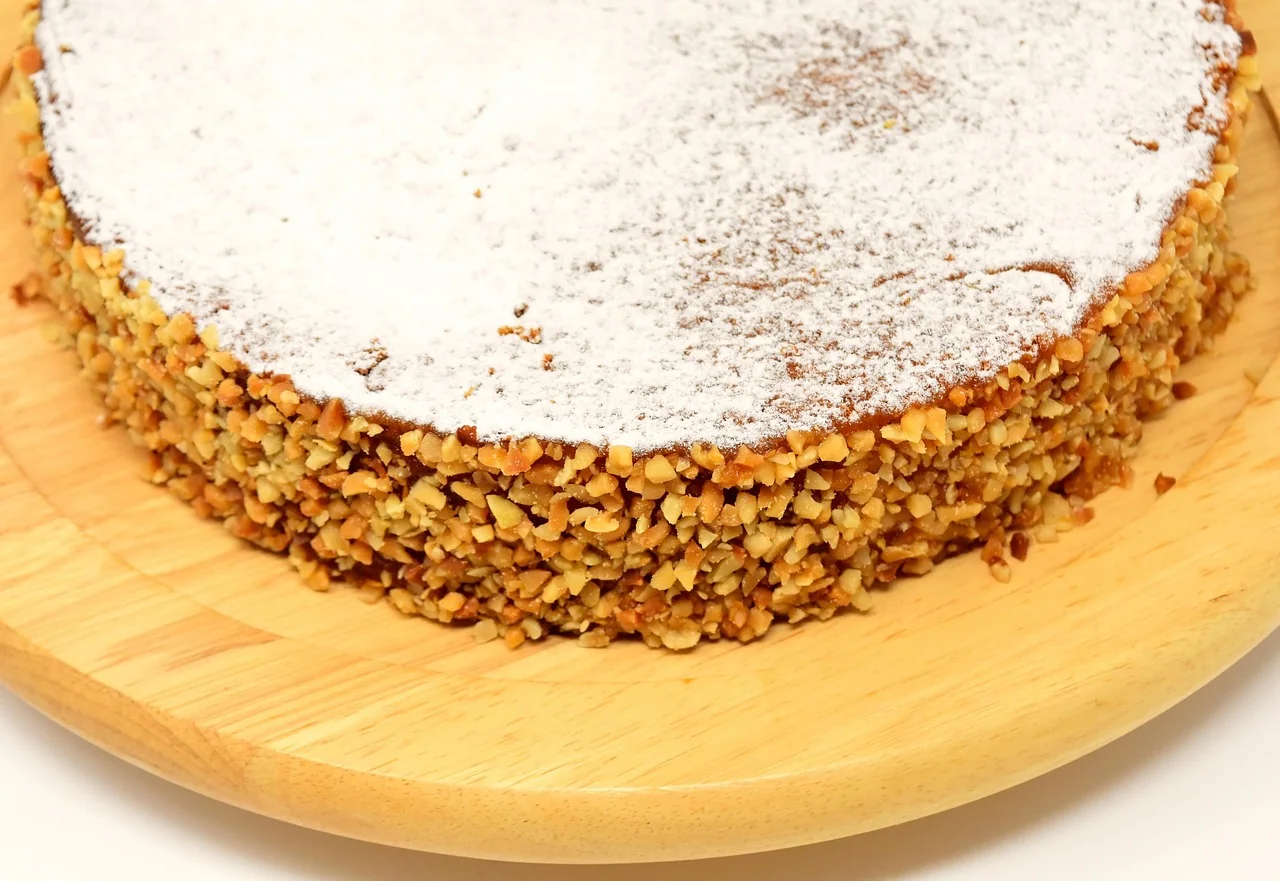
Today most Cypriot vasilopites are butter cakes flavoured with orange, vanilla or mastiha (mastic), and some recipes add mahlepi as well; both appear in Cypriot vasilopita recipes published in December 2025. The top is usually dusted with icing sugar and decorated with the new year's numbers in blanched almonds or icing. Patisseries now also sell modern takes, from orange and almond to carrot cake.
Why do offices, schools and clubs cut a vasilopita in January?
This is the custom that surprises many expats. The vasilopita is not just a family cake: workplaces, schools, sports clubs and associations cut one at their first gathering of the year, often with a priest blessing it, a short speech and a draw. About 200,000 vasilopites were expected to be cut in Cyprus for New Year 2026, with one bakery chain alone making around 15,000 large cakes to order for associations and groups. These cuttings start in early January and often run until the end of February.
Some dated examples from the last New Year season:
| Date | Who | What happened |
|---|---|---|
| 7 January 2026 | Kykkos Lyceum, Nicosia | Teachers' vasilopita cutting during the first break |
| 8 January 2026 | Cyprus Olympic Committee, Nicosia | Cake blessed by priests for the sports federations; Special Olympics Cyprus was the "lucky" federation |
| 9 January 2026 | A Nicosia law firm | Team vasilopita to start the year |
| 19 January 2026 | Tsireio Gymnasium, Limassol | Parents' association cut the school cake, and every class cut its own |
Even the President takes part: the Press and Information Office recorded the President attending the Cyprus Broadcasting Corporation's vasilopita cutting on 11 January 2023. If you are invited to your office or your child's school cutting, go: it is the friendliest event of the year, and turning up matters more than anything you bring. At larger events slices are often dedicated to departments, classes or member clubs, so the "lucky" winner can be a whole team.
Does Agios Vasilis bring the presents?
Traditionally, yes. In Cyprus Agios Vasilis, rather than Father Christmas, visits each house on New Year's Eve and leaves presents under the tree for 1 January. Families used to leave him something on the table for the night: a glass of wine, a piece of pie or koliva, and a comb for his beard; in Anogyra an olive branch and the householder's purse were added for a blessing. Many families now give presents at Christmas too, so if you are buying for a Cypriot friend's children, ask which day they open theirs.
What other New Year customs will you see in Cyprus?
- New Year carols: on New Year's Eve children go from door to door singing New Year carols, and are given sweets or coins. Keep some change by the door.
- Podariko (first foot): the first person to step into the house on New Year's Day sets the luck for the year, so families like it to be a kind person or a child, entering right foot first. The visitor is offered honey or something sweet and a coin.
- Breaking a pomegranate: many families smash a pomegranate at the front door for abundance; the custom has moved into city flats too.
- Olive branches: in Paphos villages an olive branch was thrown into the fire on New Year's Eve; if it crackled and jumped, a loved one's affection was confirmed. In Marathasa and Tillyria an olive wreath was hung on the door.
- Sprouting wheat: grain is watered in a dish until it sprouts and later planted on Saint Anthony's Day, 17 January.
- Church on 1 January: the morning service on New Year's Day is the Liturgy of Saint Basil, one of only about ten times a year it is used; many families go before lunch.
- The New Year table: there is no single menu, but stuffed turkey, souvla, gammon (sometimes cooked in Commandaria), oven pasta and stuffed vegetables all appear, with seasonal pomegranate, citrus and loukoumades or pishies for dessert.
Where can you buy a vasilopita in Cyprus?
Bakeries, patisseries and supermarkets all sell vasilopites over the festive season. For the family table a small round cake is enough; for an office or club, we suggest ordering a large rectangular one well before Christmas, as large and custom sizes are made to order. Shops listed in Checkincyprus's 2024 and 2025 round-ups include:
| Shop | Where | What they offered (2023–2025 seasons) | Website |
|---|---|---|---|
| Wilton Patisserie | Limassol, Larnaca, Paphos | Orange and roasted almond cake, round or rectangular, four sizes; the online shop listed round cakes from €12.90 (last season's price) | wiltonpatisserie.com |
| New York Sweets | Nicosia, Limassol, Larnaca, Paphos | Carrot-cake vasilopita with pineapple, two sizes, larger to order | In store |
| Chocoland Fine Pastry | Larnaca | Orange-zest and almond cake, 20 cm and 24 cm, with or without the coin | In store |
| La Parfaite | Nicosia, Limassol | Classic vasilopita in three sizes, plus a Lotus biscuit version | In store |
| Bianco Sweets, Seed of Happiness | Nicosia | Orange and almond; an orange-blossom cake with almond and brown rice flour | In store |
| Alfita Bakery | Avgorou (Famagusta district) | Festive vasilopita | In store |
Neighbourhood bakeries and the big supermarkets are the easiest last-minute options. The 2026 ranges and prices had not been announced when we checked on 19 October 2026.
How do you make a vasilopita at home?
A simple Cypriot-style cake is easy, and baking it on New Year's Eve is part of the tradition:
- Cream roughly equal weights of soft butter and sugar (around 200–250 g each for a 25–28 cm tin) until pale.
- Beat in four or five eggs one by one, then the zest and juice of an orange and a splash of brandy.
- Fold in about twice the butter's weight of self-raising flour with a pinch of ground mastiha and mahlepi, loosening with milk or yoghurt until the batter drops from the spoon. Chopped walnuts or almonds are optional.
- Wrap a clean coin in foil or baking paper and push it into the batter in the tin.
- Bake at about 180°C for 45–50 minutes, until a skewer comes out clean. Cool, dust with icing sugar and mark the year in almonds.
Tips if you are invited to a Cypriot New Year
- Arrive with something sweet (a box of pastries, chocolates or a bottle of wine), not a vasilopita: the host will have their own.
- Wait for the cutting. Do not start eating your slice before everyone has theirs, and never cut the vasilopita yourself.
- If you find the coin, say so: it is a happy moment, and you keep it.
- Greet people with "Kali chronia" (Happy New Year) or "Chronia polla", and wish anyone called Vasilis or Vasiliki a happy name day.
- Plan for the holiday. Friday 1 January 2027 is a public holiday: banks and government offices close and shop hours vary, so buy cake and food by 31 December.
- Children's carols: have coins ready on New Year's Eve.
Related guides
Recommended for this guide
Contains affiliate links GetYourGuide
Skip-the-line tickets, day trips and guided tours, usually with free cancellation up to 24 hours before.
See things to do in Cyprus
Flights & car hire
 Discover Cars
Compare car hire from local and international companies at Larnaca and Paphos airports.
Compare car hire
Flights & car hire
 GetRentacar
Rent a car directly from local rental companies, with the price and conditions shown before you book.
Find a rental car
Frequently asked questions
What is vasilopita in Cyprus?
It is the New Year cake or bread named after Saint Basil (Agios Vasilis). A coin is baked inside and whoever finds it in their slice is said to be lucky for the coming year.
When do Cypriots cut the vasilopita?
Families cut it either just after midnight on New Year's Eve or on New Year's Day, usually with the head of the household making the sign of the cross over it before slicing.
Who gets the first slice of vasilopita?
The first slices are dedicated rather than eaten: to Christ, to Saint Basil or the Virgin Mary, to the house and sometimes to the poor or absent relatives. Then everyone present gets a slice, usually from the eldest down.
What do you do if you find the coin in the vasilopita?
You are the lucky one of the year. People traditionally keep the coin, often in a pocket or purse, as a good-luck charm for the next twelve months.
Who brings presents in Cyprus, Santa or Saint Basil?
Traditionally Agios Vasilis (Saint Basil) brings presents on New Year's Eve, to be opened on 1 January. Many families now give presents at Christmas as well, so ask what the household you are visiting does.
Where can I buy a vasilopita in Cyprus?
Bakeries, patisseries and supermarkets all sell them over the festive season. Chains such as Wilton Patisserie (Limassol, Larnaca, Paphos) and New York Sweets (all main cities) offer several sizes, and large cakes for offices need ordering in advance.
Useful links
- Wilton Patisserie – New Year's cakes (vasilopita)Round and rectangular sizes; shops in Limassol, Larnaca and Paphos
- Metro Supermarket – vasilopita recipeA Cypriot supermarket's home recipe
- Britannica – Saint Basil the GreatWho Agios Vasilis was
- Patriarchate of Antioch – the Liturgy of Saint Basil, celebrated ten times a year
Sources (15)
- Britannica – Saint Basil the Great
- Politis – Around 200,000 vasilopita cakes expected to be cut in Cyprus this year (31 December 2025)
- Politis – Welcoming the New Year the Cypriot way (31 December 2025)
- Politis – The Cypriot festive season and the traditions that shape the New Year table (31 December 2025)
- Cyprus Mail – Festive bakes made in Cyprus, Loulla Astin (18 December 2025)
- Commercial.cy – Celebrating the New Year of 2023 (27 December 2022)
- VKCyprus – New Year customs in Cyprus (1 January 2020, in Russian)
- Cyprus Olympic Committee – vasilopita cutting 2026 (8 January 2026)
- Kykkos Lyceum, Nicosia – January 2026 school programme
- Tsireio Gymnasium, Limassol – January 2026 school programme
- Press and Information Office – President attends CyBC vasilopita cutting (11 January 2023)
- Lellos P. Demetriades Law Office – Vasilopita 2026 (9 January 2026)
- Checkincyprus – 11+2 vasilopites in Cyprus patisseries (30 December 2025, in Greek)
- Checkincyprus – The best vasilopites this New Year (30 December 2024, in Greek)
- Orthodox Times – Vasilopita and the golden coin (31 December 2021)