Summarise this page 8 key points · 1 minute
- What is Emba like?Emba is a large, lived-in hillside village just north of Paphos, built around a 12th-century church, with newer villas and many sea views.
- Where is Emba and how do you get around?Paphos town centre is about 10 minutes by car and the airport about 25 minutes, but buses are infrequent so most residents rely on a car.
- Neighbourhoods and places in EmbaChoose between the traditional old village, the lively main road, quiet Petridia, the newer estates on the slopes or the practical Paphos and Chloraka edges.
- Who is Emba best for?Emba suits families, retirees and remote workers who want space near Paphos, but it is less suited to people who want to live without a car.
- Homes and cost of livingIn September 2026 median asking prices were about €295,000 for a flat and €495,000 for a house, more affordable than coastal Paphos.
- Schools, healthcare and everyday services near EmbaEmba has its own state primary school and lyceum, Paphos General Hospital is about 10 minutes away, and international schools are in Paphos.
- Things to do in and around EmbaVisit the 12th-century Panagia Chryseleousa church, walk the seafront at Chloraka and Kissonerga, or head to Agios Neophytos Monastery and Kato Paphos.
- Pros and cons of living in EmbaEmba offers a village feel, sea views and more space for your money near Paphos, but a car is effectively essential and the beach is not walkable.
Quick answer
Emba (also spelled Empa) is one of the largest villages in the Paphos district, sitting on the slopes just north of Paphos town. It combines a traditional village core with newer housing estates, and suits families and retirees who want space and a local feel while staying close to town.
- Borders Paphos to the north, about 10 minutes' drive from the town centre and about 25 minutes from Paphos Airport.
- The coast at Chloraka and Kissonerga is roughly 10 minutes away by car.
- Mix of a historic village centre and modern villas, bungalows and apartment complexes.
- Popular with families and retirees, including a sizeable expat community.
- Buses run to Paphos, but most residents find a car essential.
- Main localities: the old village around Panagia Chryseleousa, the main road, Petridia, the newer estates on the slopes and the edges towards Paphos and Chloraka.
- Emba has its own primary school and a state lyceum, Agios Charalambos Lyceum and TESEK.
What is Emba like?
Emba is a large, established village on the hillside immediately north of Paphos. Its name comes from the Cypriot dialect word for "enter", often linked to its position at the gateway to the town.
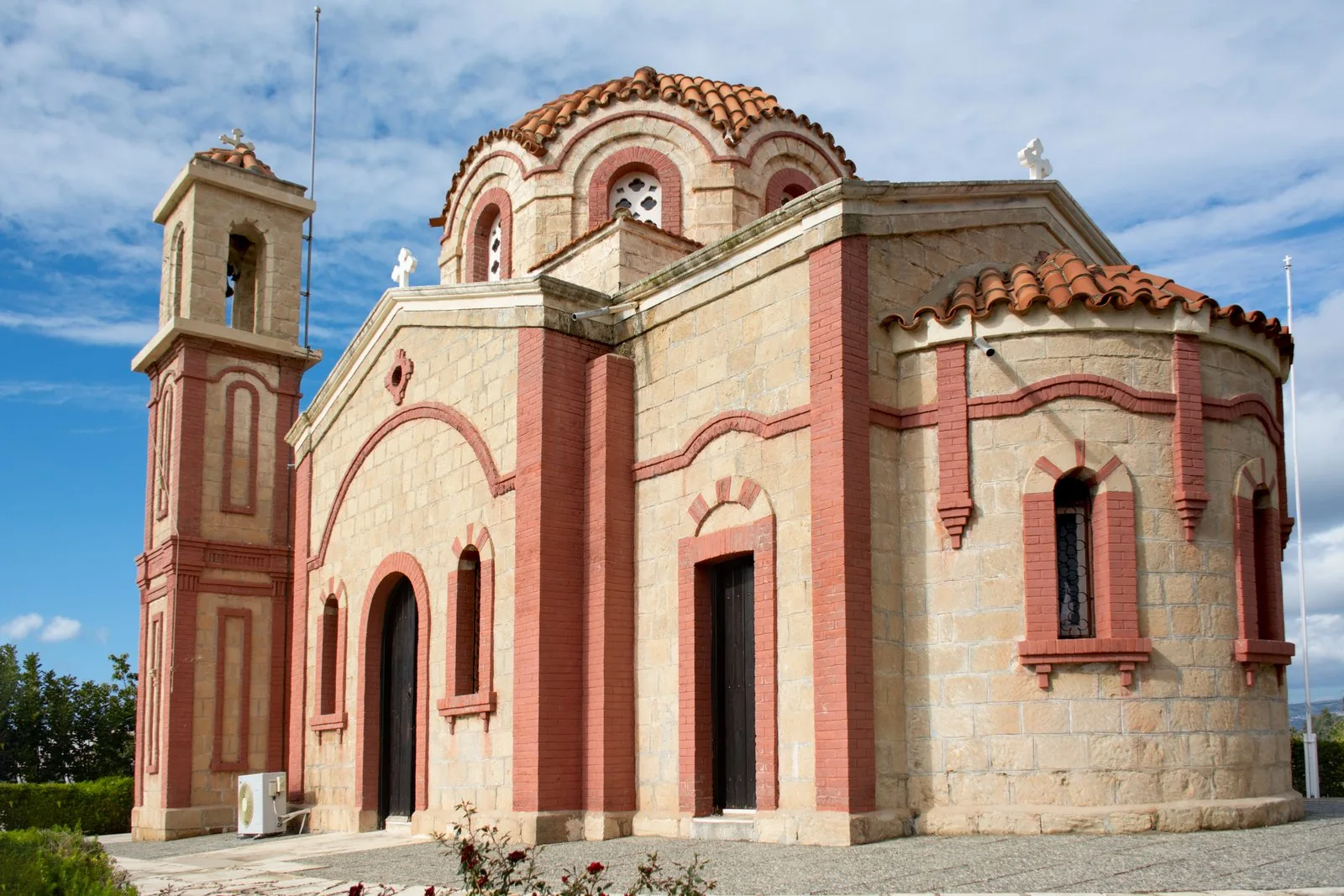
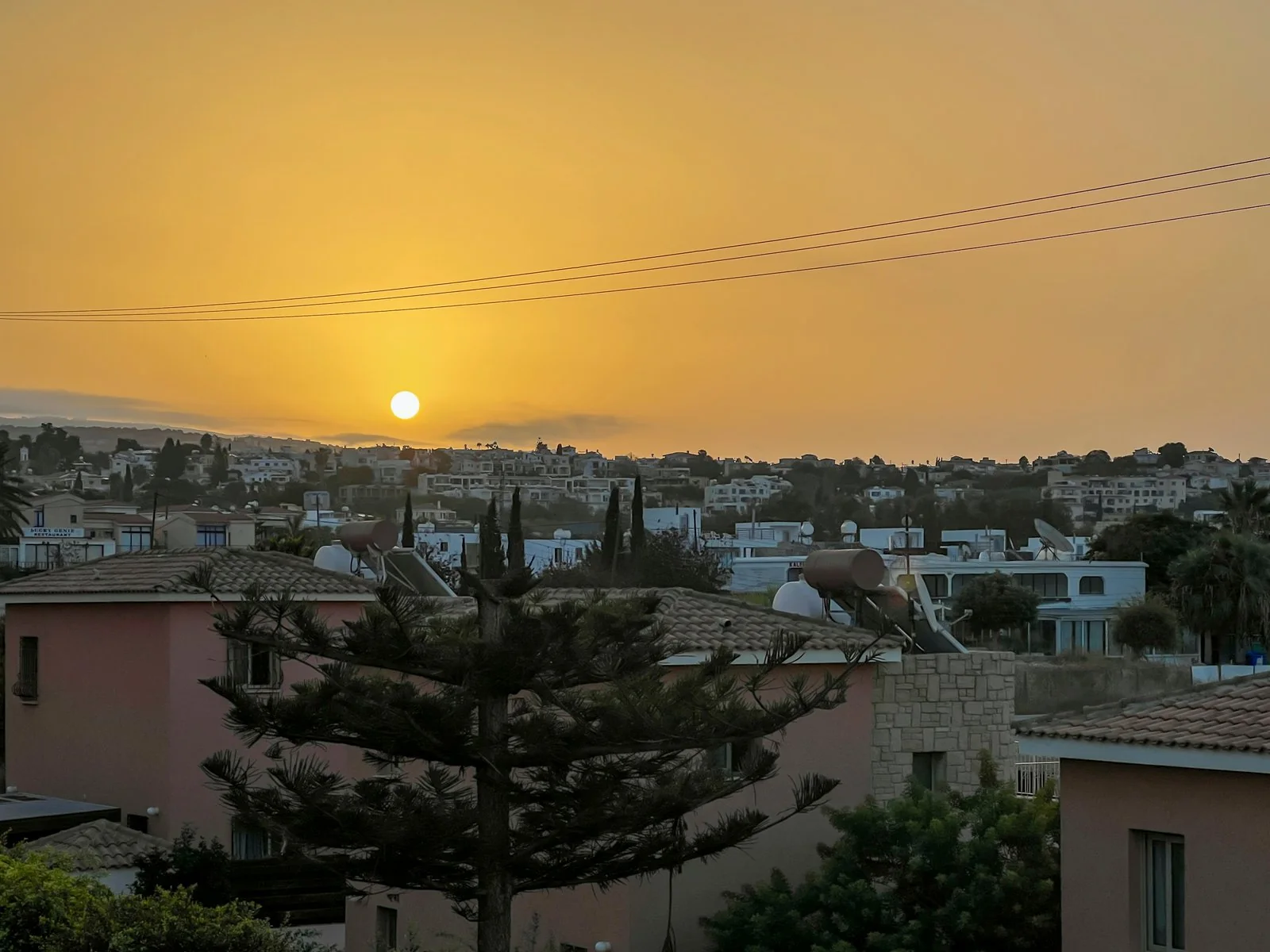
The old centre is built around the 12th-century Byzantine church of Panagia Chryseleousa, with narrow streets, coffee shops and tavernas. Around it, newer neighbourhoods of villas, bungalows and small apartment complexes have spread across the slopes. Many homes enjoy views down towards the sea.
It feels residential and lived-in rather than touristy. Cypriot families and expats live side by side, and the village stays active year-round. Local life is still visible in the evenings, when residents gather at the coffee shops along the winding main road, and religious festivals bring the community together during the year.
Where is Emba and how do you get around?
Emba borders Paphos, Chloraka, Kissonerga, Tala, Tremithousa and Mesogi. The town centre is about 10 minutes away by car, Kato Paphos about 15 minutes, and the coast at Chloraka or Kissonerga roughly 10 minutes. Paphos Airport is about 25 minutes away, and the A6 motorway towards Limassol about 15–20 minutes.
Buses connect Emba with Paphos, but frequencies are lower than in town and the village is spread out. Most residents rely on a car. Our public transport guide explains the bus network.
Neighbourhoods and places in Emba
Emba is one of the largest villages in the Paphos district, with 4,855 residents at the 2011 census. It borders Paphos, Chloraka, Kissonerga, Tala, Tremithousa and Mesogi, so residents often describe where they live by the old church, the main road or the neighbouring village.
The old village and Panagia Chryseleousa
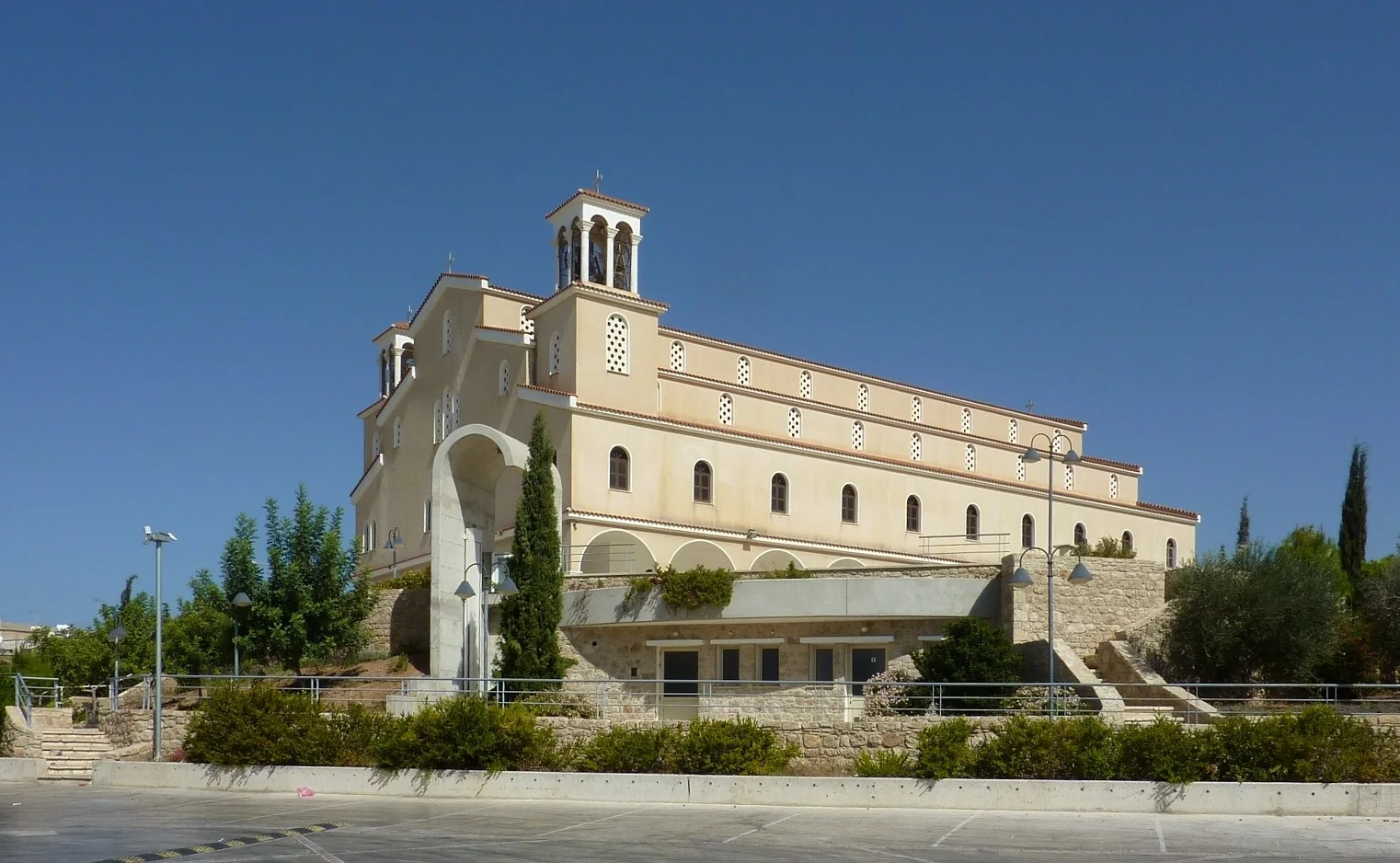
The heart of Emba is the 12th-century church of Panagia Chryseleousa, known for its frescoes and its 16th-century gilded iconostasis. The newer church of St Andrew stands nearby and hosts the village's main religious festival on 30 November, St Andrew's name day.
- Feels like: traditional, with older stone houses and narrow lanes.
- Suits: people who want a village house with character.
- Landmarks: Panagia Chryseleousa, St Andrew's church.
- Tip: parking near the church is limited on feast days and Sundays.
The main road
A narrow, winding road runs through the village, lined with shops, coffee shops, bakeries and tavernas. This is where everyday life happens, and where residents meet in the evenings.
- Feels like: lively and practical.
- Suits: anyone who wants to walk to local shops.
- Tip: traffic can build up at peak times, so allow extra time for the school run.
Petridia
Petridia is a locality within Emba, with the chapel of St George, the cave chapel of St Lambros, the caves of St Kournoutas and the site of the former church of St Akakios.
- Feels like: quiet countryside with scattered homes.
- Suits: walkers and anyone interested in local history.
- Tip: some of the chapels are small and only open for services, so check before visiting.
The newer estates on the slopes
Around the old core, villas, bungalows and low-rise apartment complexes have spread across the hillside, many with views down to the sea. New-build projects are still common. In September 2026 the median asking price was about €295,000 for a flat and €495,000 for a house across Emba.
- Feels like: modern, residential and mixed, with Cypriot and expat neighbours.
- Suits: families and retirees who want a garden or a pool.
- Tip: in growth areas, ask what is planned on neighbouring plots before you buy, as construction is ongoing.
The Paphos and Chloraka edges
The southern and western edges of Emba run into Paphos and Chloraka, giving quick access to town shops, schools and the coast. The town centre is about 10 minutes away and the sea at Chloraka about 10 minutes.
- Feels like: suburban, close to everything.
- Suits: commuters and families on the school run into Paphos.
- Tip: this side of Emba is the most practical if you want short drives to town.
Who is Emba best for?
- Families looking for houses with gardens within easy reach of Paphos schools.
- Retirees who want a village setting without being isolated.
- Remote workers who value space and views, and do not need to commute daily.
- It is less suited to people who want to live without a car.
Homes and cost of living
You will find traditional stone village houses in the old core, detached villas and bungalows on the outskirts, and low-rise apartment and townhouse developments. New-build projects are common.
Overall, Emba is more affordable than coastal Paphos, and you typically get more space for your money. Homes with clear sea views or large plots command higher prices. Day-to-day costs are similar to the rest of the district.
What does it cost to live here?
Asking prices as of October 2026, rounded:
- Buying: in September 2026 the median asking price was about €295,000 for a flat and €495,000 for a house, about a fifth below nearby Chloraka for flats and well below it for houses.
- Rent: long-term lets in Emba itself are scarce. Across Paphos, one-bedroom flats typically ask €550-€800 a month and two-bedroom flats €750-€1,100; Emba usually sits in the lower half of these ranges.
Paphos district sale prices rose almost 10% year on year in the second quarter of 2026, with apartments up more than 18%.
Schools, healthcare and everyday services near Emba
Schools
- Emba Primary School: the village's own state primary school.
- Agios Charalambos Lyceum and TESEKEmba: the state lyceum and technical school in the village.
- The International School of Paphos100 Aristotelous Savva Avenue, Anavargos, about 10 minutes away: English National Curriculum from about age 2½ to 18, through to A levels.
- Aspire Private British SchoolTombs of the Kings Avenue, Paphos: UK curriculum for ages 4 to 18, with IGCSE, GCSE and A levels.
- State schools: places are allocated by home address, and lessons are in Greek. The Ministry of Education explains how state primary schools work, and its secondary education pages cover the gymnasium (ages 12 to 15) and lyceum (15 to 18).
See our international schools guide to compare fees and curricula.
Hospitals and clinics
- Paphos General HospitalAnavargos, about 10 minutes away: the district's main public hospital, run by the State Health Services Organisation (OKYPY), with a 24-hour emergency department.
- Iasis Private Hospital8 Voriou Ipirou Street, Paphos, in the Universal area.
- Evangelismos Private Hospital87 Vasileos Konstantinou Avenue, Paphos: private hospital with a 24-hour casualty department.
- Blue Cross Medical Centre51 Dimokratias Avenue, Paphos.
- Family doctor: choose a personal doctor close to home and register through GESY, the national health system.
Shopping and services
- Supermarkets: local shops and bakeries in the village; Smart Discount Shops at 89 Mesogis Avenue, Mesogi; Lidl at 104 Tombs of the Kings Avenue; and Sklavenitis inside Kings Avenue Mall. Our supermarkets guide compares the chains.
- Local council: Emba did not join a municipality in the 2024 reform; it remains a community in the West Paphos community cluster, with Chloraka.
- Citizen services: the Pafos Citizen Service Centre on Michail Savva Street, in the Stelios Kyriakides stadium car park, handles many government applications and enquiries (Monday to Friday, 8:00 to 13:15).
- Post: use the Cyprus Post website to find the nearest post office or postal agency and to track parcels.
- Buses: village routes run from Karavella station in the town centre. Check the current route numbers and timetables with Pafos Buses (OSYPA) before relying on them for a daily commute.
Things to do in and around Emba
- Panagia Chryseleousa: the village's 12th-century church, known for its frescoes and gilded iconostasis.
- Coastal villages: Chloraka and Kissonerga have seafront walks, small beaches and restaurants.
- Agios Neophytos Monastery: just beyond neighbouring Tala.
- Paphos town and Kato Paphos: for archaeological sites, shopping and the harbour.
- Dining: traditional tavernas and coffee shops in the village centre.
Map it · Driving route
From Agios Neophytos to Paphos harbour
- Agios Neophytos Monastery
- Panagia Chryseleousa
- St Andrew's church
- Paphos harbour
Opens Google Maps with every stop in order. Opening hours can change, so check before you go.
Pros and cons of living in Emba
Pros - Close to Paphos while keeping a village feel - More space for your money than the coast - Sea views from many homes - Established community and year-round life
Cons - A car is effectively essential - Hilly, winding roads and some congestion at peak times - Not walkable to the beach - Ongoing construction in growth areas
Compare Emba with other areas using our area finder.
Plan my trip
Want us to plan your days in Cyprus?
Tell us where you’re going, for how many days and what you love. We’ll send you a plan made for you, with places to see, where to eat and a Google Maps route for each day.
Compare other areas in Paphos
Recommended for this guide
Contains affiliate links Booking.com
Frequently asked questions
Is Emba a good place to live for expats?
Yes. Emba offers village character with town amenities close by, and many expats already live there. It suits people who want a quieter base without being far from Paphos.
Is Emba good for families?
It is a popular choice for families thanks to larger homes, gardens and its short drive to schools and services in Paphos. The village also has its own local amenities.
How far is Emba from Paphos, the beach and the airport?
Emba is about 10 minutes from central Paphos, about 10 minutes from the coast at Chloraka, and about 25 minutes from Paphos Airport by car.
Do you need a car in Emba?
In practice, yes. There is a bus service to Paphos, but the village is spread out on hilly roads, and a car makes daily life much easier.
Is Emba expensive?
Emba is generally more affordable than coastal areas such as Universal or Kato Paphos, though newer villas with sea views can be priced at the upper end for inland villages. In September 2026 flats had a median asking price of about €295,000 and houses about €495,000.
Useful links
- Visit Cyprus – Panagia Chryseleousa Church, Empa
- Private primary schools in Cyprus – Ministry of Education
- Private secondary schools in Cyprus – Ministry of Education
- List of hospitals in Cyprus – GOV.UK
- Paphos General Hospital – State Health Services Organisation
- Pafos Citizen Service Centre – Pafos Municipality
Sources (18)
- Panagia Chryseleousa Church, Empa – Deputy Ministry of Tourism (visitcyprus.com)
- Empa, Cyprus – Wikipedia
- Chlorakas, Paphos: Complete 2026 Property and Area Guide – INDEX.cy
- Apartments for Rent in Paphos: Complete 2026 Guide – INDEX.cy
- Cyprus property prices climb as foreign demand stays strong, CBC says (24 September 2026) – Cyprus Mail
- Private primary schools in Cyprus – Ministry of Education
- Private secondary schools in Cyprus – Ministry of Education
- List of hospitals in Cyprus (updated 24 June 2026) – GOV.UK
- Paphos General Hospital – State Health Services Organisation
- Main bus stations and routes – Pafos Buses (OSYPA)
- The best supermarkets in Paphos (updated January 2026) – Guide to Paphos
- Sklavenitis Cyprus renovation and integration plan for Papantoniou stores (17 June 2025) – CBN
- Pafos Citizen Service Centre – Pafos Municipality
- Tala Primary School – WhatSchool
- Agios Charalambos Lyceum and TESEK, Emba – school planning document 2023-24
- The International School of Paphos – about the school
- Aspire school – Cyprus Mail schools guide
- Local government reform (Cyprus) – Wikipedia