Summarise this page 26 key points · 1 minute
- The villages at a glanceTwenty-one villages across the Larnaca hills, the Troodos, the Limassol wine country and the Paphos hills, each with what it is best for.
- Pano and Kato Lefkara: lace, silver and stone lanesPano Lefkara, at 650 metres, is famous for UNESCO-listed Lefkara lace and filigree silver, with a lace museum, House 1923 Tavern and The Agora Hotel.
- Kato Drys: honey, embroidery and a boutique wineryKato Drys, next to Lefkara, has the Bee & Embroidery Museum, a rural museum and tastings at the Ktima Christoudia winery.
- Tochni: Tochni stone and one of the island's oldest villagesTochni, between Larnaca and Limassol, is a stone-built agrotourism village with a 3 km nature trail, cycling and Tochni Tavern.
- Fikardou: a village preserved as a monumentFikardou is a car-free Ancient Monument with two rural house museums, the Yiannakos café-restaurant and a Christmas Village from 21 November.
- Kakopetria: the old quarter by the riverKakopetria's protected old quarter is near the UNESCO church of Agios Nikolaos tis Stegis, with riverside tavernas and trout at The Mill.
- Kalopanagiotis: tradition and tranquillity in the Troodos MountainsKalopanagiotis has the UNESCO-listed Agios Ioannis Lampadistis monastery, a Venetian bridge, sulphur springs and the Casale Panayiotis spa hotel.
- Pedoulas: cherries and a UNESCO churchPedoulas, at 1,100 metres, has the UNESCO-listed Archangelos Michael church (1474) and a Cherry Festival every June.
- Platres: waterfalls and forest walksPlatres is the classic hill resort, with walks to the Caledonia and Millomeris waterfalls and riverside trout at Psilo Dentro.
- Agros: roses, rose water and cured meatsAgros, in Pitsilia, is known for rose water, cured meats and spoon sweets, and holds its Rose Festival in May.
- Fini: pottery, loukoumi and the Chantara waterfallFini, at 920 metres, has a folk-art museum, its own loukoumi, Phini Tavern and an easy trail past the Chantara waterfall.
- Omodos: the best-known wine villageOmodos has the Holy Cross monastery, a medieval wine press, wineries, arkatena bread at Arkatena Fotini and slow-roasted pork at Stou Kir Yianni.
- Vasa: zivania and limestone lanesVasa, next to Omodos, has a Zivania Museum, the Argyrides Winery by reservation and Pyrgos Tavern over the vineyards.
- Arsos: a mountain gem with a big wine heartArsos, at about 850 metres, has the Six Fountains trail, a Folk Art Museum, Agora Tavern on the square and a Grape Feast in September.
- Vouni: a wine village with characterVouni has an Oenology Centre, courtyard tavernas such as Oraia Ellas, the last traditional kafeneio and a palouze festival in September.
- Lofou: cobbled lanes on a hilltopLofou, at 780 metres, is a compact hilltop village with a walk to the 1842 Elitzi fountain, Lofou Tavern and the Apokryfo guesthouse.
- Lania: the artistic heart of the hillsLania, at 570 metres, is a Commandaria village of artists' studios, with two tavernas and open courtyards every May.
- Kathikas: wineries on the Laona plateauKathikas, on the Laona plateau, has the Vasilikon and Sterna wineries, the easy Agiasma trail and family tavernas.
- Drouseia: sea views and weavingDrouseia, the highest point of the Laona plateau, has sea views, a Weaving Museum and Droushia Heights Hotel.
- Kritou Terra: hidden beauty and natural wonderKritou Terra has one of the island's largest springs, the Kremiotis waterfall walk and Mylari Bistro on the square.
- Steni: colourful tradition near PolisSteni, near Polis, has the free Museum of Village Life and the Neromylos café-taverna opposite it.
- Pano Panagia: the forest village of MakariosPano Panagia is the birthplace of Makarios III, close to Chrysorrogiatissa Monastery and the Vouni Panayia Winery.
- Why do expats choose village life in Cyprus?Expats choose village life for homes that are more affordable than on the coast, a slower pace, friendly neighbours and easy access to nature and local food.
- What are the top things to do in Cyprus's traditional villages?Take a wine tour in Arsos or Vouni, hike around Kalopanagiotis or Kritou Terra, visit Steni's rural museum and browse Lania's open studios.
- What is village life like through the seasons?Spring brings wildflowers and Easter feasts, summer wine festivals and music nights, autumn grape and palouze festivals, and winter open fires, craft markets and occasional Troodos snow.
- Why visit rural Cyprus?Time in traditional villages offers connection rather than just tourism, and a glimpse of slower Cypriot life for anyone curious about living here.
Quick answer
Cyprus's most beautiful traditional villages include Pano Lefkara (lace and silver), Omodos and the Limassol wine villages, Kakopetria and Kalopanagiotis in the Troodos, car-free Fikardou, and Kathikas and Drouseia on the Paphos hills. This guide gives each village what to see, what to do, where to eat, where to stop for a coffee and where to stay, plus a Google Maps route for walking each village and for a day of driving between them. Village life also brings more affordable homes than the coast, a slower pace and a strong sense of community.
- Pano Lefkara is known for Lefkara lace, on UNESCO's intangible heritage list since 2009, and filigree silver; the Museum of Traditional Embroidery and Silversmith-work is in the House of Patsalos.
- Omodos, at 800 metres in the Limassol wine country, has the Holy Cross monastery, a medieval wine press and a three-day fair from 14 September.
- Kakopetria's protected old quarter sits in the Solea Valley, a short drive from Agios Nikolaos tis Stegis, one of the ten UNESCO-listed painted churches of the Troodos.
- Fikardou was declared an Ancient Monument in 1978; cars are not allowed in, and it is a Christmas Village from 21 November 2026 to 6 January 2027.
- Every village below has a Google Maps route you can open with one tap, and you can ask us to plan your days for you.
When you think of Cyprus, golden beaches and ancient ruins might come to mind. Scratch beneath the surface, though, and you will find its traditional villages, which are just as magical. For anyone interested in living in Cyprus or in authentic things to do on the island, they offer a glimpse into the heart of island life.
Each village tells a different story of local wines, artisan crafts, religious heritage and hospitality that makes strangers feel like family. Below you will find the most beautiful ones, area by area, with what to see, what to do, where to eat, where to stop for a coffee and where to stay. Every village has a Google Maps route you can open with one tap, and each area ends with a driving route for a full day out. Planning a walk in the mountains too? Use our hiking routes finder to pick a trail by area and difficulty, and see our Villages of Cyprus map for even more ideas.
The villages at a glance
| Village | Area | Best for | Don't miss |
|---|---|---|---|
| Pano & Kato Lefkara | Larnaca hills | Lace, silver, stone lanes | Museum of Traditional Embroidery and Silversmith-work |
| Kato Drys | Larnaca hills | Honey, quiet lanes, wine | Bee & Embroidery Museum |
| Tochni | Larnaca hills | Rural stays, cycling | Saints Constantine and Helen church |
| Fikardou | Nicosia, Pitsilia | A preserved, car-free village | Rural house museums |
| Kakopetria | Troodos, Solea Valley | Old quarter, river, trout | Agios Nikolaos tis Stegis (UNESCO) |
| Kalopanagiotis | Troodos, Marathasa | Monastery, spa, Venetian bridge | Agios Ioannis Lampadistis (UNESCO) |
| Pedoulas | Troodos, Marathasa | Cherries, mountain air | Archangelos Michael church (UNESCO) |
| Platres | Troodos | Waterfalls, forest walks | Caledonia and Millomeris waterfalls |
| Agros | Troodos, Pitsilia | Roses, cured meats | The Rose Festival in May |
| Fini | Troodos | Pottery, loukoumi, waterfall | Chantara waterfall |
| Omodos | Limassol wine villages | Wine, monastery, arkatena bread | Holy Cross monastery and the old wine press |
| Vasa | Limassol wine villages | Zivania, quiet lanes | Zivania Museum |
| Arsos | Limassol wine villages | Wine, fountains trail | Six Fountains trail |
| Vouni | Limassol wine villages | Tavernas, palouze festival | Oenology Centre |
| Lofou | Limassol wine villages | Cobbled lanes, views | Elitzi fountain walk |
| Lania | Limassol wine villages | Artists, flowers | Open studios and courtyards |
| Kathikas | Paphos hills | Wineries, Easter traditions | Vasilikon and Sterna wineries |
| Drouseia | Paphos hills | Sea views, weaving | Weaving Museum |
| Kritou Terra | Paphos hills | Springs, waterfall, stillness | Kremiotis waterfall |
| Steni | Paphos, near Polis | Village life museum | Steni Museum of Village Life |
| Pano Panagia | Paphos forest | Monastery, wine, Makarios | Chrysorrogiatissa monastery |
Pano and Kato Lefkara: lace, silver and stone lanes
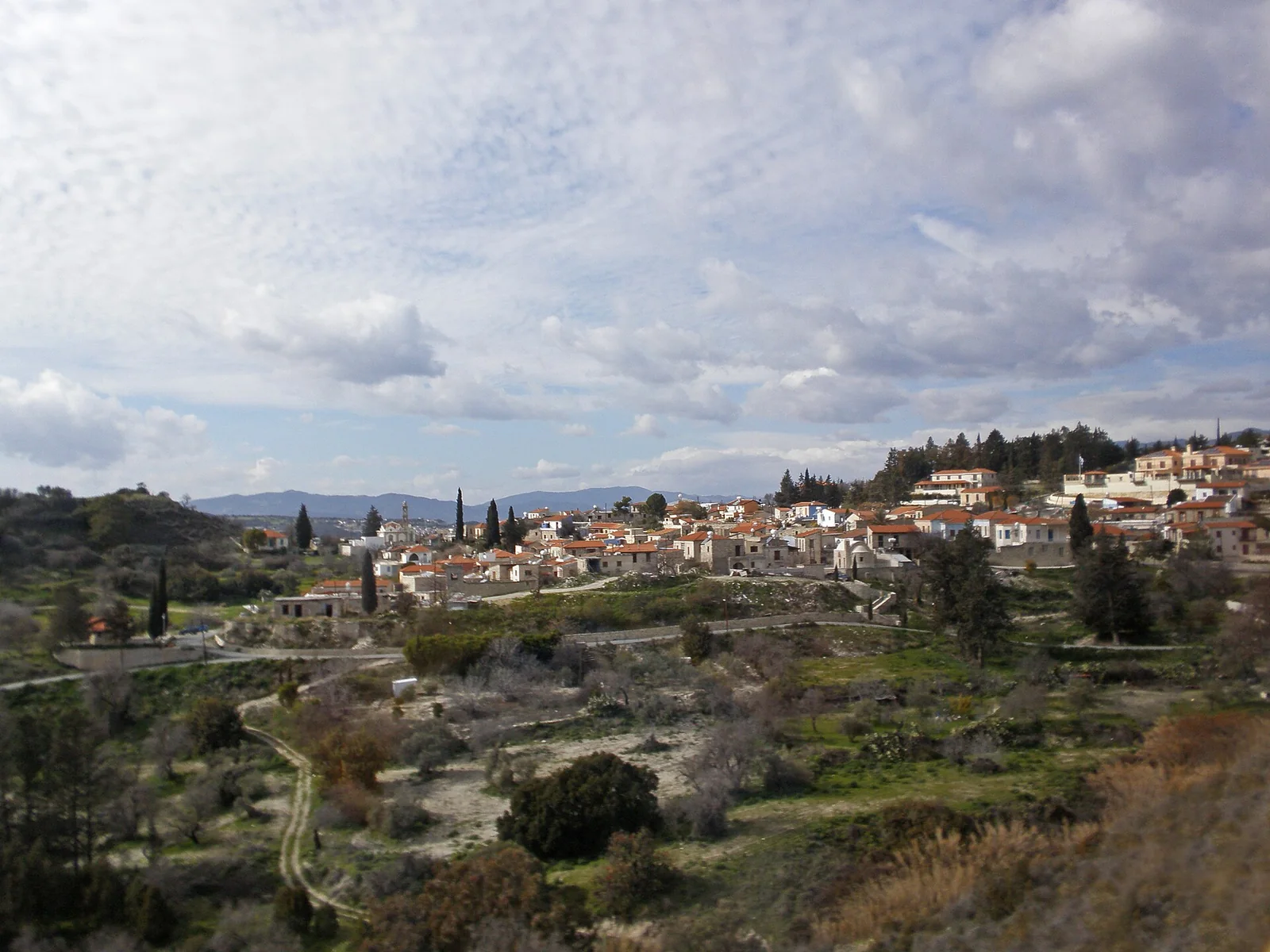
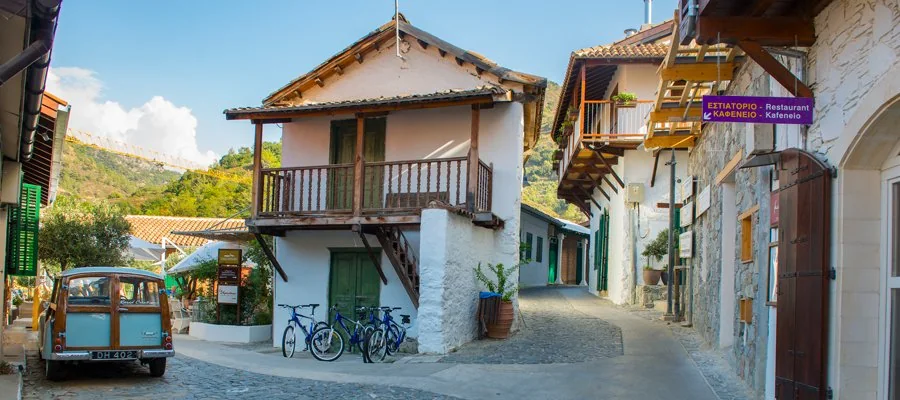
Lefkara, split into Pano (upper) and Kato (lower) Lefkara, sits at 650 metres at the south-eastern foot of the Troodos, 43 km from Larnaca. It is famous for Lefkara lace (lefkaritika), inscribed on UNESCO's intangible heritage list in 2009, and for fine filigree silver. It was named one of the UN Tourism "Best Tourism Villages" in 2021.
- What to see: The Local Museum of Traditional Embroidery and Silversmith-work in the House of Patsalos (daily, 08:30–16:00 from mid-September to mid-April and 09:30–17:00 in summer), the Church of Timios Stavros with its iconostasis carved in 1740 and a silver-covered cross, the Lefkara Handicraft Centre and the Folklore Museum. In Kato Lefkara, the Chapel of Archangelos Michail has frescoes from the 12th and 15th centuries.
- What to do: Watch lacemakers and silversmiths at work in the workshops along the lanes, walk the 2.5 km Lefkara–Kato Drys nature trail, or visit the Oliva Terra organic olive farm, where you can walk in the orchards.
- Where to eat: House 1923 Tavern on Giannou Kranidioti serves Cypriot sharing plates and grills such as lamb chops and moussaka, and Novél at The Agora Hotel is a Mediterranean bistro using produce from local farms, with pizzas at lunch and sharing plates at dinner.
- Coffee and sweets: To Kafeneio tis Pareas is a popular corner café known for mahalepi with ice cream, and the lanes are full of shops selling loukoumi (Cyprus delight).
- Where to stay: The Agora Hotel is an adults-only boutique hotel with 18 rooms and a heated courtyard pool on the site of the 1920s village market; Lefkara View has two self-catering apartments in a traditional house near the Holy Cross church.
- When to go: The Lefkara Festival every August, and the official Lefkara Christmas Village, from 21 November 2026 to 6 January 2027 (the villages open on Saturdays, Sundays and public holidays, and daily from 21 December 2026 to 6 January 2027; opening hours for 2026-27 will be published on the official page, not yet out, checked 19 November 2026).
Map it · Walking route
A walk through Pano Lefkara
- Church of Timios Stavros
- Museum of Traditional Embroidery and Silversmith-work
- Lefkara Handicraft Centre
- House 1923 Tavern
Opens Google Maps with every stop in order. Opening hours can change, so check before you go.
Thinking of living here? Read our Lefkara area guide.
Kato Drys: honey, embroidery and a boutique winery
Kato Drys sits at about 520 metres, 36 km south-west of Larnaca and just past Lefkara, and is the birthplace of Agios Neofytos the Recluse (born 1134). It is one of the Rural Larnaka "honey villages", with stone fountains and a Venetian bridge.
- What to see: The Bee & Embroidery Museum in a 300-year-old building (closed Thursdays), the Local Rural Museum in a 19th-century stone house (09:00–15:00, €1) and the 15th-century church of Panagia Eleousa.
- What to do: Walk the Lefkara–Kato Drys trail, book a cellar tour and tasting at Ktima Christoudia, a family boutique winery growing indigenous grapes (at harvest, from mid-August to October, you can tread grapes and make soutzoukos), and visit To Madratzi tis Giagias for almond sweets, terebinth pies and jams.
- Where to stay: To Konatzi tis Marikkas tziai tou Yianni, an 1865 family mansion restored in 2016 with five rooms around an inner patio, and Palatakia, adults-only rooms in traditional houses. Both are listed by the official Cyprus Agrotourism Company.
- When to go: The Feggaros Festival, a big summer music festival, is held every July.
Map it · Walking route
A walk through Kato Drys
- Bee & Embroidery Museum
- Local Rural Museum
- Panagia Eleousa church
Opens Google Maps with every stop in order. Opening hours can change, so check before you go.
Tochni: Tochni stone and one of the island's oldest villages
Tochni lies about 36 km south-west of Larnaca, halfway to Limassol, and is one of the oldest villages on the island. Its houses are built from locally quarried "Tochni stone", and it has become one of the busiest agrotourism villages in Larnaca district.
- What to see: The 19th-century church of Saints Constantine and Helen, built on a bridge over the river on the site of a church said to have been founded by St Helena, the Ecclesiastical Museum next to it, and the ruins of the 14th-century Gothic Holy Cross church on the hill.
- What to do: Walk the circular Tochni nature trail (about 3 km) through orchards with sea views, and cycle from the village, home to one of the island's largest cycling centres.
- Where to eat: Tochni Tavern is a meze restaurant with a terrace over the village, known for mixed meze, pork knuckle and souvlaki; Nostos Restaurant and Taverna faces the village church.
- Where to stay: Danae House, eight one-bedroom apartments around a courtyard pool, and Vasilikos House, with balconies over the village, are both restored village properties.
- When to go: The feast of Saints Constantine and Helen on 21 May.
Map it · Driving route
The Larnaca hill villages by car
- Pano Lefkara
- Kato Lefkara
- Kato Drys
- Tochni
- Tochni Tavern
Opens Google Maps with every stop in order. Opening hours can change, so check before you go.
Fikardou: a village preserved as a monument
Fikardou, at about 900 metres in the Pitsilia region of Nicosia district and about 40 km from Nicosia, was declared an Ancient Monument in 1978 and won a Europa Nostra award in 1987. Almost nobody lives here any more, and cars are not allowed in, so you park outside and walk its lanes of restored 18th-century houses.
- What to see: The Fikardou Ethnological Museum in two 18th-century houses, the House of Katsinioros with its wine press and storage jars and the House of Achilleas Dimitri with a weaver's workshop (closed Mondays), and the church of the Apostles Peter and Paul, in its current form since 1754.
- What to do: Walk in on the 2 km Lazanias–Fikardou nature trail (about 45 minutes, one way), or visit Machairas Monastery, less than 15 minutes away by car.
- Where to eat and have a coffee: Yiannakos, a café-restaurant in a traditional house full of old objects, is known for village dishes such as lamb, rabbit and pastitsio with mint.
- When to go: Fikardou is one of the official Christmas Villages, from 21 November 2026 to 6 January 2027 (the villages open on Saturdays, Sundays and public holidays, and daily from 21 December 2026 to 6 January 2027). Fikardou is open from 11:00 to 19:00, and from 15:00 on Christmas Day and New Year's Day (official 2026-27 programme, checked 19 November 2026).
Map it · Walking route
A walk through Fikardou
- Church of the Apostles Peter and Paul
- Fikardou Ethnological Museum
- Yiannakos Restaurant
Opens Google Maps with every stop in order. Opening hours can change, so check before you go.
Kakopetria: the old quarter by the river
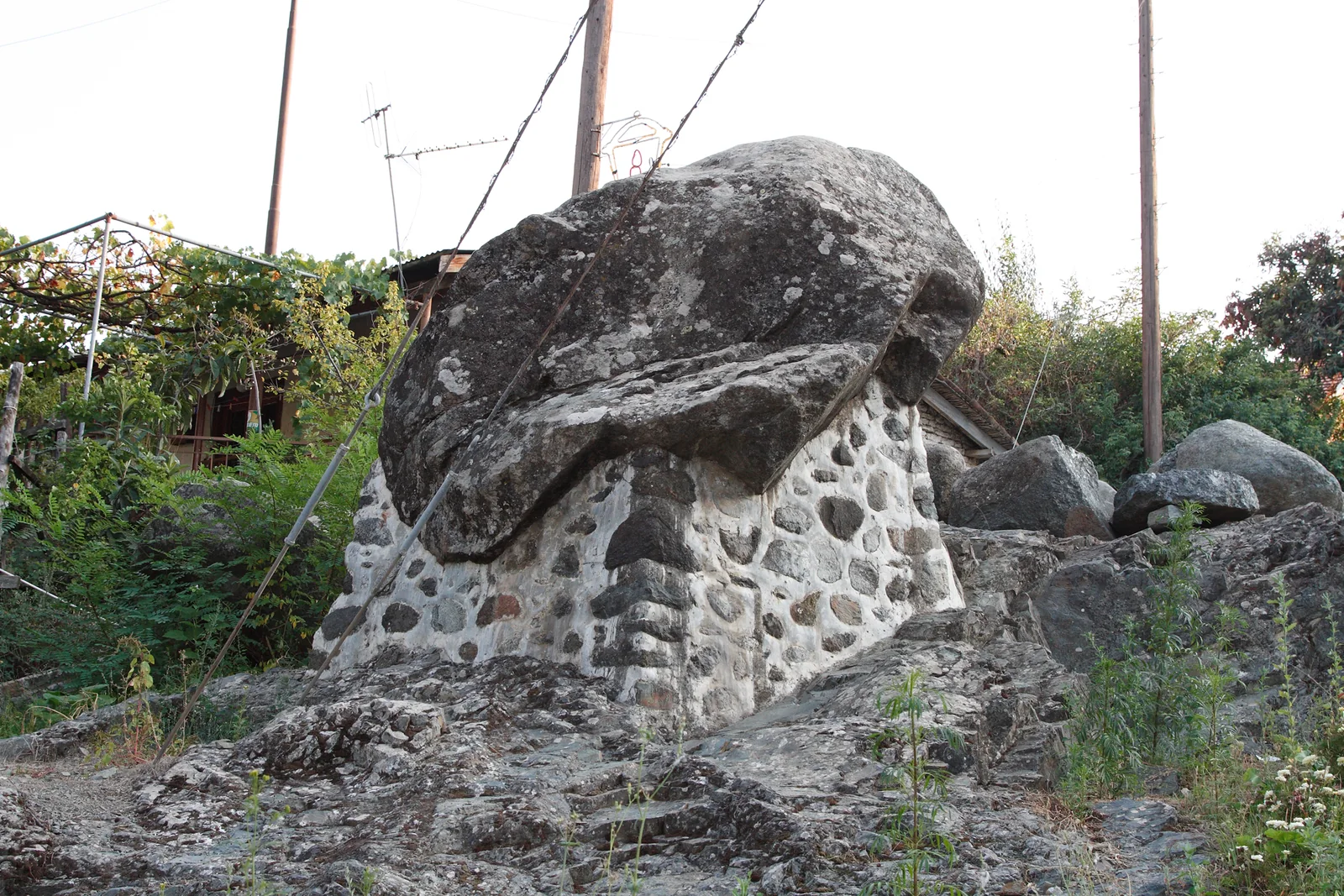
Kakopetria, at 667 metres, is the highest village in the Solea Valley of the Troodos, about 55 km from Nicosia. Its old quarter of stone-paved alleys and wooden balconies, built between two streams that meet in the village, has been restored and declared a protected cultural heritage site.
- What to see: The Church of the Transfiguration of the Saviour (1520), the Linos Museum with tools for making wine, bread and olive oil, the olive mill museum and the Mylos tis Gonias watermill, which ground grain from 1754. Just outside the village is Agios Nikolaos tis Stegis, one of the ten Troodos painted churches on the UNESCO World Heritage List, with murals from the 11th to the 17th century.
- What to do: Walk the 1 km "Monopati tis Vateris" in the village, or, for keen walkers, the Kannoures – Agios Nikolaos tis Stegis trail from the Troodos (9 km, about 3 hours, a demanding downhill). More trails are in our hiking routes finder.
- Where to eat: Mylos, the restaurant of The Mill hotel, is known for trout; Drosseri Potamia is a family-run spot by the river with grills and meze; Ayis Giorkis serves souvla, sheftalia and snails (closed Mondays); Potzie Poda does generous grills and burgers (closed Tuesdays).
- Coffee and sweets: Galini Café is a stone-and-wood café with homemade sweets, a river view and a fireplace.
- Where to stay: The Mill hotel, in the old part of the village.
- When to go: Summer for cool mountain air, and spring and autumn for walking.
Map it · Walking route
A walk through old Kakopetria
- Church of the Transfiguration
- Old Kakopetria
- The Mill hotel
Opens Google Maps with every stop in order. Opening hours can change, so check before you go.
Kalopanagiotis: tradition and tranquillity in the Troodos Mountains
Nestled in the Marathasa Valley, about 70 km from Nicosia, Kalopanagiotis is one of the most breathtaking villages in Cyprus. It is known for its sulphur springs and for the Monastery of Agios Ioannis Lampadistis, a UNESCO World Heritage site with three Byzantine churches under one roof and frescoes from the 9th to the 15th century.
- What to see: The monastery and its Byzantine Museum, the 16th-century Venetian stone bridge, which until recently was the only way between the village and the monastery, the Kykko watermill and the churches of Agios Andronikos and Archangelos Michael.
- What to do: Stroll the cobbled lanes of restored stone houses, walk the 4 km Kalopanayiotis – Oikos nature trail, or book a treatment at the spa of Casale Panayiotis.
- Where to eat: Casale Panayiotis runs several places in the village: Byzantino for Cypriot dishes such as meze, moussaka and koupepia, Loutraki for grills with valley views, Pantheon for casual food and ice cream, and Cava, a wine cellar and cocktail bar.
- Where to stay: Casale Panayiotis is a boutique spa hotel with 41 rooms spread across seven restored village houses, open all year. The village also has smaller agrotourism guesthouses with mountain views.
- When to go: Spring and autumn are green and quiet midweek. Pair it with a visit to Kykkos Monastery higher up in the Troodos.
Map it · Walking route
A walk through Kalopanagiotis
- Monastery of Agios Ioannis Lampadistis
- Venetian bridge
- Casale Panayiotis
Opens Google Maps with every stop in order. Opening hours can change, so check before you go.
Pedoulas: cherries and a UNESCO church
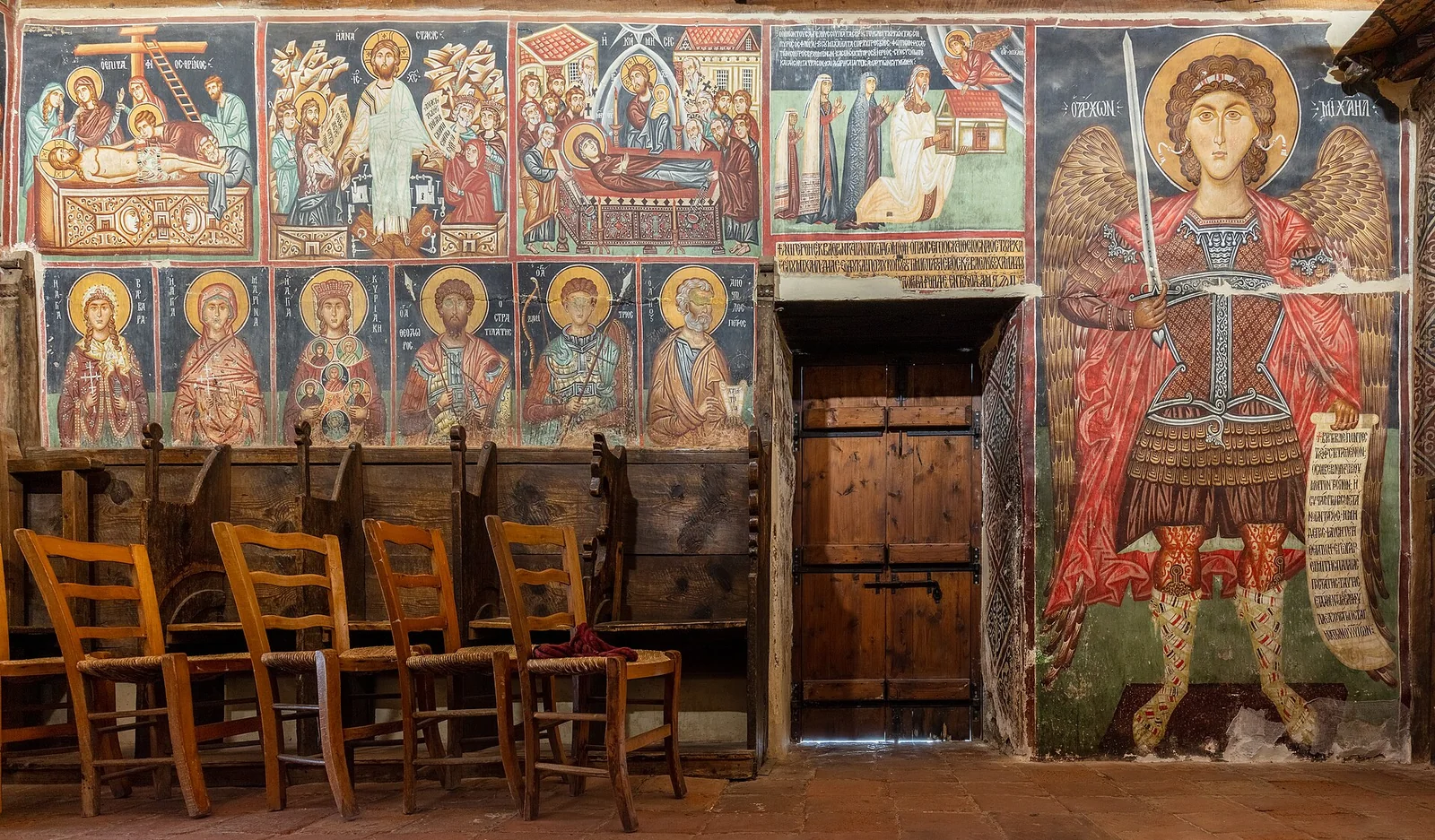
Pedoulas sits at 1,100 metres at the head of the Marathasa Valley, 75 km from Nicosia and 55 km from Limassol. It is famous for its cherries and for the small church of Archangelos Michael, painted in 1474 and on the UNESCO World Heritage List.
- What to see: The Archangelos Michael church, the Byzantine Museum opposite it with icons from the 12th to the 20th century, the Folk Art Museum, and the church of the Holy Cross with the largest cross in Cyprus (25.3 metres).
- What to do: Taste the water from the village springs, walk among the cherry orchards and combine the village with Kalopanagiotis, just down the valley.
- Coffee: Capuralli Café hosted events during the 2026 Cherry Festival.
- When to go: The Pedoulas Cherry Festival in June (the 8th edition was on 13–14 June 2026), with music, dancing, shadow theatre and free cherries.
Map it · Driving route
The Troodos villages and painted churches by car
- Kakopetria
- Agios Nikolaos tis Stegis
- Pedoulas
- Kalopanagiotis
Opens Google Maps with every stop in order. Opening hours can change, so check before you go.
Platres: waterfalls and forest walks
Platres, at about 1,100 metres in Limassol district and about 39 km from Limassol, became a British hill resort from 1878 and is still where islanders head to escape the summer heat. The Greek poet Giorgos Seferis mentions it in one of his most famous poems.
- What to see: The Caledonia waterfall, one of the highest in Cyprus, the Millomeris waterfall, the church of Panagia Faneromeni (1880), the Venetian Milia bridge and the Cultural Centre with old village photographs.
- What to do: Walk the Kalidonia trail (3 km, about 1.5 hours) to the Caledonia waterfall, the easy Millomeris trail (about 1.2 km) from the village entrance, or the circular Psilodentro – Pouziaris trail (9 km). Our Troodos waterfalls guide has the details.
- Where to eat: Psilo Dentro is a riverside trout farm and restaurant, open in its current form since 1979, where trout is grilled on charcoal; Rendezvous Restaurant & Garden at the Petit Palais Hotel has a forest-view balcony and seasonal Mediterranean dishes.
- Coffee and sweets: Orosimo Café on Olympiou is an all-day café known for apple pie with ice cream, and Psilo Dentro brews coffee in hot sand.
- Where to stay: The Petit Palais Hotel in the village centre. See our Platres area guide for living here.
Map it · Walking route
Platres to the Millomeris waterfall on foot
- Panagia Faneromeni church
- Millomeris waterfall
Opens Google Maps with every stop in order. Opening hours can change, so check before you go.
Agros: roses, rose water and cured meats
Agros, at about 1,100 metres in the Pitsilia region of Limassol district and about 35 km north of Limassol, is built like an amphitheatre with views over the forest. It is known for Damask roses, rose water and the cured meats of Pitsilia.
- What to see: The church of Panagia Eleousa, with items from the old Monastery of Megas Agros, and the Frangoulides museum (visits by phone on 25 522144).
- What to do: See rose water being made at The Rose Factory, run by the Tsolakis family since 1948, taste lountza and smoked sausages at Teacher's Cold Cuts (Allantika tou Daskalou), and pick up spoon sweets at Niki's Sweets. Walkers can take the circular Agros – Kato Mylos trail (6 km) or the Lagoudera – Agros trail (6 km).
- When to go: The Agros Rose Festival in May (the 18th edition ran over two weekends, 9–10 and 16–17 May 2026), with rose-distilling workshops, stalls and music.
Fini: pottery, loukoumi and the Chantara waterfall
Fini (Foini) sits at 920 metres, 44 km from Limassol, above the Diarizos valley. It was once one of the three pottery centres of Cyprus, and it is also known for its own loukoumi.
- What to see: The Pilavakeion Museum, a private folk-art museum, the Chantara waterfall (about 8 metres), three old stone bridges and the church of Timios Stavros.
- What to do: Walk the easy Trooditissa – Foini trail (4.5 km, about 2 hours), which passes the Chantara waterfall, and look for clay pots in the village workshops.
- Where to eat: Phini Tavern has been open since 1983, with a fireplace and a terrace over the gorge, serving meze, kleftiko and local trout.
- When to go: The Foini Traditional Festival on the first Sunday of August, and the Grape Fest in September.
Map it · Driving route
A mountain day: Platres, Fini and Omodos
- Platres
- Caledonia waterfall
- Fini
- Chantara waterfall
- Omodos
Opens Google Maps with every stop in order. Opening hours can change, so check before you go.
Omodos: the best-known wine village
Omodos sits at 800 metres in the Krasochoria (wine villages) of Limassol district, 42 km from Limassol. Its stone-paved square, laid out in 1910, leads to the Holy Cross monastery, and the lanes around it are full of wineries, bakeries and lace shops.
- What to see: The Monastery of Timios Stavros (Holy Cross) with its old icons and woodcarvings, the Linos medieval wine press near the monastery, the Byzantine Icon Museum, the Museum of the 1955–59 Struggle and the centre for narrow-knit lace (ploumi). Next to the chapel of the Apostle Philip grows a laurel tree estimated at about 1,000 years old.
- What to do: Taste wine at Ktima Gerolemo (generally daily 10:00–15:30, check ahead), Linos Winery or Oenou Yi (Ktima Vasiliadis), including zivania and Commandaria, and buy narrow-knit lace in the lanes.
- Where to eat: Stou Kir Yianni is the best-known taverna, famous for "kotsi", pork leg slow-roasted for six hours with a Commandaria sauce; Makrinari has live music; Taverna tou Themistokli is a long-established classic; The Black Geese serves dinner with live music.
- Coffee and sweets: Arkatena Fotini, the Hadjistasou family bakery since 1935, makes arkatena bread and serves brunch, village breakfasts and halloumi pie; Platia Cafeteria, opposite the monastery, is known for loukoumades with coffee.
- Where to stay: The Stou Kir Yianni guest houses in a listed building in the centre, or To Katoi Holiday Homes.
- When to go: The three-day Holy Cross fair from 14 September, one of the largest religious fairs on the island, and the Wine Festival in August. Weekends are busy, so come midweek for quiet lanes.
Map it · Walking route
A walk through Omodos
- Omodos square
- Holy Cross monastery
- Linos wine press
- Arkatena Fotini
- Stou Kir Yianni
Opens Google Maps with every stop in order. Opening hours can change, so check before you go.
Pair it with our wine routes guide and 10 best wineries to visit.
Vasa: zivania and limestone lanes
Vasa (Koilaniou) sits at 750 metres, 35 km from Limassol, among vineyards next to Omodos. It is a limestone village of old wine presses and zivania stills.
- What to see: The Zivania Museum, the Museum of Primary Education, the Gothic-style church of the Annunciation (1896–1900), the 14th-century chapel of Agios Georgios with 15th-century frescoes, and the two-tier Gerovrysi stone bridge at the village entrance.
- What to do: Book a tour and tasting at Argyrides Winery, a family estate (by reservation only), and follow the riverside path from the Agios Georgios chapel when the water is low.
- Where to eat: Pyrgos Tavern serves rabbit or beef stifado and meze on a balcony over the vineyards, with a wood burner inside in winter.
- When to go: The Grape Fest in mid-September.
Arsos: a mountain gem with a big wine heart
Arsos is one of the largest wine villages in Cyprus. It sits at about 850 metres, 42 km from Limassol towards the Paphos border, with wide views over the valleys.
- What to see: The church of the Apostle Philip on the square, the chapel of Agia Mariamni beside it, the Folk Art Museum in a restored 19th-century house and a traditional distillery in the centre.
- What to do: Walk the 1.25 km "Six Fountains" trail, which links six old fountains along the river, and taste wine in the surrounding wineries.
- Where to eat: Agora Tavern on Apostolou Philippou Square, next to the church, serves stifado, meatballs, lountza and homemade sausages under a vine pergola, with a fireplace in winter.
- Where to stay: Several restored guesthouses and agrotourism houses in the village.
- When to go: The Grape Feast (palouze festival) at the end of September, and the fair of the Apostle Philip, the patron saint, on 14 November.
Vouni: a wine village with character
Vouni sits at around 800 metres about 35 km from Limassol, with narrow cobbled streets, traditional homes and old wine presses that recall its winemaking roots.
- What to see: The Oenology Centre near the village entrance, the Folk Art Museum, the Ecclesiastical Museum beside Timios Prodromos church with 16th-century icons, the old olive mill and the two reservoirs built in Venetian and Ottoman times.
- What to do: Follow Wine Route 4, which passes through the village, and visit the chapel of Panagia Peravouniotissa, about 1 km away.
- Where to eat: Oraia Ellas serves Greek-Cypriot home cooking in a whitewashed courtyard with blue doors (try the lamb and the babanatsa pie); Vouniotiko is family-run with a terrace and a fireplace; Lenias Tavern serves meze and a weekend "boukoma" village breakfast.
- Coffee: I Plateia is the last of the village's traditional kafeneia, open into the evening with wine and beer.
- Where to stay: Oinou Strata is an adults-only retreat with three suites, fireplaces and a wine bar.
- When to go: The Palouzes Festival in the third week of September (on 20 September in 2026), and the feast of the Transfiguration at the Chrysosotiros chapel on 6 August.
Lofou: cobbled lanes on a hilltop
Lofou sits on a hilltop at 780 metres, 26 km from Limassol, among vines and almond trees, and has kept its name since Byzantine times. It is compact, so it is easy to explore on foot.
- What to see: The 19th-century church of Panagia Chrysolofitissa, the chapel of Profitis Elias with views over the Kouris dam, the olive mill museum, the old school and the Elitzi fountain (1842).
- What to do: Walk the Lofou nature trail (about 1.5 km) to the Elitzi fountain, and try the beers of Bes Beer, a small craft brewery in the village (call ahead on 25 434100).
- Where to eat: Lofou Tavern, part of the Agrovino complex, serves moussaka, cooked dishes and grilled meze with produce from the owner's farm; Kamares Tavern is small and traditional, with a fireplace, in the heart of the village.
- Coffee: The Agrovino café, a few metres from the tavern, has a veranda for Cyprus coffee.
- Where to stay: Apokryfo, a boutique guesthouse with a pool and a candlelit restaurant, open all year; Agrovino, self-catering studios in a stone property from 1794.
- When to go: The Grape Fest at the end of September, and OenoFest in October.
Map it · Walking route
A walk through Lofou
- Panagia Chrysolofitissa church
- Kamares Tavern
- Lofou Tavern (Agrovino)
Opens Google Maps with every stop in order. Opening hours can change, so check before you go.
Lania: the artistic heart of the hills
Lania, at 570 metres about 25 km from Limassol, is one of the Commandaria villages and has been popular with painters, sculptors and artisans for decades. Homes are adorned with bougainvillea, jasmine and colourful pots.
- What to see: The old wine press and Commandaria Storage Museum, the old olive press, a restored traditional house and a shoemaker's workshop, the church of Panagia Valana and a protected old oak tree near the Agios Georgios chapel.
- What to do: Visit the artists' studios and galleries along the lanes.
- Where to eat: Lania Tavern has a green terrace at the village entrance and has served meze for about 30 years; Platanos Tavern, under a large plane tree, is known for its fluffy meatballs and is open all year.
- When to go: The "Lanes and Courtyards of Lania" weekend every May, when the women of the village open their courtyards, and the "Artists of Lania" open studios in October (11–12 October in 2025).
Map it · Driving route
The Limassol wine villages by car
- Lania
- Lofou
- Vouni
- Vasa Koilaniou
- Omodos
- Arsos
Opens Google Maps with every stop in order. Opening hours can change, so check before you go.
Kathikas: wineries on the Laona plateau
Kathikas sits at almost 700 metres on the Laona plateau, 23 km north of Paphos, and is one of the wine villages of the Paphos region, with houses over a century old.
- What to see: The chapel of Agios Onouphrios, Panagia Evaggelistria church and the Akamas Avifauna and Flora Visitor Centre in the village.
- What to do: Taste wine on the terrace of Vasilikon Winery, which also has a wine museum, or at Sterna Winery and its wine museum (Monday to Saturday, 09:00–17:00), and walk the easy circular Agiasma trail (2 km, about 45 minutes).
- Where to eat: To Stekki tou Panai, a family-run first-floor taverna with a balcony over the village, is known for its meat meze (closed Wednesdays); Yiannis Tavern has a covered rear terrace (closed Thursdays); Kyparissos Tavern on the Peyia road serves home cooking and set meze.
- Coffee and sweets: Kathikas Square Gin Bar, on the square, serves coffee, homemade cakes and waffles from the morning.
- When to go: Greek Orthodox Easter, when villagers carry the cross from Agios Onouphrios to Panagia Evaggelistria on Good Friday.
Read our Kathikas area guide for everyday life there.
Drouseia: sea views and weaving
Drouseia sits at about 630 metres, the highest point of the Laona plateau, about 30 km from Paphos and 10 km from Polis, with sweeping views to the sea and the Akamas.
- What to see: Stone houses with carved doorways, the 15th-century Agios Georgios Nikoxylitis monastery, the Weaving Museum and the Akamas Regional Museum of Rural Life.
- Where to eat and have a coffee: O Stathmos is a bar, café and taverna in the village, and the restaurant at Droushia Heights Hotel looks out over the plateau.
- Where to stay: Droushia Heights Hotel, a four-star hotel with a pool and spa, open all year.
Kritou Terra: hidden beauty and natural wonder
Among green hills at around 470 metres, about 3 km east of Drouseia, Kritou Terra looks out towards Chrysochou Bay and has one of the largest springs in Cyprus. It is the birthplace of Hadjigeorgakis Kornesios, the 18th-century Dragoman of Cyprus.
- What to see: The church of Panagia Chryseleousa, the Kefalovryso fountain (1908) with six spouts, the old communal wash house, and the restored Agia Aikaterini church about 3 km outside the village, which opens once a year on the saint's feast day.
- What to do: Walk to the Kremiotis waterfall, a short but steep walk with two falls and a cave (wear proper shoes; it flows best in spring or after rain).
- Where to eat: Mylari Bistro Tavern on the new square by the church has big views, modern meze and Sunday souvla.
Steni: colourful tradition near Polis
About 5 km from Polis Chrysochous, Steni is a working village of farming and animal husbandry, with a mild climate that makes it a year-round destination and views over Polis bay and the Paphos Forest.
- What to see: The Steni Museum of Village Life, which shows how farming shaped the community between around 1800 and 1945 (free, daily 10:00–16:00, closed on public holidays), and the ruins of Chrysolakourna monastery with Hellenistic tombs nearby.
- Where to eat and have a coffee: Neromylos Watermill Café Taverna, opposite the museum, is family-run with a meze platter (closed Wednesdays), and Kalimani Restaurant serves moussaka, kleftiko and sheftalia (closed Mondays).
- Where to stay: Harma Traditional Boutique Suites, six stone-built suites with a pool in the village centre. More choice is in nearby Polis and Latchi.
Map it · Driving route
The Paphos hill villages by car
- Kathikas
- Drouseia
- Kritou Terra
- Kremiotis waterfall
- Steni Museum of Village Life
Opens Google Maps with every stop in order. Opening hours can change, so check before you go.
Pano Panagia: the forest village of Makarios
Pano Panagia sits at about 850 metres, much of it within the Paphos Forest, about 33 km north-east of Paphos. It is the birthplace of Archbishop Makarios III.
- What to see: The Makarios family home, now a small museum, and Chrysorrogiatissa Monastery, founded in 1152 (free; 09:30–12:30 and 13:30–18:30 from May to August, with shorter hours the rest of the year), with its icon treasury and old monastery winery.
- What to do: Tour and taste at Vouni Panayia Winery (daily 09:00–15:30; lunch by reservation), recently refurbished, or walk the circular Vouni Panagias trail (9.8 km, about 3 hours, the hardest grade) from the square.
- Where to eat and have a coffee: Veranda tou Onirou is an all-day kitchen and café with vegetarian and vegan options (daily 10:00–22:00); Coffee Leaf, Snacks & More is a mountain café with sunset views.
- Where to stay: Oniro Hotel, a family-run hotel with 15 rooms.
- When to go: The Virgin Mary festival on 14–15 August, and the grape festival in mid-September.
Map it · Driving route
Pano Panagia and Chrysorrogiatissa
- Pano Panagia
- Chrysorrogiatissa Monastery
- Vouni Panayia Winery
Opens Google Maps with every stop in order. Opening hours can change, so check before you go.
Why do expats choose village life in Cyprus?
What makes these villages stand out is their way of life as much as their beauty. Village life offers something that city apartments and beach resorts cannot: community, calm and cultural depth.
- Affordable homes compared with coastal areas.
- A slower pace of lifePerfect for retirees or remote workers.
- Friendly neighbours and a strong sense of community.
- Access to nature, local food and authentic Cyprus gastronomy.
What are the top things to do in Cyprus's traditional villages?
- Watch lacemakers and silversmiths at work in Pano Lefkara.
- Taste wine and zivania in Omodos, Vasa, Arsos, Vouni or Kathikas.
- See a UNESCO painted church near Kakopetria, in Pedoulas or at Agios Ioannis Lampadistis in Kalopanagiotis.
- Walk to a waterfall from Platres, Fini or Kritou Terra, and find more trails in our hiking routes finder.
- Visit a rural museum in Fikardou, Kato Drys or Steni.
- Go to a village festivalRoses in Agros in May, cherries in Pedoulas in June, palouze in Vouni in September.
What is village life like through the seasons?
Village life in Cyprus follows a rhythm shaped by nature, tradition and local customs, and each season offers something different.
Spring: bloom and renewal
- Wildflowers cover the fields and hillside paths, ideal for photography and hiking.
- Easter is a major celebration across villages, with midnight services, fireworks and family feasts featuring lamb and Commandaria.
- Agros celebrates its roses in May, and Lania opens its courtyards.
Summer: festivals and long evenings
- Many villages host wine festivals, music nights and religious feasts, from the Lefkara Festival to the Feggaros Festival in Kato Drys.
- Shady courtyards and village cafes become lively hubs in the evenings, and the mountain villages stay cooler than the coast.
Autumn: harvest and heritage
- The grape harvest begins, and grape and palouze festivals take place in villages such as Arsos, Vouni, Vasa and Lofou.
- Cooler weather is ideal for exploring trails and archaeological sites.
Winter: cosy culture
- Mountain villages come alive with Christmas villages, such as Fikardou and Lefkara, church services and craft markets.
- Enjoy open fires, hearty stews and Cypriot hospitality in stone-built guesthouses and tavernas with fireplaces.
- Snow can dust the Troodos peaks, turning villages such as Kalopanagiotis into winter wonderlands.
Why visit rural Cyprus?
Exploring traditional villages is one of the most meaningful things to do in Cyprus. Whether you are sipping wine in a shaded courtyard, wandering cobblestone alleys or watching the sunset from a mountain ridge, these villages offer connection as well as tourism. For anyone curious about living in Cyprus, spending time here is a glimpse of what life can be like when it slows down. Opening hours and menus change, so it is always worth checking before you go.
Plan my trip
Want us to plan your days in Cyprus?
Tell us where you’re going, for how many days and what you love. We’ll send you a plan made for you, with places to see, where to eat and a Google Maps route for each day.
Recommended for this guide
Contains affiliate links Booking.com
The widest choice of hotels, apartments and villas, with free cancellation on many rooms.
Find hotels in Cyprus
Tours & activities
 GetYourGuide
Skip-the-line tickets, day trips and guided tours, usually with free cancellation up to 24 hours before.
See things to do in Cyprus
Frequently asked questions
What are the most beautiful traditional villages in Cyprus?
Pano Lefkara, Omodos, Kakopetria, Kalopanagiotis, Lofou, Fikardou, Pedoulas, Lania and Kathikas are among the most loved, each with stone lanes, old churches and local food. This guide covers 21 villages across the island.
What is the best way to explore traditional villages in Cyprus?
Hire a car and group villages by area: the Larnaca hills (Lefkara, Kato Drys, Tochni), the Limassol wine villages (Omodos, Vasa, Arsos, Vouni, Lofou, Lania), the Troodos (Kakopetria, Pedoulas, Kalopanagiotis, Platres) or the Paphos hills (Kathikas, Drouseia, Kritou Terra). Each area has a Google Maps day route in this guide.
Where can I eat in Omodos?
Stou Kir Yianni is known for slow-roasted pork leg with Commandaria sauce, and Makrinari, Taverna tou Themistokli and The Black Geese are other options. For coffee, Arkatena Fotini bakes arkatena bread and Platia Cafeteria faces the monastery.
Can I live in one of these villages as a foreigner?
Yes. Many expats have settled in villages such as Lania, Vouni, Tochni and the Lefkara area for the peaceful lifestyle and lower cost of living.
Are there festivals in these villages?
Yes. Highlights include the Lefkara Festival in August, the Pedoulas Cherry Festival in June, the Agros Rose Festival in May, the Omodos fair from 14 September, and grape and palouze festivals in Vouni, Arsos, Vasa and Lofou in September.
Can Expatify plan a village day for me?
Yes. Fill in our Plan my trip form with where you are going, how many days you have and what you enjoy, and we will email you a day-by-day plan with a Google Maps route for each day.
Useful links
Sources (76)
- Fikardou Christmas Village 2026-27 programme – Deputy Ministry of Tourism (visitcyprus.com, checked 19 November 2026)
- Christmas Villages 2026-27: opening days – Heartland of Legends, Deputy Ministry of Tourism (checked 2 November 2026)
- Lefkara village – Deputy Ministry of Tourism (visitcyprus.com)
- Local Museum of Traditional Embroidery and Silversmith-work, Lefkara – Deputy Ministry of Tourism
- Lefkara – Larnaka Tourism Board
- Museum of Lefkara – Lefkara Municipality
- Lefkara Laces or Lefkaritika – Cyprus National Commission for UNESCO
- Restaurant review: House 1923, Pano Lefkara – Cyprus Mail (19 Nov 2025)
- Lefkara – Christmas Villages 2026-27 – Deputy Ministry of Tourism (visitcyprus.com)
- The Agora Hotel, Pano Lefkara – Mr & Mrs Smith
- 5 mountain cafés for Cypriot coffee, sweets and backgammon – FastForward
- Kato Drys village – Deputy Ministry of Tourism (visitcyprus.com)
- Kato Drys – Larnaka Tourism Board
- Spring outing to Kato Drys – Larnaka Tourism Board
- Kato Drys – Cyprus Agrotourism Company
- Tochni village – Deputy Ministry of Tourism (visitcyprus.com)
- Tochni – Larnaka Tourism Board
- Tochni Tavern: authentic Cypriot cuisine – FastForward
- Tochni – Cyprus Agrotourism Company
- Fikardou village – Deputy Ministry of Tourism (visitcyprus.com)
- Fikardou – Christmas Villages 2026-27 – Deputy Ministry of Tourism (visitcyprus.com)
- Fikardou village – Visit Nicosia
- Omodos village – Deputy Ministry of Tourism (visitcyprus.com)
- Omodos – All About Limassol (Limassol Tourism Board)
- 11 reasons to spend a weekend in Omodos – dom.com.cy (11 Sep 2026)
- Fotini Arkatena, Omodos – All About Limassol
- Wineries – Limassol Tourism Board
- Lofou village – Deputy Ministry of Tourism (visitcyprus.com)
- Lofou – All About Limassol
- Lofou Tavern – All About Limassol
- Agrovino, Lofou – Cyprus Agrotourism Company
- Apokryfo, Lofou – i-escape
- OenoFest 2025 in Lofou – FastForward
- Vasa Koilaniou village – Deputy Ministry of Tourism (visitcyprus.com)
- Pyrgos Tavern, Vasa – All About Limassol
- Arsos village – Deputy Ministry of Tourism (visitcyprus.com)
- Agora Tavern, Arsos – All About Limassol
- Vouni – All About Limassol (Limassol Tourism Board)
- Palouzes Festival in Vouni – Limassol Tourism Board
- Oraia Ellas, Vouni – All About Limassol
- Traditional coffee shops of Limassol – All About Limassol
- Lania village – Deputy Ministry of Tourism (visitcyprus.com)
- Laneia – All About Limassol
- Artists of Lania, 11–12 October 2025 – ArtCy
- Kakopetria village – Deputy Ministry of Tourism (visitcyprus.com)
- Christmas in Kakopetria: 5 taverns – FastForward (29 Dec 2025)
- Kannoures – Agios Nikolaos tis Stegis nature trail – Deputy Ministry of Tourism
- Kalopanagiotis village – Deputy Ministry of Tourism (visitcyprus.com)
- Painted Churches in the Troodos Region – UNESCO World Heritage Centre
- Casale Panayiotis – i-escape
- Pedoulas village – Deputy Ministry of Tourism (visitcyprus.com)
- 8th Pedoulas Cherry Festival, 13–14 June 2026 – Pedoulas Community
- Two days of cherries and village fun – Cyprus Mail (6 Jun 2026)
- Platres village – Deputy Ministry of Tourism (visitcyprus.com)
- Kalidonia nature trail – Deputy Ministry of Tourism
- Millomeris waterfall trail, Platres – All About Limassol
- Psilo Dentro, Platres – All About Limassol
- Orosimo Café, Platres – All About Limassol
- Agros village – Deputy Ministry of Tourism (visitcyprus.com)
- Rose festival returns to Agros across two weekends – Politis
- Taking time to smell the roses – Cyprus Mail
- Nature trails list – Department of Forests
- Foini village – Deputy Ministry of Tourism (visitcyprus.com)
- Phini Tavern – All About Limassol
- Trooditissa – Foini nature trail – Deputy Ministry of Tourism
- Kathikas village – Deputy Ministry of Tourism (visitcyprus.com)
- Vasilikon Winery
- Free wine for all at this village event – Cyprus Mail (24 Dec 2025)
- Drouseia village – Deputy Ministry of Tourism (visitcyprus.com)
- Droushia Heights Hotel – dining
- Kritou Terra village – Deputy Ministry of Tourism (visitcyprus.com)
- The Steni Museum of Village Life – Deputy Ministry of Tourism (visitcyprus.com)
- Pano Panagia village – Deputy Ministry of Tourism (visitcyprus.com)
- Chrysorrogiatissa Monastery – Deputy Ministry of Tourism (visitcyprus.com)
- Where Cyprus winemakers dare – Cyprus Mail (3 Feb 2025)
- Lanes and courtyards of Lania open again – Cyprus Mail (5 May 2026)