Quick answer
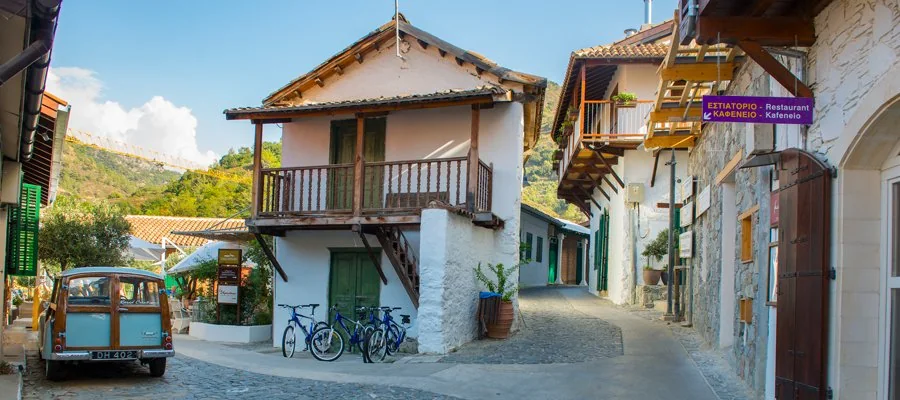
The best villages to visit in Cyprus are Lefkara, Omodos, Lofou, Kakopetria, Kalopanagiotis, Fikardou, Platres, Agros, Kathikas and Tochni. They range from the Troodos Mountains to the Paphos hills and the Larnaca countryside, and they offer UNESCO-listed Byzantine churches, Lefkara lace (on UNESCO's intangible heritage list since 2009), wine villages and stone-built lanes. Late September brings grape festivals, and Fikardou and other Christmas Villages open from 21 November 2026 to 6 January 2027.
- Lefkara lace was inscribed on UNESCO's Representative List of the Intangible Cultural Heritage of Humanity in 2009.
- Fikardou was declared an Ancient Monument in 1978 and won a Europa Nostra award in 1987; cars are not allowed in the village.
- Ten painted churches of the Troodos are on the UNESCO World Heritage List, including Agios Nikolaos tis Stegis near Kakopetria and Agios Ioannis Lampadistis in Kalopanagiotis.
- Legend says Leonardo da Vinci visited Lefkara in 1481 and bought a lace altar cloth for Milan Cathedral.
- Omodos holds one of the biggest religious fairs on the island every 14 September, and Lofou celebrates the harvest with a Grape Fest at the end of September.
Some of the most rewarding days out in Cyprus happen away from the coast, in stone-built villages with Byzantine churches, wine presses and craft workshops. Here are ten villages worth the drive, spread across the Troodos Mountains, the Limassol wine country, the Paphos hills and the Larnaca countryside.
The 10 villages at a glance
| # | Village | District | Known for | Good time to go |
|---|---|---|---|---|
| 1 | Lefkara | Larnaca | UNESCO-listed lace, filigree silver | August (Lefkara Festival) |
| 2 | Fikardou | Nicosia | Protected Ancient Monument, car-free | 21 Nov – 6 Jan (Christmas Village) |
| 3 | Omodos | Limassol | Holy Cross monastery, wine, Zivania | 14 September fair |
| 4 | Lofou | Limassol | Cobbled lanes, harvest Grape Fest | End of September |
| 5 | Kakopetria | Nicosia | Protected old quarter, UNESCO church nearby | Summer (mountain resort) |
| 6 | Kalopanagiotis | Nicosia | UNESCO-listed monastery, sulphur springs | Pair with Kykkos |
| 7 | Platres | Limassol | Caledonia waterfall, nature trails | Overnight stay |
| 8 | Agros | Limassol | Roses and rose oil, cured meats | Workshop visits |
| 9 | Kathikas | Paphos | Wine village, Easter traditions | Greek Orthodox Easter |
| 10 | Tochni | Larnaca | "Tochni stone" houses, cycling | Cycling day |
1. Lefkara
Lefkara, split into Pano and Kato Lefkara, sits at 650 metres at the foot of the Troodos Mountains, 43 km from Larnaca. It is world-renowned for lace embroidery and filigree silver, crafts practised in the village since Venetian times.
Lefkara lace (lefkaritika) was inscribed on UNESCO's Representative List of the Intangible Cultural Heritage of Humanity in 2009. The tradition dates back to at least the 14th century and combines hemstitch, cut work, satin-stitch fillings and needlepoint edgings, with geometric motifs drawn from ancient Greek and Byzantine art. Legend has it that Leonardo da Vinci visited in 1481 and bought a lace altar cloth for Milan Cathedral.
What to see: the Museum of Traditional Embroidery and Silversmithing, the Lefkara Handicraft Centre, the Folklore Museum, the Church of Timios Stavros and the Chapel of Archangelos Michail in Kato Lefkara, with 12th- and 15th-century frescoes. When to go: the Lefkara Festival each August brings music, dance, theatre and craft exhibitions. Thinking of living there? Read our Lefkara area guide.
2. Fikardou
Fikardou, at about 900 metres in the Pitsilia region of Nicosia district, is almost deserted, and that is its charm. The Department of Antiquities declared the whole village an Ancient Monument in 1978, and it won a Europa Nostra award in 1987. Vehicles are not allowed in, so you walk its lanes of restored 18th-century houses.
What to see: the House of Katsinioros and the House of Achilleas Dimitris, both museums of rural life, and the 16th-century church of Saints Peter and Paul. The Monastery of Machairas is less than 15 minutes away. The name is thought to come from a Greek phrase meaning "den of fugitives". When to go: Fikardou is one of the official Christmas Villages, open from 21 November 2026 to 6 January 2027.
3. Omodos
Omodos sits at 800 metres in the Krassochoria wine area of Limassol district, 42 km from Limassol. It is known for wine, Zivania, narrow-knit lace and arkatena bread.
What to see: the Monastery of Timios Stavros (Holy Cross) with its old icons and woodcarvings, a medieval wine press, local wineries, the Icon Museum and a centre for preserving narrow-knit lacing. When to go: every 14 September the village holds one of the biggest religious fairs on the island, lasting three days in the square in front of the monastery. Combine it with our wine routes guide.
4. Lofou
Lofou sits on a hilltop at 780 metres, 26 km from Limassol, and has kept its name since Byzantine times. It is renowned for its old architecture and winding cobbled streets, surrounded by vines and almond trees.
What to see: the 19th-century church of the Annunciation, the chapel of Prophet Elias, a small agricultural museum, the old school and the Elitji fountain, dating from 1842. When to go: the Grape Fest at the end of September marks the harvest, with traditional grape-juice treats, folk entertainment and wine tasting.
5. Kakopetria
Kakopetria lies in the Solea Valley of the Troodos, in Nicosia district, among pine forests. Its old quarter of narrow stone-paved alleys and wooden balconies has been restored and declared a protected cultural heritage site.
What to see: the Church of the Transfiguration in the old village, the Linos Museum, an olive mill museum and the Mylos tis Gonias watermill, which ground grain from 1754. Five kilometres away is Agios Nikolaos tis Stegis (St Nicholas of the Roof), one of the ten Troodos painted churches on the UNESCO World Heritage List, with murals from the 11th to the 17th century. When to go: it is a popular summer resort, so come in summer for cooler mountain air.
6. Kalopanagiotis
Kalopanagiotis is in the Marathasa Valley, 70 km from Nicosia, and is known for its sulphur springs. The Monastery of Agios Ioannis Lampadistis is on the UNESCO World Heritage List and contains three Byzantine churches with frescoes from the 9th to the 15th century.
What to see: the monastery and the 16th-century Venetian stone bridge, which until recently was the only way between the village and the monastery. When to go: no fixed festival is listed, so plan it as a Marathasa day trip, perhaps with Kykkos Monastery visit. More ideas are in our traditional villages guide.
7. Platres
Platres sits at 1,100 metres in the Troodos, in Limassol district It has a theatre-like layout and is a popular holiday destination with hotels. The Greek poet Giorgos Seferis mentions Platres in one of his most famous poems.
What to see: Caledonia, one of the highest waterfalls in Cyprus, believed to have been named by English or Scottish visitors in 1878, plus nature trails and old village photographs at the Cultural Centre. When to go: it works well as an overnight stop for walking; see our Troodos waterfalls guide and our Platres area guide.
8. Agros
Agros, at 1,100 metres in the Pitsilia region of Limassol district, has a theatre-like layout with panoramic forest views. It is known for roses, and local workshops show rose-oil distillation as well as the making of lountza, hiromeri, marmalades and sweets. When to go: the tourism board lists no fixed festival date, so it is best planned around a visit to the local workshops, and you can make a day of the Pitsilia region.
9. Kathikas
Kathikas sits at almost 700 metres, about 23 km north of Paphos, and is one of the wine villages of the Paphos region. It keeps houses over a century old, many old churches and a small donkey sanctuary.
When to go: Greek Orthodox Easter is the main festival. On Good Friday villagers re-enact the Passion, carrying the cross from the chapel of Agios Onouphrios to Panagia Evaggelistria church. Our Kathikas area guide covers everyday life there.
10. Tochni
Tochni lies about 36 km south-west of Larnaca and is described as one of the oldest villages on the island. Its houses are built from locally quarried limestone known as "Tochni stone".
What to see: a Latin church rebuilt on the site of one said to have been founded by St Helena on her return from the Holy Land, the Orthodox church of Agios Constantinos and Agia Eleni, and a small Byzantine museum. Bike centres and horse riding make it a good base for cycling. When to go: the tourism board lists no fixed festival date, so plan it as an active day out on two wheels or on horseback.
Related guides
Recommended for this guide
Contains affiliate links Booking.com
The widest choice of hotels, apartments and villas, with free cancellation on many rooms.
Find hotels in Cyprus
Tours & activities
Booking.com
The widest choice of hotels, apartments and villas, with free cancellation on many rooms.
Find hotels in Cyprus
Tours & activities
 GetYourGuide
Skip-the-line tickets, day trips and guided tours, usually with free cancellation up to 24 hours before.
See things to do in Cyprus
Flights & car hire
GetYourGuide
Skip-the-line tickets, day trips and guided tours, usually with free cancellation up to 24 hours before.
See things to do in Cyprus
Flights & car hire
 Skyscanner
Search every airline flying out of Larnaca and Paphos at once and set price alerts.
Search flights
Skyscanner
Search every airline flying out of Larnaca and Paphos at once and set price alerts.
Search flights
Frequently asked questions
What is the most beautiful village in Cyprus?
It depends on what you like. Lefkara is famous for lace and silver, Omodos and Lofou for wine and cobbled streets, and Kakopetria and Kalopanagiotis for mountain scenery and UNESCO-listed Byzantine churches.
Which Cyprus villages have UNESCO-listed churches?
Ten painted churches of the Troodos are on the UNESCO World Heritage List. They include Agios Nikolaos tis Stegis, 5 km from Kakopetria, and the Monastery of Agios Ioannis Lampadistis in Kalopanagiotis.
Is Lefkara lace really on a UNESCO list?
Yes. Lefkara lace, or lefkaritika, was inscribed on UNESCO's Representative List of the Intangible Cultural Heritage of Humanity in 2009. The tradition dates back to at least the 14th century.
When are the grape festivals in Cypriot villages?
Lofou holds its Grape Fest at the end of September, with grape-juice treats, folk entertainment and wine tasting. Omodos holds a three-day religious fair from 14 September.
Which villages are good to visit at Christmas in Cyprus?
Fikardou is one of the official Christmas Villages, which run from 21 November 2026 to 6 January 2027 (inclusive). See our Kyperounta guide for another Troodos Christmas village.
Can you drive into Fikardou?
No. Vehicles are not allowed to enter Fikardou, so you park outside and walk in.
Useful resources
- Lefkara Laces or Lefkaritika – Cyprus National Commission for UNESCO
- Byzantine Route: 10 Painted Churches of Troodos – Deputy Ministry of Tourism (visitcyprus.com)
- Lefkara village – Deputy Ministry of Tourism (visitcyprus.com)
- Fikardou village – Deputy Ministry of Tourism (visitcyprus.com)
- Fikardou – Christmas Villages – Deputy Ministry of Tourism (visitcyprus.com)
- Omodos village – Deputy Ministry of Tourism (visitcyprus.com)
- Lofou village – Deputy Ministry of Tourism (visitcyprus.com)
- Kakopetria village – Deputy Ministry of Tourism (visitcyprus.com)
- Kalopanagiotis village – Deputy Ministry of Tourism (visitcyprus.com)
- Platres village – Deputy Ministry of Tourism (visitcyprus.com)
- Agros village – Deputy Ministry of Tourism (visitcyprus.com)
- Kathikas village – Deputy Ministry of Tourism (visitcyprus.com)
- Tochni village – Deputy Ministry of Tourism (visitcyprus.com)