Summarise this page 8 key points · 1 minute
- Is the power cut just your home?The EAC asks you to run through these checks before you call.
- When and how do you call EAC?your main switch is ON and you still have no power;
- How do you find out about planned power cuts?The EAC publishes faults and scheduled interruptions on its website, district by district, with the areas affected and the expected time the power will be back.
- How do you keep food and medicines safe in a power cut?A fridge should normally run at 5 °C or below.
- Who supplies your water, and who do you call about a leak?Since 1 July 2024, water supply has been run by the district local government organisations (EOAs), which took over from the old water boards and municipal water services.
- What do you do with a burst pipe?Close the shut-off valve (stopcock) just after your water meter, which stops water to all your internal plumbing.
- What do you do if you smell gas?This section is about LPG (liquefied petroleum gas), the gas used in Cypriot homes for cooking, heating and hot water, from a portable cylinder or from a bulk tank filled by a supplier.
- Landlord or tenant: who pays?Most rentals are governed by the written contract, and the law adds no automatic repair duty on the landlord.
Quick answer
For a power cut in Cyprus, first check whether your neighbours have power and whether your main switch has tripped, then call the Electricity Authority of Cyprus (EAC) fault line on 1800. Planned cuts are posted on the EAC website by district. Water leaks in the street go to your district's water organisation (in Limassol, EOA Lemesos on 25 271000, 24/7); for a leak inside your home, close the valve after your water meter and call a plumber. If you smell gas from an LPG cylinder or tank, do not touch switches, close the valve if it is safe, open windows, get out and call 112.
- Power cut: check your neighbours and your main switch first; if the problem is in the network, call EAC on 1800 (faults) or 1818 (bills and account).
- EAC lists faults and scheduled interruptions by district on its website; treat your wiring as live throughout a planned cut.
- Water: the network up to your meter is the water organisation's job; pipes after the meter are the owner's. In Limassol call EOA Lemesos on 25 271000, 24 hours a day.
- Burst pipe inside your home: close the shut-off valve after the meter, keep water away from electrics and call a plumber.
- Gas smell: no flames or switches, close the cylinder valve if safe, ventilate, leave and call 112 from outside.
Lights out, water pouring through the ceiling or a smell of gas in the kitchen? In Cyprus, power faults go to the Electricity Authority of Cyprus (EAC) on 1800, leaks in the street go to your district's water organisation, and a strong gas smell means getting out and calling 112. If anyone is hurt, or there is fire or a risk of explosion, always call 112 first.
Below we explain what to check before you call, how to find planned power and water cuts, what to do with a burst pipe or a leaking gas cylinder, and who pays if you rent. Numbers were checked October 2026.
Who do you call for what?
| Problem | First check | Who to call |
|---|---|---|
| No electricity | Neighbours' lights; your main switch by the meter | EAC faults 1800 |
| Fallen or damaged power line | Keep well away | EAC 1800; 112 if there is fire or someone is hurt |
| Bill or account question | Your latest bill | EAC 1818 |
| Leak in the street or no water | Announced works or faults | Your district water organisation (EOA) or community council |
| Leak or burst pipe inside your home | Close the valve after the meter | A plumber; your landlord if you rent |
| Gas smell from an LPG cylinder or tank | Close the valve if safe; ventilate | 112 from outside if the smell persists; your gas supplier |
Is the power cut just your home?
The EAC asks you to run through these checks before you call. Many cuts turn out to be your own main switch tripping, and if you reset it yourself the power is back at once and you avoid the charge for an EAC team visit.
- Look at your neighbours. If the whole street is dark, it is a network fault or a planned cut.
- Check for a notice. Look for an EAC notice about a scheduled interruption, an announcement in the press, on radio or TV, or a disconnection notice for an unpaid bill.
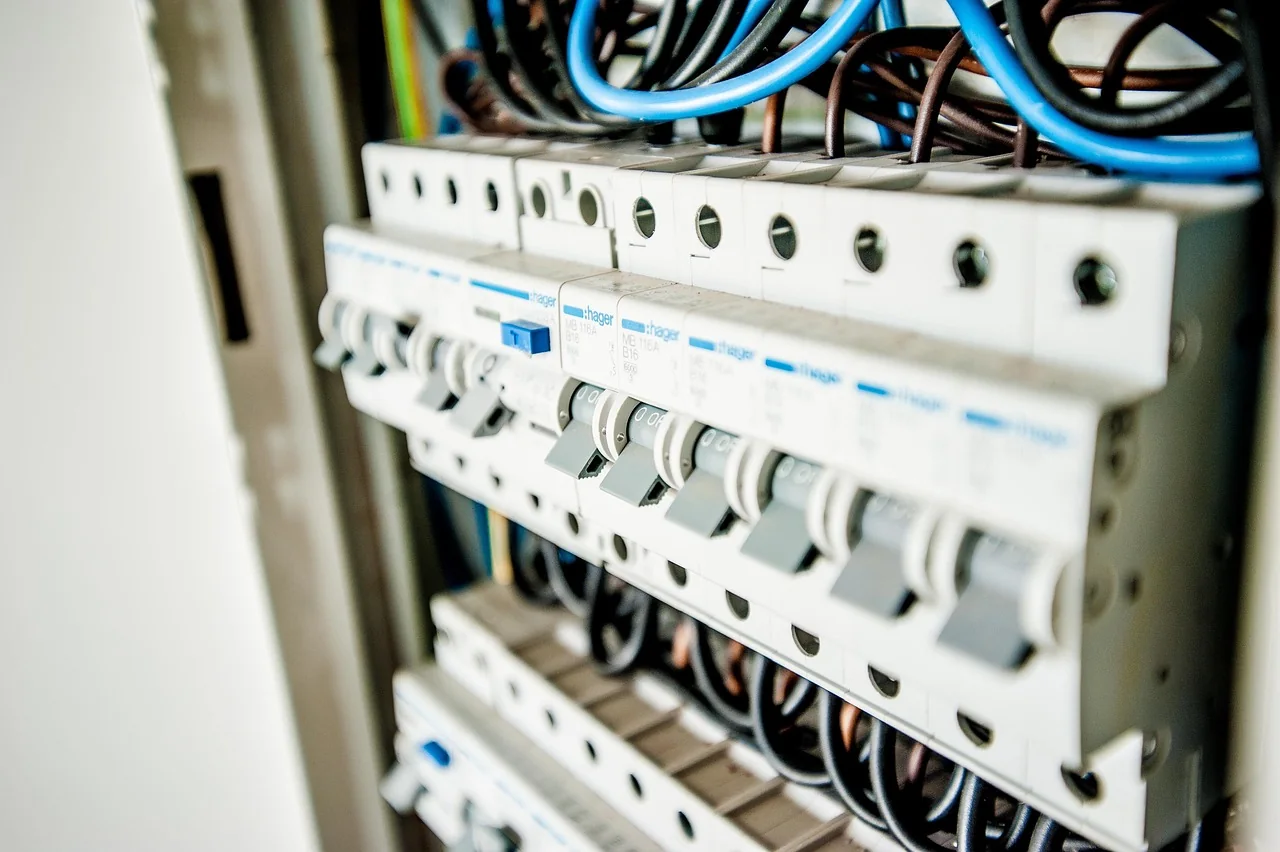
- Go to your meter and main (automatic) switch. If it has moved from ON (I) to OFF (O), switch it back on once.
- If it trips again, there is a fault in your own wiring or an appliance. Call a licensed electrician; unplugging a few appliances to reduce the load can help in the meantime.
- If only some rooms are off, check the circuit breakers on the distribution board inside your home and switch any that have tripped back on. If the problem continues, call an electrician.
Some meters have an EAC circuit breaker next to them instead of a fuse. If it is at O, move it to I. If it keeps tripping, you are probably overloading the supply; an electrician can check, and you can apply to EAC for a higher capacity.
The EAC is responsible up to and including its meter. It cannot be called for problems inside your home beyond the meter: those need a licensed electrician.
When and how do you call EAC?
Call 1800 if:
- your main switch is ON and you still have no power;
- there is a general outage in your area;
- you have tried the checks above and cannot restore the supply.
Give your exact location (district, town or village, street and a landmark) and say what you have noticed, for example a bang, sparks or a tree on the line. You can also report outages, street lighting and tree problems with the online form on the EAC website. For questions about your bill or account, call 1818 instead.
If a power line is down or damaged, move away at once, keep everyone else back and call 1800. If there is a fire, an injury or the cable is across a road, call 112 as well. Never try to move a cable yourself.
How do you find out about planned power cuts?
The EAC publishes faults and scheduled interruptions on its website, district by district, with the areas affected and the expected time the power will be back. Planned cuts for maintenance are also announced in the local press; in August 2026, for example, cuts in several Paphos villages were listed by village and time.
Two points from EAC announcements:
- Power can come back earlier than announced, so treat your electrical installation as live throughout the scheduled hours.
- Unplanned cuts happen too, from cables cut by contractors to trees falling on lines. In September 2026 parts of Nicosia and Larnaca lost power for a few hours for exactly these reasons, and in August 2026 an island-wide blackout was being investigated.
For how the summer peak affects the grid, see our summer survival guide.
How do you keep food and medicines safe in a power cut?
UK Food Standards Agency guidance, which applies just as well in Cyprus:
| Appliance | Stays cold for | Tip |
|---|---|---|
| Fridge | Up to about 4 hours | Keep the door shut |
| Full freezer | Up to about 48 hours | Keep the door shut |
| Half-full freezer | Up to about 24 hours | Group items together |
- A fridge should normally run at 5 °C or below. During a power cut, food is fine while the fridge stays below 8 °C.
- If the fridge has reached 8 °C or more, eat chilled food (meat, fish, ready-to-eat food, leftovers) within four hours or throw it away, unless the power returns within four hours.
- A cheap fridge thermometer tells you where you stand. In summer heat, times can be shorter than the estimates.
Medicines. If you keep insulin, eye drops, vaccines or other medicines in the fridge, check the patient leaflet for how long they can stay at room temperature, and ask a pharmacist if you are unsure. During a long summer cut, a cool bag with ice packs helps, but medicine should not touch the ice directly. For a night pharmacy, call 11892. If someone at home relies on powered medical equipment, such as oxygen or a home dialysis machine, ask the supplier now what to do in a power cut, and call 112 if a cut puts them in danger.
Other tips. Keep a torch and a charged power bank where you can find them in the dark. Switch off sensitive appliances, such as computers and air-conditioners, so they do not all come back on at once when the power returns.
Who supplies your water, and who do you call about a leak?
Since 1 July 2024, water supply has been run by the district local government organisations (EOAs), which took over from the old water boards and municipal water services. Community water supplies are being moved across in stages (EOA Lemesos, for example, says they will join later), so some villages are still supplied by their community council. Your water bill names your supplier and how to reach it.
| District | Water supplier | Fault line |
|---|---|---|
| Limassol | EOA Lemesos | 25 271000, 24/7 (eoalemesos.org.cy) |
| Nicosia | EOA Nicosia (Lefkosia) | See your water bill |
| Larnaca | EOA Larnaca | See your water bill |
| Famagusta (free area) | EOA Famagusta | See your water bill (eoaa.org.cy) |
| Paphos | EOA Paphos | See your water bill |
| Villages not yet covered | Community council | Community office |
EOAs post planned interruptions and faults on their websites, and the local press reports bigger cuts. If the water stops without notice, check there first before you call. For tariffs, water tanks and saving water, see our guide to water bills and water cuts.
Who is responsible for which pipe? EOA Lemesos explains the rule:
- Up to the meter: the water organisation looks after the network, the main pipes and your service connection. A leak in the road or pavement, or before your meter, is theirs: report it straight away.
- After the meter: the pipes inside your property are the owner's responsibility. Call a plumber.
- Apartment blocks with a central meter: the water organisation is responsible up to and including that meter; beyond it, the building's management committee is.
What do you do with a burst pipe?
- Turn off the water. Close the shut-off valve (stopcock) just after your water meter, which stops water to all your internal plumbing. Find your meter and this valve today, before you need them. Your home may also have other valves, for example on the pipe from a roof tank; ask your landlord or plumber to show you.
- Keep water away from electrics. If water is near sockets, light fittings or the distribution board, do not touch them; switch off the power at the main switch only if you can reach it from somewhere dry.
- Switch off the electric water heater if the leak is from the hot water system.
- Open the taps to drain the remaining water from the pipes, and move valuables out of the way.
- Call a plumber. If you rent, tell your landlord at once.
- Take photos and videos of the damage, for your landlord and your home insurance claim.
- Watch your next bill. In Limassol, if a leak pushes billed use above 120 m³ in a period, you can apply to EOA Lemesos for a bill review once the leak is fixed.
If water is coming from the flat above, knock on the door, then contact the building's management committee and, if you rent, your landlord.
What do you do if you smell gas?
This section is about LPG (liquefied petroleum gas), the gas used in Cypriot homes for cooking, heating and hot water, from a portable cylinder or from a bulk tank filled by a supplier. LPG is heavier than air, so it gathers near the floor and in low spaces, and it can catch fire some distance from the leak. Gas leaks from cylinders have caused serious explosions in Cypriot homes.
If you smell gas:
- No flames, no switches. Do not light anything, smoke or turn lights or appliances on or off.
- Turn off the appliance and close the valve on the cylinder or tank, if you can do it safely.
- Open doors and windows to let the gas out.
- If the smell is strong, or still there after you have closed the valve, get everyone out and call 112 from outside. The fire service deals with gas leaks.
- If the smell is faint and has gone, do not use the appliance again until it has been checked. Call the supplier for a bulk tank, or a qualified gas technician for a cooker or heater.
- If a fire starts, close the door on it, get everyone out and call 112.
Safe use of cylinders:
- Change cylinders in the open air if you can, or with windows and doors open, away from any flame.
- Close the valve on the empty cylinder before disconnecting it, and connect the new one fully before opening its valve.
- To check for leaks, brush soapy water onto the hose and joints and watch for bubbles. Never use a flame. Replace a cracked or perished hose.
- Store spare cylinders upright, outdoors where possible, never in a basement, under the stairs or in a cupboard with electrics.
- Keep the room ventilated when a gas heater is on, with a window slightly open. Our guide to heating your home in Cyprus compares safer options.
Landlord or tenant: who pays?
It depends mostly on your tenancy agreement:
- Most rentals are governed by the written contract, and the law adds no automatic repair duty on the landlord. Contracts usually make the landlord responsible for structural, plumbing and electrical faults and major appliances, and the tenant for day-to-day upkeep and for damage they cause.
- Rent-controlled tenancies (some properties built before the end of 1999 in controlled areas): the landlord must keep the property fit for the purpose it was let, including the roof, main pipes and wiring, unless the agreement says otherwise.
Whatever your contract says, act first to limit the damage (turn off the water or the gas), then tell your landlord straight away in writing, with photos and the time it happened. Keep receipts if you have to pay for an emergency repair. Our guide to renting in Cyprus explains what to look for in the repairs clause, and damp and mould in Cyprus homes covers what to do after a leak.
What to do next
- Save 1800 (EAC faults), 1818 (EAC accounts), your water supplier's fault line from your bill and 112 in your phone.
- Find your main electrical switch, your water meter and the shut-off valve after it, and your gas cylinder valve. Show everyone at home.
- Put a torch, a power bank and a fridge thermometer where you can find them in the dark.
- Read our guides to setting up electricity and water, your EAC bill and water bills and water cuts.
- Keep the wider list of numbers handy: see emergency numbers in Cyprus.
Recommended for this guide
Contains affiliate links Airalo
 Discover Cars
Frequently asked questions
What number do I call for a power cut in Cyprus?
Call the EAC on 1800, its faults line. First check whether your neighbours have power and whether the main switch by your meter has tripped to OFF, as resetting it yourself is faster and avoids a call-out charge.
How do I find out about planned power cuts in Cyprus?
The EAC publishes faults and scheduled interruptions by district on its website, and announces planned cuts in the press and on radio and TV. Power may come back earlier than announced, so treat your installation as live throughout.
Who do I call about a water leak in the street?
Your district's water organisation (EOA), or your community council in villages it does not yet cover. In the Limassol district, EOA Lemesos takes leak reports 24/7 on 25 271000. Your water bill shows who supplies you.
Who pays to fix a burst pipe in a rented home in Cyprus?
It depends on your contract. Leases usually make the landlord responsible for plumbing and electrical faults and the tenant for day-to-day upkeep and damage they cause. Stop the water first, then tell the landlord in writing with photos.
What should I do if I smell gas from a cylinder?
Do not use flames or electrical switches. Close the cylinder valve if you can do so safely, open doors and windows, get everyone out and call 112 from outside. The fire service deals with gas leaks.
How long does food stay safe in the fridge during a power cut?
UK food safety guidance says a closed fridge stays cold for up to four hours, a full freezer for up to 48 hours and a half-full one for about 24 hours. Keep the doors shut.
Useful links
- EAC – Faults and scheduled interruptionsChoose your district; faults line 1800
- EAC – Actions in case of a power cut
- EAC – Submit an incident online
- EOA Lemesos – Contact usFaults and emergencies 25 271000, 24/7
- EOA Lemesos – Faults and scheduled interruptions
- GOV.UK – Food safety in a power cut
Sources (25)
- Electricity Authority of Cyprus – Actions in case of a power cut
- Electricity Authority of Cyprus – Faults and scheduled interruptions
- Electricity Authority of Cyprus – Contact us (1800, 1818, head office)
- Electricity Authority of Cyprus – Submit an incident (damaged or fallen lines)
- Electricity Authority of Cyprus – Safety tips for the home
- Cyprus Mail – Planned power cuts across Paphos on Monday (27 August 2026)
- Cyprus Mail – EAC crews scramble as power cuts hit Nicosia and Larnaca (17 September 2026)
- Cyta – Special and short-code numbers (1800 EAC faults, 1818 EAC call centre)
- EOA Lemesos – Contact us (faults and emergencies 25 271000, 24/7)
- EOA Lemesos – Frequently asked questions: water supply
- EOA Lemesos – Who we are
- EOA Lemesos – Announcement 171/2026: water interruption due to a fault in Amathountos (July 2026)
- Cyprus Mail – Famagusta district water applications now online (19 March 2025)
- Politis – Water supply cut in Agios Andreas after fault, Nicosia District Organisation (8 May 2026)
- SigmaLive – Water supply disruptions in Livadia, Larnaca District Local Government Organisation (7 July 2026)
- Cyprus Mail – Paphos officials highlight serious water challenges, EOA Paphos (3 September 2025)
- Cyprus Mail – Ayia Napa tavern suffers gas leak from corroded cylinder (27 May 2023)
- Cyprus Mail – Man injured in Athienou gas leak explosion (14 February 2024)
- Calor – Gas bottle emergencies
- Queensland Government – Using natural gas and LPG safely
- Cheshire Fire and Rescue Service – Heaters: fire safety advice
- EKO Cyprus – LPG bulk (domestic heating, hot water and cooking)
- GOV.UK (Food Standards Agency) – Food safety in a power cut: advice for consumers (published 26 July 2023)
- Zeno Legal – Cyprus renting: tenant rights and contracts (updated June 2026)
- Landager – Cyprus residential maintenance obligations (May 2026)