Summarise this page 7 key points · 1 minute
- How do prescriptions for insulin and tablets work on GESY?Your personal doctor or specialist issues the prescription through the GESY system.
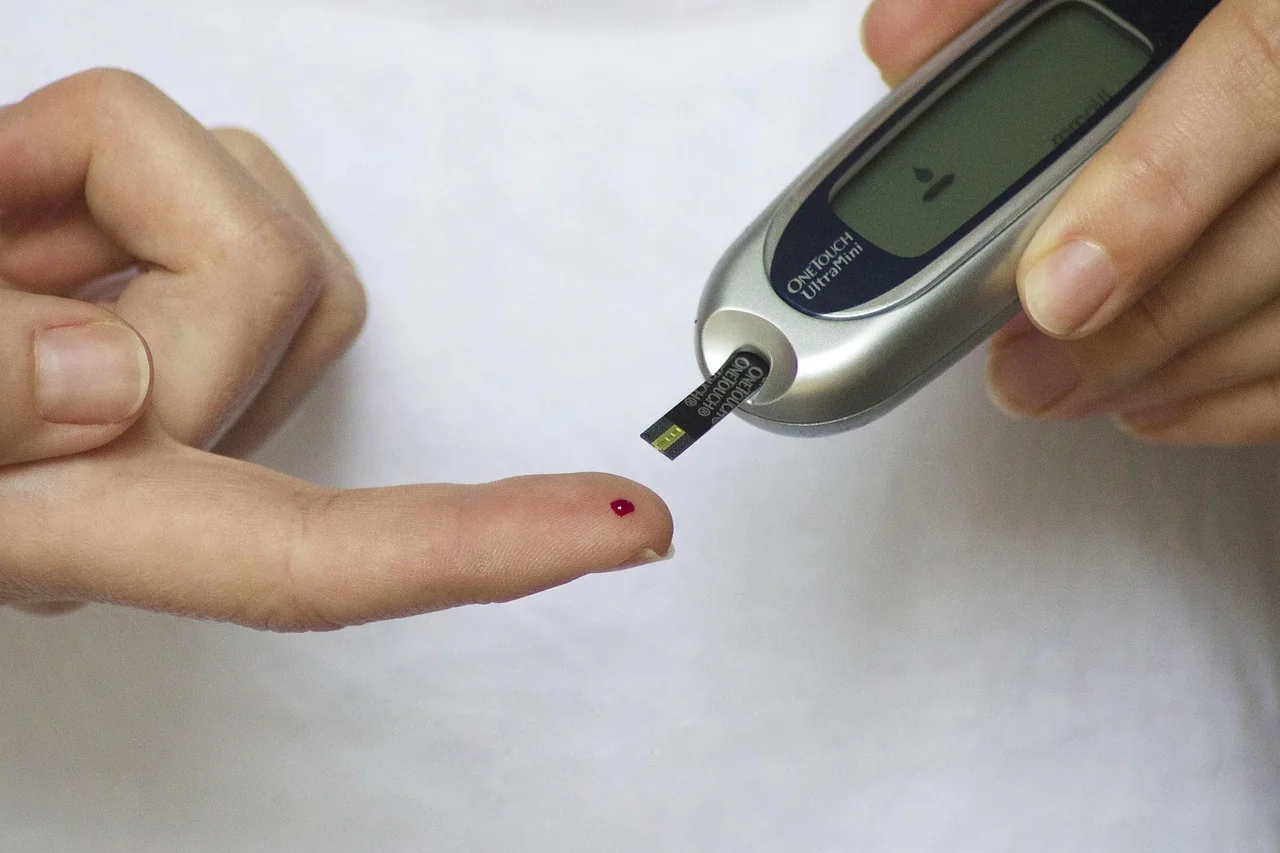
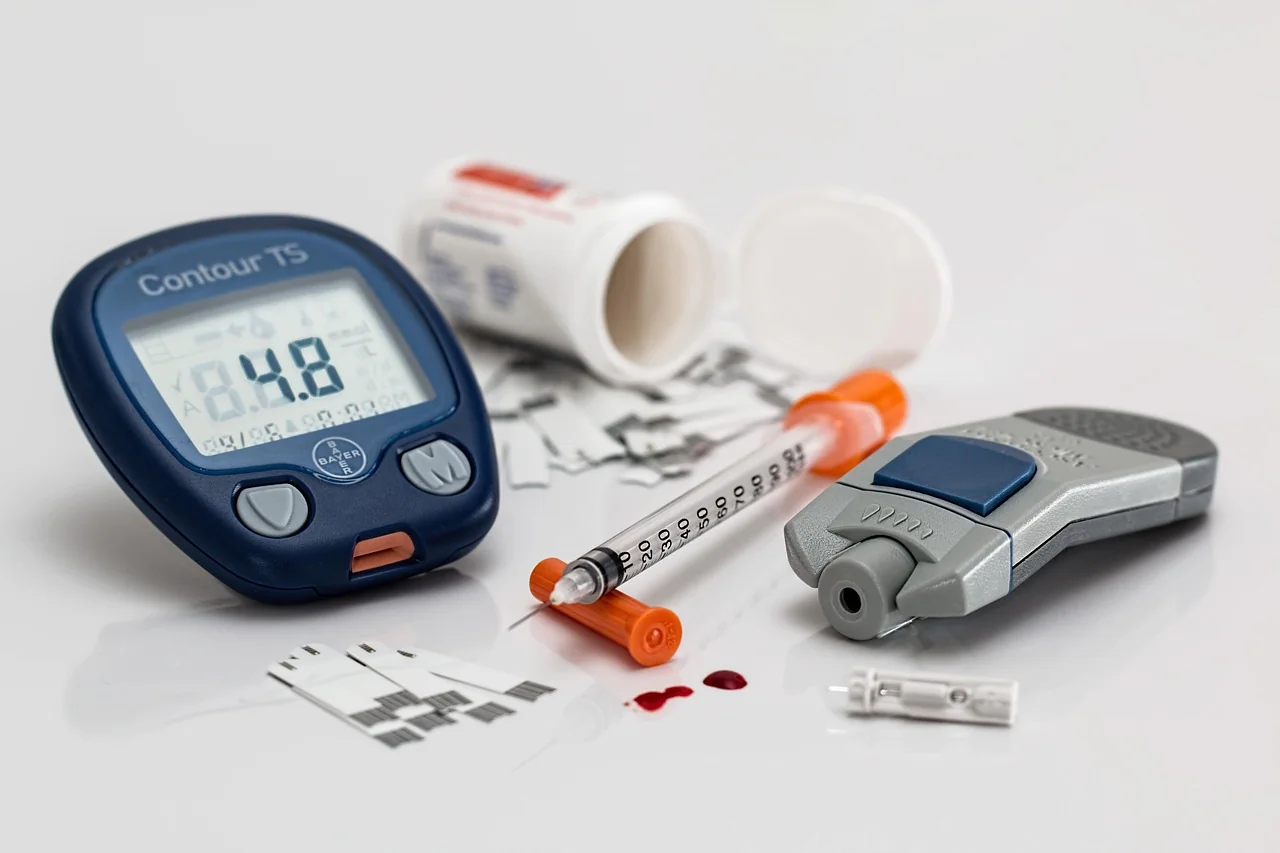
- How do you get a glucose meter and test strips?Blood glucose test strips are prescribed through GESY like other supplies and collected at a pharmacy for the €1 device co-payment.
- Can you get a continuous glucose monitor (CGM) on GESY?Yes, continuous glucose monitoring systems are provided through GESY, and as of September 2026, most patients receive the main CGM system at no charge.
- Can you get an insulin pump on GESY?an adult with at least two clinical factors, such as an HbA1c of 7.0% or more, frequent hypos, ketoacidosis or severe lipohypertrophy (lumps from injecting)
- What should you bring when you move to Cyprus or visit?Bring insulin, tablets, pen needles, strips, sensors and pump consumables to last until you are registered with GESY and a doctor has prescribed for you, plus a margin for delays.
- Which diabetes associations can help?The associations are a good place to ask practical questions about supplies, schools and suppliers.
- What should you do about a hypo, and when should you call 112?Your diabetes team will give you a personal plan for treating low blood sugar (hypoglycaemia); follow it, and ask them to go through it with your family, colleagues or your child's school.
Quick answer
On GESY, insulin, diabetes tablets and medical supplies are prescribed by your personal doctor or specialist and collected from a contracted pharmacy for €1 per item, within the €150 annual co-payment cap (€75 for children up to 21 and some other groups). Some newer medicines need HIO prior approval and a few are dispensed only by hospital pharmacies. Continuous glucose monitors are provided through GESY, and since February 2026 two patch insulin pumps, Omnipod Dash and Medtrum, have been in the GESY catalogue for people with type 1 diabetes and some other types who meet HIO criteria. Checked October 2026.
- Each prescribed medicine or medical device costs €1 at a GESY pharmacy; if you choose a pricier brand than the fully covered option, you pay the difference.
- Repeat prescriptions can run for up to six months; before a trip abroad of over a month you can collect up to 20 days early.
- Patch pumps Omnipod Dash (from 9 February 2026) and Medtrum (from 20 February 2026) are in the GESY catalogue, with HIO approval, dietitian training in carb counting and supplier training.
- In 2026 the HIO ran a new tender for glucose sensors; patients' groups have warned it could bring charges for some systems, so check with your doctor and pharmacy before switching.
- Severe hypo with unconsciousness or a seizure: call 112 at once. Never give food or drink to someone who cannot swallow safely.
Insulin, tablets, test strips, glucose sensors and insulin pumps are all available through GESY, the General Healthcare System, but each works slightly differently. Most medicines and supplies are collected from an ordinary GESY pharmacy for €1 per item, some need the Health Insurance Organisation (HIO) to approve them first, and pumps come with training conditions.
This guide explains how prescriptions, sensors and pumps work, what to bring when you move to Cyprus or visit, which patient associations can help, and what to do about a severe hypo. It is health information, not medical advice: talk to your doctor about which medicines and devices are right for you, and never change your doses without their advice. Rules were checked in October 2026 and change often. For appointments, tests and clinics, see our guide to diabetes care on GESY.
How do prescriptions for insulin and tablets work on GESY?
- Your doctor prescribes electronically. Your personal doctor or specialist issues the prescription through the GESY system.
- Choose any GESY pharmacy. Beneficiaries have a free choice of contracted community pharmacy. Give the pharmacist your ID or residence permit number so they can find the prescription.
- Pay the co-payment. Each medicine on a prescription costs €1, even if you need two boxes of it for a higher dose. Medical devices and supplies also cost €1 each.
- Watch out for brand differences. If you choose a more expensive product than the fully covered one in its category, you pay the difference (called "Contribution II"). At least one product in each category is fully covered, and the pharmacist can offer the cheapest equivalent with your agreement.
- Set up repeat prescriptions. Your doctor can issue repeat prescriptions valid for up to six months, so you collect each supply without another appointment.
All co-payments count towards the annual cap of €150, or €75 for children up to 21, low-income pensioners and Guaranteed Minimum Income recipients.
Which diabetes medicines need prior approval?
Most medicines are dispensed straight away. Some specialised medicines need HIO prior approval, and a few can only be dispensed by certain hospital pharmacies. Two current examples:
| Medicine | Rules from 15 October 2026 |
|---|---|
| Ozempic (semaglutide) | Revised protocol for type 2 diabetes; the first choice of the two, regardless of body weight; dispensed by any pharmacy on prescription |
| Mounjaro (tirzepatide) | Covered for type 2 diabetes and adult obesity under protocol; dispensed only through state hospital pharmacies for now |
For both, the prescriber must be an endocrinologist, internal medicine specialist, geriatrician or a designated adult personal doctor, and the doctor submits the approval request through the GESY system. Reimbursement is not automatic.
What if the GESY system is down?
Pharmacies need the online system to dispense GESY prescriptions. In March 2025 weekend outages left some diabetes patients unable to collect medication. Do not wait until your last pen or box: collect your next supply a few days early, especially before long weekends and public holidays.
How do you get a glucose meter and test strips?
Blood glucose test strips are prescribed through GESY like other supplies and collected at a pharmacy for the €1 device co-payment. The number of strips you can have depends on your type of diabetes and treatment, and allowances have changed over the years, so ask your doctor what you are entitled to. If you test more often than your prescription allows, for example during illness, pregnancy or a change of treatment, discuss it with your doctor rather than running short.
Ask your pharmacist or doctor which meters are compatible with the strips on the GESY list, as strips only work with matching meters.
Can you get a continuous glucose monitor (CGM) on GESY?
Yes, continuous glucose monitoring systems are provided through GESY, and as of September 2026, most patients receive the main CGM system at no charge. How it has developed:
- 2022: the Cabinet approved the Health Ministry buying sensors and patch pumps for children with type 1 diabetes.
- November 2023: the Health Minister announced that the HIO had lifted the age limit on sensors.
- January 2024: the HIO told MPs that new devices would be available to all insulin-dependent people, regardless of age.
- February 2026: the HIO launched a new tender for CGM systems.
Sensors are collected from pharmacies. In 2024 the Pancyprian Diabetic Association named the Medtrum and GlucoMen Day systems in its advice to users. We could not confirm which brands, such as FreeStyle Libre or Dexcom, are on the GESY list today, as this depends on HIO tenders.
Will there be a charge? In September 2026, patients warned the minister that under the new tender rules, people choosing a system priced above the HIO's reimbursement level could have to pay the difference. They asked for a zero charge for all diabetes devices regardless of age. The Despina Children's Diabetes Foundation also criticised the tender's technical criteria. No ministerial decision had been reported by late October 2026. Before you switch systems, ask your doctor and pharmacist whether you will have to pay anything.
How to get a CGM:
- Ask your endocrinologist, paediatric endocrinologist or diabetes clinic whether you meet the HIO criteria.
- Your doctor prescribes it through the GESY system.
- Collect it from your pharmacy, and save the supplier's helpline number in your phone.
- For your first sensor, the association recommends having a supplier representative fit it.
In hot weather, users have reported sensors losing accuracy or falling off early. Above 35 °C the association suggests covering the sensor with light clothing, using extra adhesive in summer and calling the supplier before removing a faulty sensor.
Can you get an insulin pump on GESY?
Yes, under HIO criteria. Since February 2026 two patch pumps (tubeless pumps worn on the skin) have been in the GESY catalogue of medical devices for outpatient care, after the supply of the GlucoMen Day pump ended:
| Pump | In the GESY catalogue from |
|---|---|
| Omnipod Dash | 9 February 2026 |
| Medtrum | 20 February 2026 |
Who qualifies?
According to the HIO criteria as reported in February 2026, you must have type 1 diabetes, LADA, MIDD (maternally inherited diabetes and deafness) or diabetes after removal of the pancreas, and also be one of the following:
- under 18
- pregnant or planning a pregnancy
- an adult with at least two clinical factors, such as an HbA1c of 7.0% or more, frequent hypos, ketoacidosis or severe lipohypertrophy (lumps from injecting)
You also need to be ready for regular monitoring. People approved for a Medtronic MiniMed 780G pump cannot be approved for a patch pump until four years after that approval.
How do you apply?
- See your treating doctor, who assesses you against the criteria.
- Complete carbohydrate-counting training with a clinical dietitian your doctor refers you to.
- Your doctor submits the request to the HIO through the GESY system.
- After approval, complete the supplier's pump training. This is compulsory, even if you used a pump before; the HIO can refuse prescriptions if training is missing.
- Stay in regular contact with your doctor and keep your glucose records, which the HIO can ask to see.
The reported allowance is one pack of 10 pods a month and one handset (PDM) every four years. Ask your doctor where your pump supplies will be collected and whether any charge applies, as we could not confirm this.
Pump clinics run at the Nicosia General Hospital Diabetes Centre (with remote monitoring of pump data) and, for children and teenagers, through the dietetics team at Archbishop Makarios III Hospital, which offers pump training, carb counting and phone follow-up.
What should you bring when you move to Cyprus or visit?
- Enough supplies for the gap. Bring insulin, tablets, pen needles, strips, sensors and pump consumables to last until you are registered with GESY and a doctor has prescribed for you, plus a margin for delays.
- Paperwork. Copies of your prescriptions and a doctor's letter, in English, listing your diagnosis, medicines (with generic names), doses and the devices you use.
- Hand luggage. Keep insulin and devices with you, not in the hold, where insulin can freeze or get lost. Hermes Airports, which runs Larnaca and Paphos airports, says exemptions to the liquids rules apply for medicines, medical products and medical devices. Tell security staff before screening and check device makers' advice on body scanners.
- Cool storage. Summer temperatures in Cyprus often pass 35 °C. Use a cool bag or insulin cooling wallet, and never leave insulin or sensors in a parked car.
- Visitors. If you are visiting from the EU, carry your European Health Insurance Card and travel insurance; others need travel insurance that covers pre-existing conditions. Visitors are not GESY beneficiaries, so supplies bought here are paid for privately.
Going abroad from Cyprus? For trips of more than a month, GESY lets you collect a repeat prescription up to 20 days before or 10 days after its scheduled date. Plan it with your pharmacy.
Which diabetes associations can help?
| Association | Who it is for | Contact |
|---|---|---|
| Pancyprian Diabetic Association (Παγκύπριος Διαβητικός Σύνδεσμος), listed by IDF Europe as the Cyprus Diabetic Association | All types of diabetes; talks with doctors, dietitians, podiatrists and psychologists, a "school of diabetes" and summer camps | diabetes.org.cy, 22 669540, cyprusdiabeticassociation@cytanet.com.cy |
| Cyprus Association of People with Diabetes (Σύνδεσμος Ατόμων με Διαβήτη Κύπρου) | Community meetings and lectures; free blood tests in November | PO Box 51704, 3508 Limassol |
| Despina Children's Diabetes Foundation | Children and young people with diabetes; campaigns on access to devices | We could not find an official website |
| Association of Parents and Friends of Children with Type 1 Diabetes (Σύνδεσμος Γονέων & Φίλων Παιδιών με Διαβήτη Τύπου 1) | Families of children with type 1 diabetes | We could not find an official website |
Most activities are in Greek. The associations are a good place to ask practical questions about supplies, schools and suppliers.
What should you do about a hypo, and when should you call 112?
Your diabetes team will give you a personal plan for treating low blood sugar (hypoglycaemia); follow it, and ask them to go through it with your family, colleagues or your child's school. Usual warning signs include shaking, sweating, hunger, confusion, irritability and unusual behaviour.
Call 112 immediately (or 22 887171, the state hospitals' ambulance and emergency line) if someone with diabetes:
- is unconscious or cannot be woken
- has a seizure (fit)
- is too drowsy or confused to swallow safely
- does not recover after treatment, as set out in their plan
- shows signs of ketoacidosis, such as vomiting, deep fast breathing, stomach pain or severe drowsiness
Never put food or drink in the mouth of someone who is unconscious or cannot swallow. If they have prescribed glucagon and you have been shown how to use it, follow their plan while you wait. When you call, give the exact location, a phone number and say the person has diabetes.
For an urgent problem that is not an emergency at the weekend, such as running out of insulin, see our out-of-hours doctors and night pharmacies guide.
What to do next
- Make sure you are registered with GESY and a personal doctor; our GESY guide explains how.
- If you want a doctor who consults in English, see finding an English-speaking GP.
- Book your endocrinologist, eye and foot checks using our guide to diabetes care on GESY.
- Save 112, 22 887171, the GESY helpline 17000 and the duty pharmacy line 11892 in your phone; our out-of-hours guide lists them all.
- If you are not in GESY, check what your policy covers for supplies; see health insurance for a residence permit.
Frequently asked questions
How much does insulin cost on GESY?
Prescribed insulin is collected from a GESY pharmacy for a €1 co-payment per item, within the €150 annual cap (€75 for children up to 21, low-income pensioners and Guaranteed Minimum Income recipients). If you choose a more expensive product than the fully covered one in its category, you pay the difference.
Is FreeStyle Libre or Dexcom covered by GESY?
Continuous glucose monitors are provided through GESY, but which brands are on the list depends on HIO tenders, and a new tender was run in 2026. We could not confirm whether FreeStyle Libre or Dexcom are currently listed. Ask your doctor or GESY pharmacy which systems you can have and whether any charge applies.
Who can get an insulin pump on GESY?
According to the HIO criteria reported in February 2026, patch pumps are for people with type 1 diabetes, LADA, MIDD or diabetes after pancreas removal who also meet extra criteria: being under 18, being pregnant or planning pregnancy, or for other adults at least two clinical factors such as a high HbA1c, frequent hypos or ketoacidosis. Your treating doctor applies through the GESY system.
How many test strips can I get on GESY?
Test strips are prescribed through GESY like other supplies, and the allowance depends on your type of diabetes and treatment. Allowances have changed over the years, so ask your doctor what you are entitled to and request a new prescription if your needs change.
Can I bring my diabetes supplies with me when I move to Cyprus?
Yes, for your own use. Carry insulin and devices in your hand luggage with copies of your prescriptions and a doctor's letter listing your diagnosis, medicines and devices. Airport security allows exemptions for medicines and medical devices; check with your airline and departure airport before you fly.
Are there diabetes associations in Cyprus?
Yes. The Pancyprian Diabetic Association (diabetes.org.cy, 22 669540) is the largest. Others include the Cyprus Association of People with Diabetes in Limassol, the Despina Children's Diabetes Foundation and the Association of Parents and Friends of Children with Type 1 Diabetes.
Useful links
- GESY – Pharmaceutical care FAQGESY helpline 17000 (+357 22 017000 from abroad)
- Diabetes Centre, Nicosia General Hospital (OKYPY)Insulin pump clinic; appointments 22 603550
- Dietetics and Nutrition, Archbishop Makarios III Hospital (OKYPY)Insulin pump service for children and teenagers
- Pancyprian Diabetic Association (Παγκύπριος Διαβητικός Σύνδεσμος)22 669540, cyprusdiabeticassociation@cytanet.com.cy
- Hermes Airports – Liquids, aerosols and gels
Sources (24)
- GESY (HIO) – Pharmaceutical care FAQ
- GESY (HIO) – Financing and co-payments
- GESY (HIO) – Co-payments regulations (Tables 1 to 3)
- Ygeia News – Patch insulin pumps added to GESY (20 February 2026)
- Ygeia News – New patch insulin pumps in GESY (11 February 2026)
- SigmaLive – No to financial burden on diabetes patients for modern technologies (28 September 2026)
- Politis – Will we have to pay to measure? (29 September 2026)
- Alphanews – Despina Children's Diabetes Foundation criticises HIO glucose monitoring tender (20 February 2026)
- Alphanews – HIO assurances on smart devices for diabetics through GESY (11 January 2024)
- House of Representatives – Health Committee agenda, 11 January 2024
- Cyprus Mail – Over 12% of Cyprus population has diabetes (14 November 2023)
- Cyprus Mail – Children with diabetes to be offered latest insulin devices (3 March 2022)
- Cyprus Mail – Diabetics suffering from Gesy online weekend shutdown (24 March 2025)
- Cyprus Mail – Mounjaro to be covered by Gesy for diabetes and adult obesity (15 October 2026)
- Cyprus Mail – Weight-loss injections: hope, hurdles and new Gesy rules (19 October 2026)
- Politis – Mounjaro now available through Gesy (October 2026)
- State Health Services Organisation – Diabetes Centre, Nicosia General Hospital
- State Health Services Organisation – Dietetics and Nutrition, Archbishop Makarios III Hospital
- State Health Services Organisation – Accident and Emergency Departments
- Pancyprian Diabetic Association – official website
- Pancyprian Diabetic Association – Continuous glucose monitoring systems in hot weather (25 June 2024)
- IDF Europe – Cyprus Diabetic Association (member profile)
- IDF Europe – Cyprus Association of People with Diabetes (member profile)
- Hermes Airports – Liquids, aerosols and gels