Summarise this page 4 key points · 1 minute
- The 10 at a glanceThe ten dishes to try range from meze, halloumi, souvla and kleftiko to taro, cured pork and loukoumi.
- Which Cypriot dishes should you try first?Start with meze to taste many dishes at once, then try halloumi, souvla, sheftalia, kleftiko and protected products such as lountza and Loukoumi Geroskipou.
- Where do locals eat traditional Cypriot food?Locals eat traditional food at home and family gatherings, at meze tavernas, at Taste Cyprus-labelled places, and in the villages where products are made.
- What should you drink with Cypriot food?Pair Cypriot food with zivania, the grape-marc spirit described as the national drink, or Commandaria, a PDO sweet wine and one of the world's oldest.
Quick answer
The traditional Cypriot dishes to try first are meze, halloumi, souvla, sheftalia, kleftiko, koupepia, kolokasi, tavas, Pitsilia lountza and Geroskipou loukoumi. Meze, a spread of small cold and warm dishes that changes with the seasons, is the easiest way to taste many at once. Several foods are tied to places: lountza to Pitsilia, loukoumi to Geroskipou and kolokasi to Sotira, all with EU protected status, while family gatherings and religious festivals remain central to Cypriot food culture.
- Loukoumi Geroskipou was the first Cypriot product registered in the EU's protected names register (PGI).
- Halloumi can be grilled without melting, and Taste Cyprus lists it among the traditional appetisers.
- Kolokasi Sotiras has been a protected designation of origin (PDO) since August 2016.
- Lountza Pitsilias is pork matured in local red wine and then smoked, often at high altitude.
- Look for the Taste Cyprus quality label, a joint scheme of the Deputy Ministry of Tourism and the private sector.
Cypriot food blends Greek-Mediterranean, Middle Eastern and European influences, and spices such as cumin and cinnamon arrived through centuries of trade. We start with ten dishes to try, then explain where locals eat them, pointing to regions, types of place and occasions rather than individual restaurants. All descriptions come from the Deputy Ministry of Tourism and its Taste Cyprus gastronomy programme. For the cultural background, read our deep dive into food in Cyprus.
The 10 at a glance
| # | Dish | What it is | Where to look for it |
|---|---|---|---|
| 1 | Meze | Many small cold and warm dishes | Tavernas, family gatherings |
| 2 | Halloumi | Semi-hard cheese that grills without melting | Appetisers and meze |
| 3 | Souvla | Lamb or pork on skewers | Grilled main courses |
| 4 | Sheftalia | Grilled minced pork with onion and parsley | Grilled main courses |
| 5 | Kleftiko | Lamb with bay leaves in a clay-sealed oven | Traditional main courses |
| 6 | Koupepia | Vine leaves stuffed with rice and minced pork | Traditional main courses |
| 7 | Kolokasi | Taro cooked with chicken or meat | Protected kolokasi from Paphos and Famagusta |
| 8 | Tavas | Pork stew with large onions and cumin | Traditional main courses |
| 9 | Lountza and village sausages | Wine-matured pork, smoked or sun-dried | Pitsilia and Paphos villages |
| 10 | Loukoumi | Traditional sugar confectionery | Geroskipou, Lefkara, kafeneia |
Which Cypriot dishes should you try first?
1. Meze
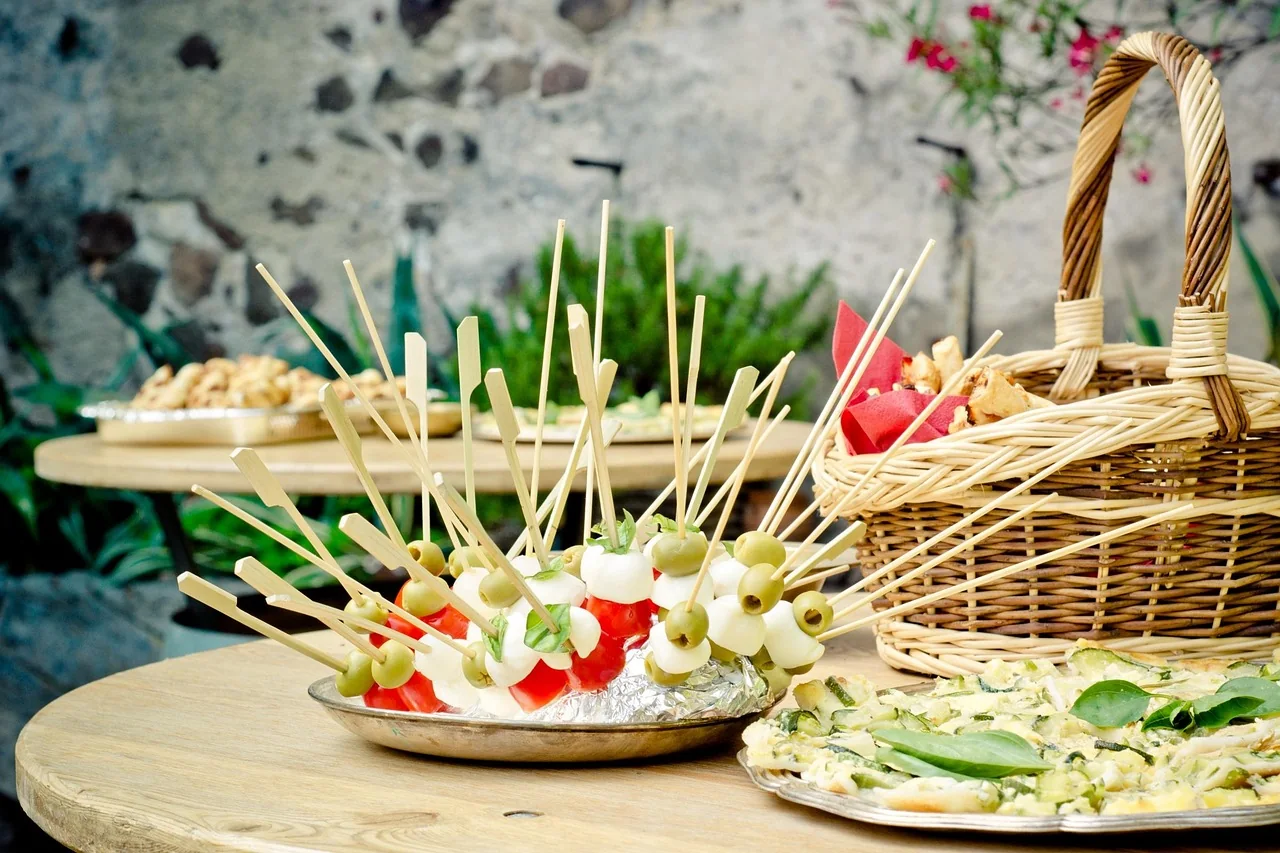
What it is: A series of small cold and warm dishes that, together, make a feast. The selection changes with the seasons.
Why it's on the list: Visit Cyprus calls meze a good way to get to know local food, because you taste many dishes in one sitting. Taste Cyprus lists tahini, talatouri, halloumi and lountza among the traditional appetisers.
Where locals eat it: At tavernas and at family gatherings, which Visit Cyprus describes as central to Cypriot social life.
2. Halloumi
What it is: A white semi-hard cheese made from sheep's or goat's milk, sometimes with cow's milk.
Why it's on the list: It can be grilled without melting. Grilled halloumi is one of the official local recipes on Visit Cyprus, and Taste Cyprus also lists zucchini flowers filled with halloumi and Cypriot ravioli filled with halloumi and egg and topped with mint. Our halloumi guide has more.
Where locals eat it: Among the appetisers on a meze spread. Anari, the other traditional Cypriot cheese, goes into anari cheese pies and bourekia.
3. Souvla
What it is: Lamb or pork cooked on skewers.
Why it's on the list: Taste Cyprus lists "souvla on the grill" among the island's traditional main courses.
Where locals eat it: Look for it among grilled main courses at traditional tavernas. See also our Tsiknopempti guide.
4. Sheftalia
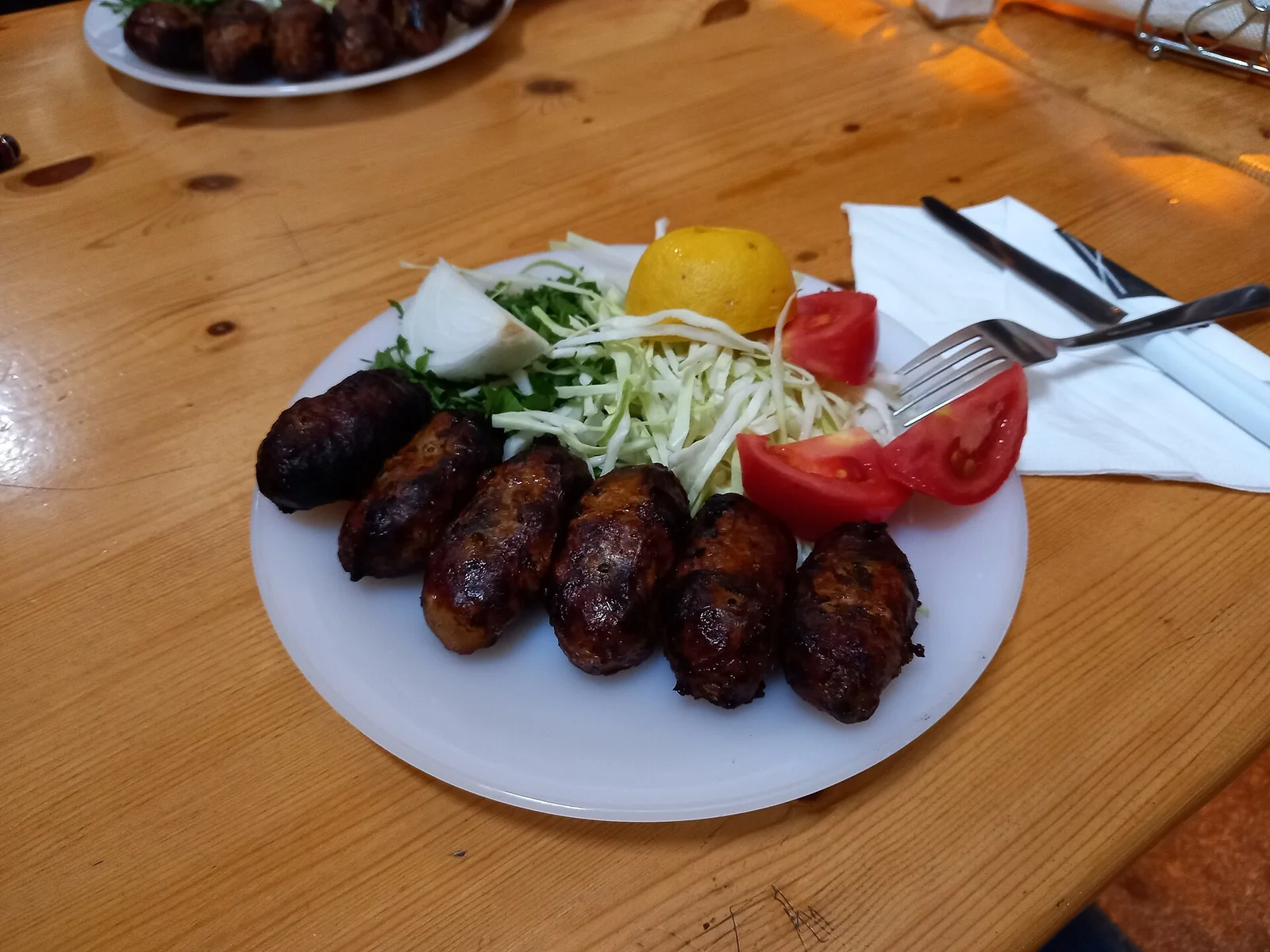
What it is: Grilled minced pork mixed with onion and parsley.
Why it's on the list: Taste Cyprus names it among the traditional main courses, under the spelling "seftalia".
Where locals eat it: Alongside souvla among grilled main courses.
5. Kleftiko (ofto kleftiko)
What it is: Lamb cooked with bay leaves in a traditional oven sealed with clay.
Why it's on the list: It is still cooked the traditional way, slowly and sealed. Try making it with our kleftiko recipe.
Where locals eat it: Look for it among traditional main courses; Taste Cyprus also lists lamb cooked in the clay pot.
6. Koupepia
What it is: Vine leaves stuffed with rice and minced pork.
Why it's on the list: It is one of the official local recipes on Visit Cyprus. See our koupepia recipe.
Where locals eat it: Among traditional main courses, or cook it at home from the Visit Cyprus recipe.
7. Kolokasi
What it is: Taro root, often cooked with chicken or meat. Taste Cyprus also lists poulles kolokasi; the edible parts are known locally as "poulles" or "mappes".
Why it's on the list: Kolokasi Sotiras (and Poulles Sotiras) has been a protected designation of origin (PDO) since August 2016.
Where locals eat it: The protected kolokasi is linked mainly to the Paphos and Famagusta districts.
8. Tavas
What it is: A pork stew with large onions and cumin, named after the cooking pot of the same name, which is said to come from Syria.
Why it's on the list: Its name and its cumin reflect the Oriental influences that Taste Cyprus describes in Cypriot cooking.
Where locals eat it: Among traditional main courses.
9. Lountza and village sausages
What it is: Lountza Pitsilias is pork matured in local red wine and then smoked, often at high altitude. Pitsilia sausage and Paphos sausage are made from pork mince matured in red wine; the first is smoked and the second sun-dried.
Why it's on the list: All three have protected geographical indication (PGI) status. Hiromeri, another cured meat, is listed among local products on Visit Cyprus.
Where locals eat it: Lountza is a traditional appetiser on the meze table, and both lountza and sausages come from the Pitsilia villages of the Troodos and the communities of the Paphos district. Our 10 best day trips from Limassol include Pitsilia.
10. Loukoumi (Cyprus delight)
What it is: A traditional sugar confectionery. Loukoumi Geroskipou has PGI status and was the first Cypriot product registered in the EU's register; production there began in the 19th century.
Why it's on the list: It is a sweet with a clear home town. Loukoumia are also made in Lefkara and Foini, and Geroskipou is known for sugar-coated almonds (koufeta), first produced in 1895.
Where locals eat it: Taste Cyprus notes that loukoumi is offered in kafeneia (traditional coffee shops) and homes. For more sweets, see our guide to Cypriot desserts.
Where do locals eat traditional Cypriot food?
- At home and at family gatherings. Visit Cyprus describes food as central to social life, from family gatherings to religious festivals, with festival treats often prepared by the women of the family.
- At tavernas serving meze. Visit Cyprus recommends meze as a good way to get to know local food.
- At places with the Taste Cyprus label. The quality label is a joint effort of the Deputy Ministry of Tourism and the private sector to promote the island's food heritage.
- In the villages where products come from. Pitsilia for lountza and sausages, Geroskipou for loukoumi and koufeta, Agros for its PGI rose spoon sweet (made from Rosa damascena petals) and Lefkara for loukoumia.
- At Easter. Paphos cheese, a sheep's, goat's or mixed-milk Easter cheese, is used mainly for flaounes; read our Easter in Cyprus guide.
What should you drink with Cypriot food?
Zivania, a grape-marc spirit distilled in copper stills, is described as the national drink, and Commandaria, a sweet dessert wine from sun-dried Mavro and Xynisteri grapes, is one of the world's oldest wines and has PDO status. See our guides to zivania and the best wineries to visit.
Related guides
Recommended for this guide
Contains affiliate links GetYourGuide
Skip-the-line tickets, day trips and guided tours, usually with free cancellation up to 24 hours before.
See things to do in Cyprus
Flights & car hire
 Discover Cars
Compare car hire from local and international companies at Larnaca and Paphos airports.
Compare car hire
Flights & car hire
 GetRentacar
Rent a car directly from local rental companies, with the price and conditions shown before you book.
Find a rental car
Frequently asked questions
What is the national dish of Cyprus?
Cyprus has no single official national dish. Meze, a series of small dishes, is the recommended way to sample Cypriot food, while zivania is described as the national drink.
What is the difference between souvla and sheftalia?
Souvla is lamb or pork cooked on skewers over the grill. Sheftalia is grilled minced pork mixed with onion and parsley.
Is halloumi made from sheep's or goat's milk?
Halloumi is a white semi-hard cheese made from sheep's or goat's milk, and sometimes cow's milk. It can be grilled without melting.
Where can I try authentic Cypriot food?
Ordering meze is the easiest way to try many dishes at once. For a recognised standard, look for places with the Taste Cyprus quality label. For specialities, go to their home areas, such as Pitsilia for lountza and Geroskipou for loukoumi.
What do Cypriots eat at Easter?
Flaounes are closely linked to Easter: Paphos cheese, an Easter cheese made from sheep's, goat's or mixed milk in the Paphos area, is used mainly for flaounes.
Are there vegetarian Cypriot dishes?
Yes. Louvi (black-eyed beans with chard), agrelia (wild asparagus) with eggs, grilled halloumi and zucchini flowers stuffed with halloumi all appear among traditional dishes.