Quick answer
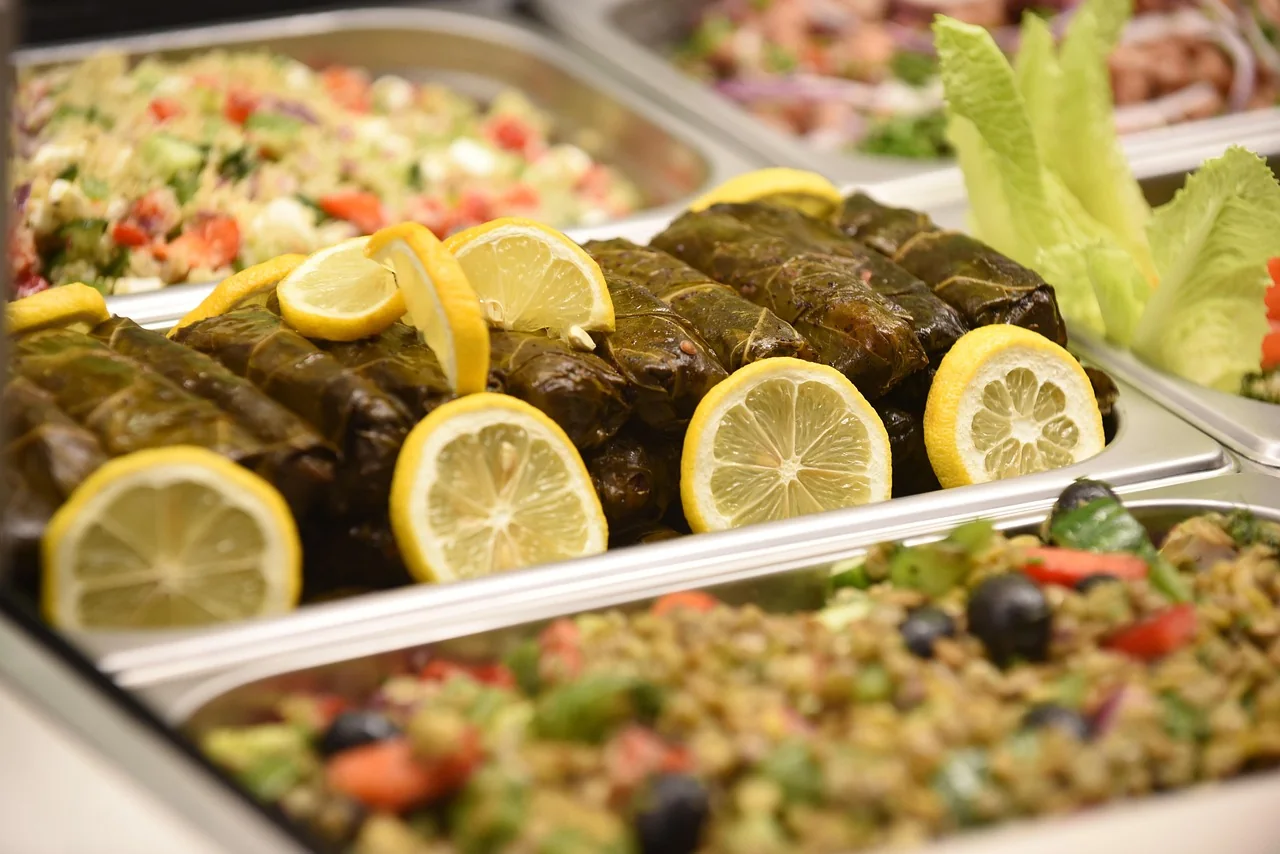
Koupepia are the Cypriot version of stuffed vine leaves: tender leaves rolled into small, tight cigars around a filling of minced pork, rice, onion, tomato and fresh herbs. They are packed into a pot, weighed down with a plate and simmered in a lemony tomato broth for about an hour, so allow roughly two hours from start to finish.
- Koupepia use minced meat (usually pork, or pork and beef) and rice, unlike the rice-only Greek dolmades often served cold.
- They are simmered in a tomato and lemon broth rather than finished with an egg-lemon sauce.
- Fresh vine leaves are at their best in late spring and early summer; jarred leaves work all year.
- Cooked koupepia keep for 3 days in the fridge and freeze well for up to 3 months.
Recipe
Koupepia
Ingredients
For the filling
For rolling
For cooking
Method
- Prepare the leaves. For fresh leaves, snip off the stems and blanch them in batches in boiling salted water for 1–2 minutes until they turn olive green and pliable, then drain. For jarred leaves, unroll them, soak in warm water for 10 minutes and rinse twice to remove the brine. Snip off any hard stems.
- Make the filling. In a large bowl combine the minced meat, rinsed rice, grated onion, grated tomato, tomato paste, parsley, mint, cinnamon if using, olive oil, salt, pepper and lemon juice. Mix with your hands for a minute until evenly combined; it should be soft and slightly wet.
- Line the base of a wide, heavy pot with torn or spare vine leaves so the koupepia do not stick or scorch.
- Roll the koupepia. Lay a leaf shiny side down with the stem end towards you. Place a heaped teaspoon of filling near the base and shape it into a short log about 4 cm long. Fold the bottom of the leaf over the filling, fold in both sides, then roll away from you into a firm, finger-thick cigar. Do not roll too tightly, as the rice needs room to swell.
- Pack the pot. Arrange the rolls seam side down in snug concentric circles, building a second or third layer if needed. Packing them closely is what stops them unrolling during cooking.
- Add the broth. Whisk the tomato paste with the lemon juice, olive oil, salt and hot water, then pour it over the koupepia. The liquid should just reach the top layer; add a little more water if needed.
- Weigh them down. Place a heatproof plate upside down directly on top of the rolls to hold them in place.
- Simmer. Bring to the boil over a medium heat, then cover with the lid, lower the heat and simmer gently for 50–60 minutes. Check after 40 minutes: the rice should be fully tender and the leaves soft enough to cut with a fork. If the pot looks dry, add a splash of hot water.
- Rest and serve. Turn off the heat and leave the koupepia covered for 15 minutes so the remaining broth is absorbed and the rolls firm up. Serve warm with the pan juices spooned over and extra lemon wedges.
Tip: Taste a spoonful of the cooking liquid before simmering: it should be noticeably sharp and well salted, because the rice absorbs much of it. If you have a pressure cooker, 20 minutes at pressure followed by natural release is a common shortcut in Cypriot kitchens.
Koupepia are small, cigar-shaped parcels of vine leaf wrapped around minced meat, rice and herbs, then gently simmered until the leaves are silky and the filling has soaked up a sharp, lemony tomato broth. They are one of the dishes that tell you most about Cypriot home cooking: frugal, seasonal, a little time-consuming, and made to be shared.
If you live in Cyprus, you are surrounded by the raw materials. Vines grow in gardens, along village walls and on balcony pergolas, and every supermarket stocks jarred leaves. Once you have rolled your first batch, you will understand why so many families make them in large quantities and keep a bag in the freezer.
Where do koupepia come from?
Stuffing leaves with rice or grain is an old technique found across the eastern Mediterranean, the Middle East, the Balkans and the Caucasus, and it goes by many names: dolma, sarma, dolmades and, in Cyprus, koupepia. The exact origins are debated, and claims about a precise date or a single place of invention should be treated with caution. What is clear is that the dish has been part of everyday cooking on the island for a very long time, among both Greek Cypriot and Turkish Cypriot communities, each with its own name and family variations.
In Cypriot households koupepia sit somewhere between everyday food and celebration food. They take time to roll, so they are often made when there are extra hands in the kitchen: a grandmother and grandchildren around the table, or relatives preparing for a name day, a christening or a wedding. The Cyprus Tourism Organisation's own food guide notes that they appear in the meze served at many weddings. They are also a familiar sight at Sunday lunches and at the village festivals held throughout the summer.
The Cypriot version has a few features that set it apart. Minced pork, sometimes mixed with beef, is the usual meat, which reflects how central pork is in Greek Cypriot cooking. The cooking liquid is typically a tomato and lemon broth rather than the egg-lemon avgolemono sauce associated with many Greek recipes. And a pinch of cinnamon, while not universal, turns up in plenty of family recipes, adding a warm note you will also recognise in Cypriot dishes such as makaronia tou fournou and stifado.
Which ingredients do you need and where can you buy them in Cyprus?
The shopping list is short and everything is easy to find on the island. The recipe card above gives exact quantities; here is what to look for when buying.
Vine leaves
- Fresh leaves are at their best from roughly late April to June, when the vines are putting out new growth. Pick or buy young, medium-sized leaves, about the size of your palm, that are bright green and free of holes. Later in summer the leaves become tougher and more fibrous. If you pick your own, make sure the vines have not been recently sprayed.
- Bunches of fresh leaves sometimes appear at the municipal and laiki (popular) markets and at village greengrocers in spring. Ask the stallholder; they are not always on display.
- Jarred leaves in brine are sold all year in Alphamega, Sklavenitis, Lidl, Metro and most local mini-markets, usually near the olives and pickles. Quality varies between brands: thinner, smaller leaves are easier to roll. Expect a few torn leaves in every jar; use them to line the pot.
Many Cypriot families blanch fresh leaves in spring and freeze them in stacks, so they can make koupepia with fresh-tasting leaves through the year. It is worth doing if you have access to a vine.
Meat and rice
Minced pork is the traditional choice. Butchers in Cyprus will mince pork shoulder for you on request, which gives a better texture and fat content than the leanest pre-packed mince. A half-and-half mix of pork and beef is also common. For the rice, a short- or medium-grain variety that holds together when cooked works best. Cypriot supermarkets sell several suitable types, often labelled Carolina or glacé; avoid parboiled rice, which stays too firm.
Herbs and flavourings
Flat-leaf parsley and mint are the core herbs. Dried mint is widely used in Cypriot cooking and is sold everywhere, but fresh mint from the market gives a brighter flavour. Grated onion and tomato keep the filling moist, while plenty of lemon juice in the broth gives koupepia their characteristic sharpness. Cypriot lemons are cheap and abundant for much of the year.
How do you get koupepia right?
Koupepia are not difficult, but a few details make the difference between rolls that hold their shape and a pot of loose rice and leaves.
Rolling technique
- Work with the shiny side of the leaf facing down and the veined side up, so the smooth surface ends up on the outside.
- Use less filling than you think. A heaped teaspoon is enough for a medium leaf. Koupepia are meant to be slim, roughly the thickness of a finger.
- Roll firmly but not tightly. The raw rice will swell as it cooks, and rolls that are wound too tight can burst.
- If a leaf is very large, cut it in half along the central vein and use each half separately. If it is small or torn, overlap two pieces.
- Set up a production line: leaves stacked on one side, filling in the middle, finished rolls on a tray. Rolling fifty koupepia takes a beginner around 45 minutes and gets noticeably quicker with practice.
Packing and weighting
The rolls should be packed seam side down and close together, with no gaps for them to move into. The upturned plate on top, mentioned in the method, is not optional: it keeps everything submerged and stops the rolls lifting and unravelling as the liquid bubbles.
Getting the broth right
Taste the cooking liquid before it goes in. It should taste slightly too sour and slightly too salty on its own, because the rice and leaves will absorb both. By the end of cooking, most of the liquid should have been absorbed, leaving a few spoonfuls of glossy, tangy sauce at the bottom of the pot. If there is still a lot of liquid when the rice is tender, remove the lid and simmer for a few more minutes. If the pot dries out before the rice is cooked, add hot water a little at a time.
Checking doneness
Lift out one roll from the top layer and cut it in half. The rice should be completely soft with no chalky centre, and the leaf should cut easily with the side of a fork. Rolls in the top layer cook last, so test from there.
What are the best variations?
- Lenten or vegetarian koupepia: During fasting periods such as Lent, many Cypriots make koupepia without meat. The filling is rice with grated courgette, onion, tomato, parsley, mint and a generous amount of olive oil. They are usually served at room temperature.
- Stuffed courgette flowers: In late spring, the same filling, with or without meat, is spooned into courgette flowers (louloudia) and cooked alongside or on top of the koupepia. It is a classic seasonal pairing in Cypriot kitchens.
- Stuffed vegetables (gemista): Leftover filling can be used to stuff tomatoes, peppers or hollowed-out courgettes and baked in the oven.
- Chicken or turkey mince: A lighter option that works well, though it is less traditional. Add an extra spoonful of olive oil to keep the filling moist.
- Cabbage leaves: In winter, when vine leaves are out of season, some families use blanched cabbage leaves to make larger rolls with a similar filling.
What should you serve with koupepia?
Koupepia can be a main course on their own or one dish among many. Good partners include:
- Thick strained yoghurt or tzatziki, which many Cypriots spoon over or alongside; the creamy, cool yoghurt balances the sharp broth.
- A village salad of tomato, cucumber, onion, olives and herbs, dressed with olive oil and lemon.
- Fresh bread to mop up the juices.
- Grilled halloumi or a plate of olives if you are building a meze-style spread. Our guide to halloumi and other Cypriot foods has more ideas.
Lemon wedges on the side are always welcome.
How do you store, freeze and reheat koupepia?
- Fridge: Cooled koupepia keep for up to 3 days in a covered container. Store them with any remaining juices so they do not dry out. Many people think they taste even better the next day.
- Freezer: Cooked koupepia freeze well for up to 3 months. Pack them in a single layer or in rows with a little broth. Uncooked rolls can also be frozen: open-freeze them on a lined tray, then transfer to a bag. Cook from frozen in the same way, allowing about 15 minutes extra simmering time.
- Reheating: Place them in a pan with a few tablespoons of water and a squeeze of lemon, cover and warm gently over a low heat for 10–15 minutes. In the microwave, cover them and heat in short bursts. They are also very good at room temperature, especially in summer.
Where can you try koupepia in Cyprus?
If you would like to taste them before making your own, look for them in a few kinds of places:
- Village tavernas, especially in the Troodos foothills and wine villages, where home-style cooking is the norm. Koupepia often appear as one of the cooked dishes in a traditional meze.
- Restaurants serving "mageirefta", the Cypriot term for slow-cooked, home-style dishes, which are often listed separately from grilled meats. These are commonly found at lunchtime in town centres.
- Village festivals and religious celebrations in summer, where local women's associations sometimes cook traditional dishes.
- Family gatherings. If you are invited to a Cypriot home for Sunday lunch or a celebration, there is a good chance they will be on the table.
For more Cypriot dishes to try at home, browse all our recipes or explore our wider Food & drink section.
Recommended for this guide
Contains affiliate links GetYourGuide
Skip-the-line tickets, day trips and guided tours, usually with free cancellation up to 24 hours before.
See things to do in Cyprus
Hotels & places to stay
GetYourGuide
Skip-the-line tickets, day trips and guided tours, usually with free cancellation up to 24 hours before.
See things to do in Cyprus
Hotels & places to stay
 Booking.com
The widest choice of hotels, apartments and villas, with free cancellation on many rooms.
Find hotels in Cyprus
Flights & car hire
Booking.com
The widest choice of hotels, apartments and villas, with free cancellation on many rooms.
Find hotels in Cyprus
Flights & car hire
 Discover Cars
Compare car hire from local and international companies at Larnaca and Paphos airports.
Compare car hire
Discover Cars
Compare car hire from local and international companies at Larnaca and Paphos airports.
Compare car hire
Frequently asked questions
Can I use jarred vine leaves instead of fresh ones?
Yes. Jarred vine leaves are sold in most Cypriot supermarkets all year and work very well. Soak and rinse them first to remove excess brine, then reduce the salt in the filling slightly. Fresh leaves, picked in late spring or early summer, are more tender and have a milder flavour.
What is the difference between koupepia and Greek dolmades?
The names are often used for the same family of dish. In Cyprus, koupepia are usually filled with minced meat and rice and cooked in a tomato and lemon broth. In Greece, dolmades are frequently a rice and herb filling served cold with olive oil, while meat versions are often finished with avgolemono, an egg-lemon sauce.
Can you freeze koupepia?
Yes, both cooked and uncooked. Freeze cooked koupepia with a little of their broth in an airtight container for up to 3 months. Uncooked rolls can be frozen on a tray, then bagged, and cooked from frozen with about 15 minutes extra simmering.
Is there a vegetarian koupepia?
Yes. A lenten or vegetarian version replaces the meat with extra rice, grated courgette, onion, tomato and plenty of herbs, bound with olive oil. It is traditionally eaten during fasting periods and is usually served at room temperature.
Why do my koupepia unroll or split while cooking?
They are usually rolled too loosely, packed with gaps in the pot, or boiled too hard. Pack them tightly seam side down, weigh them down with an upturned plate and keep the liquid at a gentle simmer. Overfilled rolls can also split as the rice swells.