Quick answer
Louvi me lahana is a Cypriot dish of black-eyed beans boiled with leafy greens such as chard, then drained and dressed while warm with olive oil, lemon juice and salt. The beans need no soaking and the whole dish takes about 50 minutes, most of it unattended simmering.
- Black-eyed beans cook in 30–40 minutes without soaking.
- Chard is the usual green; courgettes, spinach or wild greens also work.
- Naturally vegan and a staple on Orthodox fasting days.
- Dress the beans while hot so they absorb the oil and lemon.
Recipe
Louvi me lahana
Ingredients
For the beans
For the dressing
To serve
Method
- Tip the beans into a sieve, pick out any small stones or shrivelled beans and rinse under cold running water.
- Put the beans in a large pan, cover with about 5 cm of cold water and bring to the boil. Boil for 5 minutes, then drain and discard this first water.
- Return the beans to the pan, cover with fresh cold water by about 5 cm and bring back to the boil. Lower the heat and simmer gently, partly covered, for 20 minutes, skimming off any foam.
- While the beans cook, wash the chard thoroughly in several changes of water. Cut the stalks into 1 cm slices and roughly chop the leaves, keeping the two separate. If using courgettes, cut them into 2 cm chunks.
- After the beans have simmered for 20 minutes, add the salt and the chard stalks (and courgettes, if using). Simmer for 8–10 minutes more, until the beans are creamy inside but still hold their shape when pressed against the side of the pan.
- Add the chard leaves, push them under the water and cook for 3–5 minutes, until wilted and bright green.
- Drain everything well in a colander, saving a mug of the cooking water in case the beans look dry later.
- Transfer the hot beans and greens to a serving bowl. Pour over the olive oil and lemon juice, season with salt and pepper, and toss gently so the beans do not break.
- Leave to sit for 5 minutes so the beans absorb the dressing, taste and add more lemon or salt if needed, then serve warm or at room temperature with the onion, radishes, olives, tomatoes and bread.
Tip: Start checking the beans after 25 minutes in total, as freshly harvested beans can soften much faster than older stock; overcooked louvi turns to mush once dressed.
Louvi me lahana is about as humble as Cypriot cooking gets: black-eyed beans simmered with chard or other greens, drained, then soaked in good olive oil and plenty of lemon. It costs very little, needs no special skill and tastes far better than its short ingredient list suggests.
For expats it is also one of the easiest ways into everyday Cypriot home food, the kind of dish that rarely appears on tourist menus but turns up on family tables week after week.
What is louvi me lahana?
Louvi (λουβί) is the Cypriot word for black-eyed beans, and lahana simply means greens. The name describes the dish exactly. The beans are boiled until creamy, the greens are added towards the end, and everything is drained and dressed while still hot so the beans drink up the oil and lemon.
It is served warm or at room temperature, usually as a main course with bread, raw onion, olives, radishes and tomatoes on the side. In some households it is paired with fried or salted fish, which turns it into a more substantial meal.
You may also see it written as louvia me lahana or louvi me ta lahana. Spellings in Latin letters vary a lot in Cyprus, so do not worry if a menu or a neighbour uses a slightly different version.
Where does the dish come from?
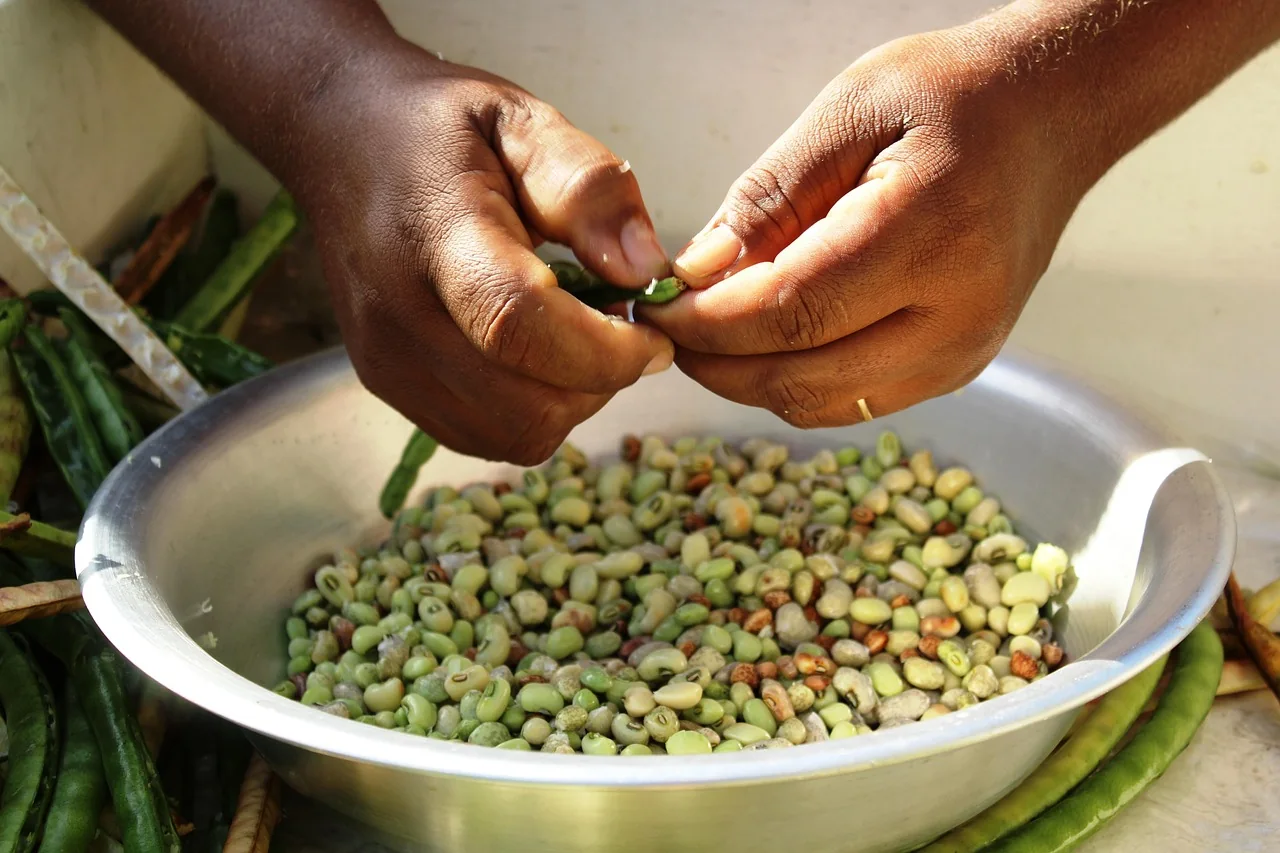
Black-eyed beans are a type of cowpea, a legume grown for thousands of years across Africa, the Middle East and southern Europe. They have long been part of the eastern Mediterranean diet, and in Cyprus they are grown locally as well as imported. In summer you can sometimes find fresh black-eyed beans still in their long pods at markets, which Cypriots cook in much the same way.
The dish itself grew out of necessity rather than invention. Dried beans kept well through the year, greens grew in every garden or could be picked from the fields, and olive oil and lemons were always to hand. Put together, they made a cheap, nourishing meal that needed nothing from the butcher.
Why is louvi linked with fasting?
The Greek Orthodox Church observes many fasting periods, including Great Lent before Easter, the fast before Christmas and, for the devout, most Wednesdays and Fridays through the year. During these periods meat, dairy and eggs are traditionally avoided. Pulse dishes like louvi, fakes (lentils) and fasolada (bean soup) therefore became mainstays of the fasting table.
Observance varies widely today. Some families still follow the fasts closely, others only in the week before Easter, and many simply eat louvi because they like it. On the strictest fasting days some observant people also avoid olive oil; in that case the dish is dressed with lemon and salt only. If you are cooking for Cypriot friends during Lent, louvi is a thoughtful and safe choice.
Which ingredients do you need and where can you buy them in Cyprus?
The recipe card lists exact quantities. Here is what to look for when shopping.
Black-eyed beans
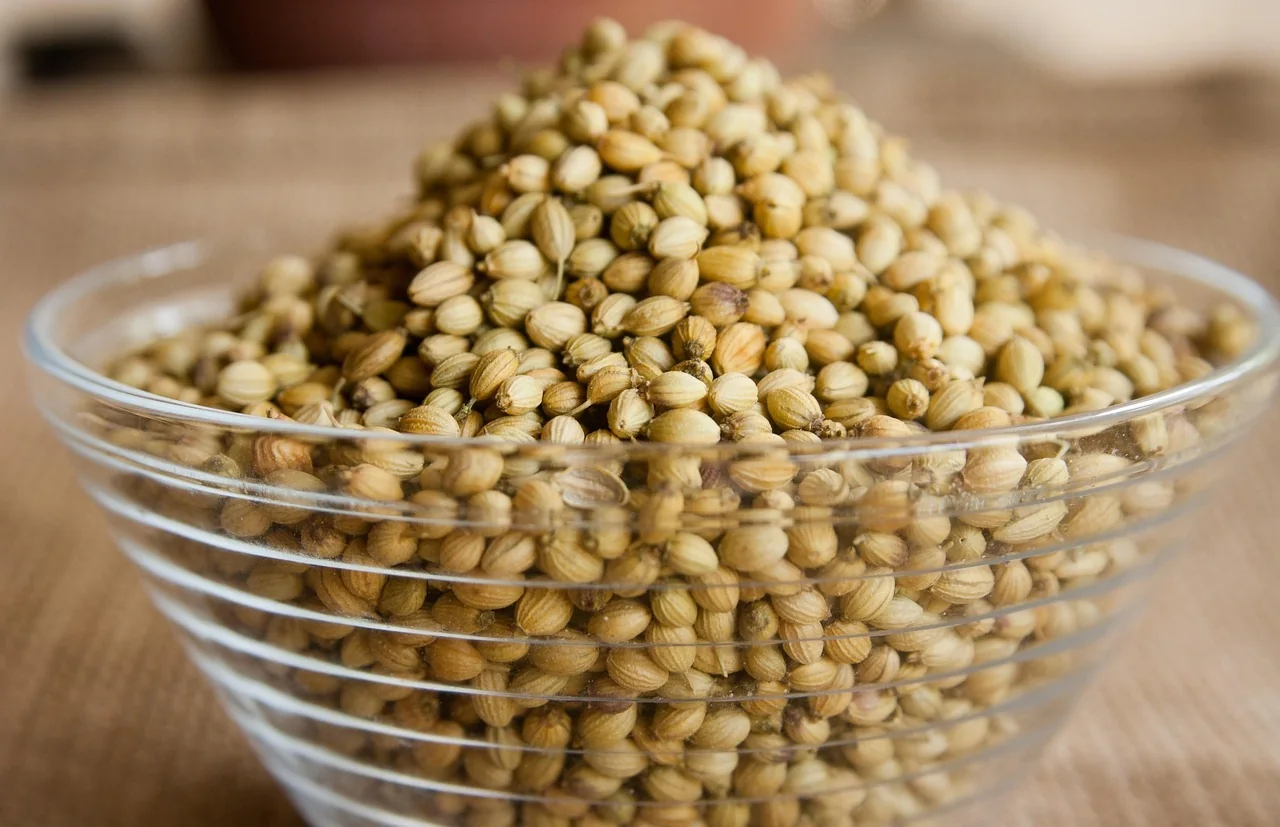
Dried black-eyed beans are sold in every Cypriot supermarket, usually labelled louvi or φασόλια μαυρομάτικα in Greek alongside the English name. Alphamega, Sklavenitis, Lidl and smaller local supermarkets all stock them, typically in 500 g bags. Look for beans that are plump, pale cream and uniform in size, with few broken pieces. Very old beans take longer to soften and can stay chalky, so buy from a shop with a good turnover and check the best-before date.
Greens
- Swiss chard (seskoula in Cypriot dialect) is the classic choice. It is easy to find from autumn to spring at municipal markets and supermarkets. The stalks need a little longer than the leaves, which is why the method adds them in two stages.
- Courgettes are the usual summer swap. Louvi me kolokouthkia (with courgettes) is so common that many Cypriots consider it a dish in its own right.
- Spinach or beet greens work if chard is not available, though spinach cooks in a minute or two and should go in right at the end.
- Wild greens are gathered by many Cypriots in winter and spring. Only use foraged plants if you, or someone with you, can identify them with certainty.
The weekly laiki (open-air) markets and the municipal markets in Nicosia, Limassol, Larnaca and Paphos are the best places for bunches of fresh, inexpensive greens. Prices are usually lower than in supermarkets in season, and the quality tends to be better.
Olive oil and lemons
Because the dressing is so simple, the oil and lemons really matter. Cypriot extra virgin olive oil is widely available, from supermarket own brands to small producers who sell at markets and village shops. A fruity, slightly peppery oil suits this dish well.
Cypriot lemons are juicy and sharp and are in season through the cooler months, though they are available most of the year. Avoid bottled lemon juice here: it lacks the fresh aroma that lifts the beans.
How do you get it right?
Louvi is forgiving, but a few details make the difference between a good bowl and a disappointing one.
- Do not overcook the beans. Black-eyed beans go from perfectly tender to split and mushy quite quickly. Start testing about 25 minutes into the total cooking time (step 5). A cooked bean should be creamy inside but still whole.
- Salt at the right moment. Adding salt partway through, as in the method, seasons the beans properly. Adding a large amount right at the start can make some batches of beans cook more slowly, although cooks disagree on how much difference it makes.
- Wash the greens thoroughly. Chard from markets often carries soil in the base of the stalks. Swish it in a sink of cold water, lift it out and repeat until no grit remains.
- Drain well. Watery beans dilute the dressing. Let them sit in the colander for a minute, shaking once or twice.
- Dress while hot. Warm beans absorb oil and lemon far better than cold ones. Pour the dressing over straight after draining (step 8) and wait a few minutes before tasting.
- Be generous with lemon. Louvi should taste bright and clearly lemony. Add more juice at the table if needed; Cypriots often squeeze extra over their own plate.
Variations
Louvi is a dish every household makes slightly differently. Some popular variations:
- With courgettes: add chunks of courgette with the chard stalks, or use courgettes alone in summer.
- With fresh beans: in summer, fresh black-eyed beans in their pods can be topped and tailed, cut into short lengths and cooked in the same way, usually in less time.
- With garlic or onion: some cooks add a finely chopped clove of garlic or some sliced onion to the dressing. It is not essential but adds a sharper edge.
- With herbs: a little chopped flat-leaf parsley or dill stirred in with the dressing gives a fresher finish.
- As a salad: leave the dressed beans to cool completely, then mix with chopped tomato, cucumber and onion for a summer bean salad to take to the beach or a barbecue.
What to serve with it
Traditionally louvi is eaten with plenty of bread to mop up the dressing, and a plate of raw accompaniments: spring onions or red onion, radishes, green or black olives, tomatoes and cucumber. These add crunch and freshness to the soft beans.
Outside fasting periods, many families serve it with fish. Fried small fish, grilled sardines and salted or smoked fish are all common pairings. A wedge of halloumi or a spoonful of tahini sauce on the side also works if you are not keeping to a vegan menu.
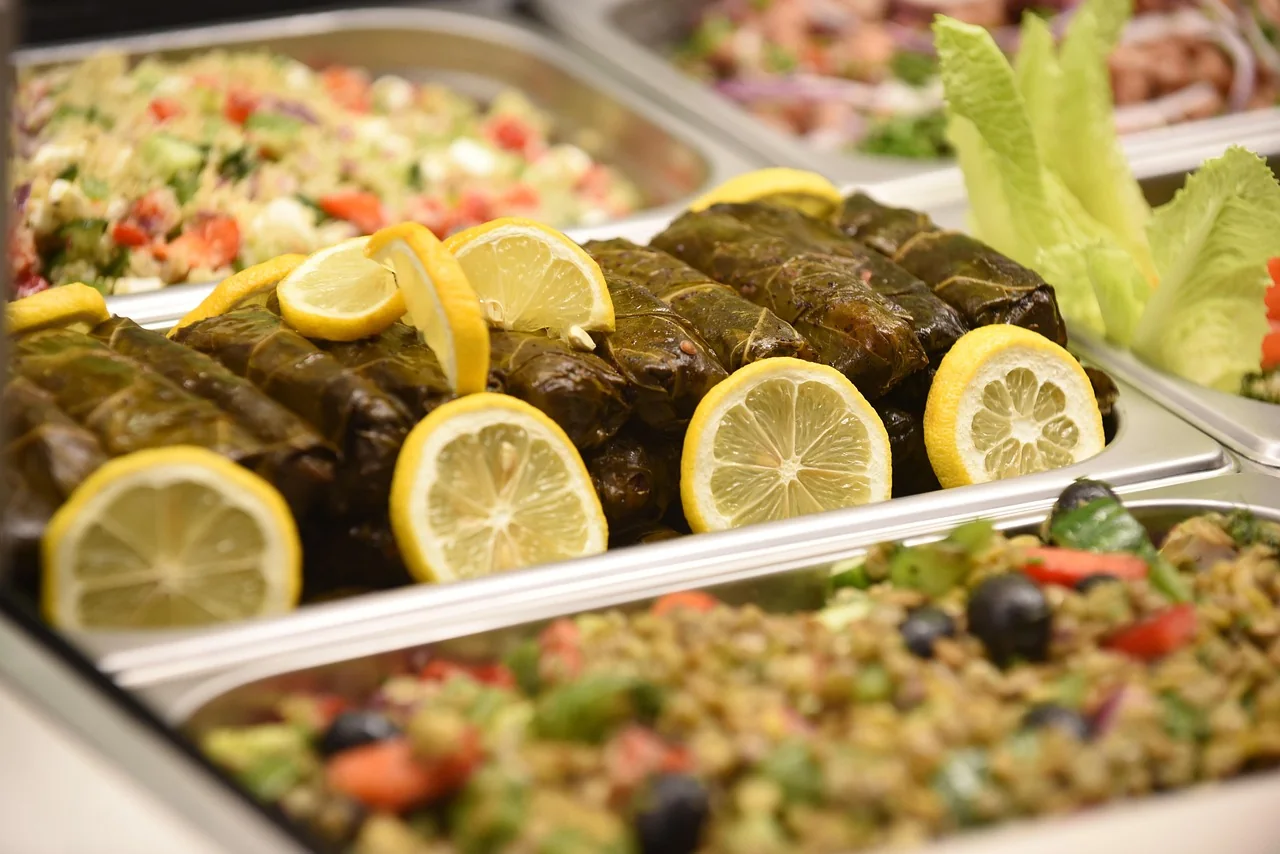
For a lenten meze spread, serve louvi alongside dishes such as tahini, hummus, olives, lenten koupepia (vine leaves stuffed with rice and herbs, without meat), and a village salad without cheese. You can find more ideas in our Food & drink section.
How to store and reheat
Louvi keeps well and many people think it tastes even better the next day, once the beans have absorbed more of the dressing.
- Fridge: store in a covered container for up to 3 days.
- Serving leftovers: take it out of the fridge 30 minutes before eating so the olive oil loosens, then refresh with a squeeze of lemon and a splash of oil.
- Reheating: warm gently in a pan with a couple of spoonfuls of water or the reserved cooking water, stirring carefully, or in the microwave in short bursts. Avoid boiling, which breaks the beans.
- Freezing: possible but not ideal. The greens become soft and watery once thawed. If you want to freeze, freeze the plain cooked beans and add fresh greens later.
Where can you try it in Cyprus?
Louvi is home cooking first and foremost, so the best version is often the one made by a Cypriot friend or neighbour. If you want to try it before cooking it yourself, these are good places to look:
- Village tavernas and family-run restaurants, especially those that cook a daily mageirefta (home-style cooked dishes) menu at lunchtime. Louvi tends to appear on Wednesdays, Fridays and during Lent.
- Traditional lunch canteens and workers' restaurants in town centres, which often display trays of the day's dishes at the counter.
- Meze restaurants during Lent, when many offer a fasting meze with pulses, greens and seafood instead of meat.
- Monastery and church events, where simple lenten food is sometimes served to visitors and worshippers.
Do not be surprised if louvi is missing from the menu in high summer at tourist-focused places; it is very much an everyday and seasonal dish. Learn more about the fasting calendar and other traditions in our Culture & festivals guides, or browse all our recipes for more Cypriot dishes to try at home.
Recommended for this guide
Contains affiliate links GetYourGuide
Skip-the-line tickets, day trips and guided tours, usually with free cancellation up to 24 hours before.
See things to do in Cyprus
Hotels & places to stay
GetYourGuide
Skip-the-line tickets, day trips and guided tours, usually with free cancellation up to 24 hours before.
See things to do in Cyprus
Hotels & places to stay
 Booking.com
The widest choice of hotels, apartments and villas, with free cancellation on many rooms.
Find hotels in Cyprus
Flights & car hire
Booking.com
The widest choice of hotels, apartments and villas, with free cancellation on many rooms.
Find hotels in Cyprus
Flights & car hire
 Discover Cars
Compare car hire from local and international companies at Larnaca and Paphos airports.
Compare car hire
Discover Cars
Compare car hire from local and international companies at Larnaca and Paphos airports.
Compare car hire
Frequently asked questions
Do I need to soak black-eyed beans before cooking louvi?
No. Black-eyed beans are small and thin-skinned, so they cook in around 30–40 minutes from dry. Soaking for a few hours shortens the time a little but is not needed, and many Cypriot cooks skip it.
Which greens are used in louvi me lahana?
Swiss chard is the most common choice in Cyprus. Courgettes are a popular summer alternative, and spinach, beet greens or foraged wild greens can be used in winter and spring.
Is louvi vegan?
Yes. Louvi me lahana contains only beans, vegetables, olive oil, lemon and salt, which is why it is a favourite on Orthodox fasting days. It only stops being vegan if you serve it with fish, as some families do.
Why do Cypriots throw away the first cooking water?
Briefly boiling the beans and discarding the water is a traditional step that many cooks believe makes them easier to digest and gives a cleaner flavour. It is optional, and evidence for the digestive benefit is limited.
Can I use tinned black-eyed beans?
You can for a quick version. Rinse two 400 g tins, cook the greens in salted water until tender, then warm the beans in the same water for 2–3 minutes before draining and dressing. The texture is softer than with dried beans.