Summarise this page 8 key points · 1 minute
- What is Xylofagou like?Xylofagou is a large working village in the Kokkinochoria red-soil area, famous for potatoes, mixing traditional village life with a sizeable international community.
- Where is Xylofagou and how do you get around?Larnaca is about 25 minutes away, Ayia Napa about 20 minutes and Larnaca Airport 30–35 minutes by car, and with limited buses a car is essential.
- Neighbourhoods and places in XylofagouChoose the village centre around the 15th-century Agios Georgios church for walkable life, the hillside villa areas for space, or the coast for coves, caves and diving.
- Who is Xylofagou best for?Xylofagou suits families, retirees, remote workers and anyone working in Larnaca or the Ayia Napa–Protaras area, as it sits between both.
- Homes and cost of livingAs of October 2026 three-bedroom houses had a median asking price of about €305,000, but long-term rentals are rare, so ask local agents.
- Schools, healthcare and everyday services near XylofagouThe village has a state gymnasium, supermarkets and a post office with a citizen service centre, with Larnaca General Hospital about 25–30 minutes away.
- Things to do in and around XylofagouExplore coves, sea caves and dive sites, the Venetian watchtower, Agios Georgios church and Panagia tou Syrmatou chapel, with Ayia Napa beaches 20–30 minutes away.
- Pros and cons of living in XylofagouXylofagou gives more space for your money between Larnaca and Ayia Napa, but you need a car, it is quiet in winter and private schools nearby are limited.
Quick answer
Xylofagou is a large farming village in the east of Larnaca district, between Larnaca and Ayia Napa, known for its red soil and potatoes. It offers spacious homes, a rugged coastline and easy access to the eastern beaches. It suits families, retirees and remote workers who want space and do not mind driving.
- One of the Kokkinochoria (red soil villages), near the A3 motorway between Larnaca and Ayia Napa.
- Larnaca town centre is about 25 minutes away by car, Ayia Napa about 20 minutes and Larnaca Airport about 30–35 minutes.
- Mostly villas, bungalows and newer developments; generally more affordable than Larnaca's coastal suburbs.
- Rocky coastline with coves and dive sites; sandy beaches a short drive away.
- Key places: the village centre and Agios Georgios church, the hillside villa areas, the coast with its fishing shelter and caves, Panagia tou Syrmatou, and the Ormideia and Dhekelia side.
- Main trade-offs: you need a car, and the village is quiet out of season.
What is Xylofagou like?
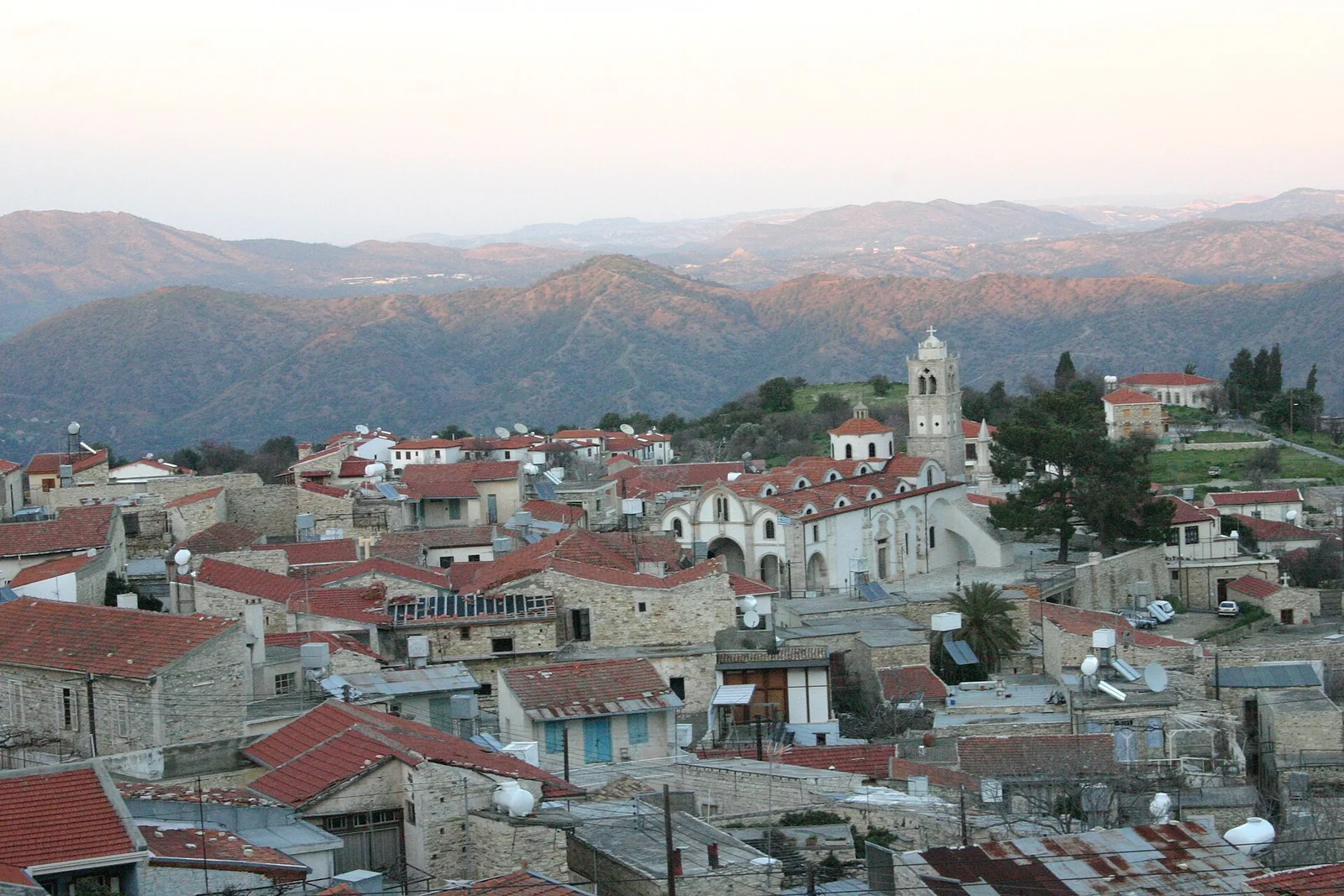
Xylofagou is a large, working village on a hillside in the east of Larnaca district. It belongs to the Kokkinochoria, the "red soil villages", whose rich red earth produces some of Cyprus's best-known potatoes and vegetables. The village even celebrates the crop with a giant potato statue and an annual potato festival.
Life here mixes traditional Cypriot village culture with a sizeable international community. The old centre has churches, coffee shops and narrow streets, while newer residential areas of villas and bungalows spread across the surrounding hills, many with views towards the sea.
Where is Xylofagou and how do you get around?
Xylofagou lies near the A3 motorway between Larnaca and Ayia Napa, close to the British Sovereign Base Area at Dhekelia. Larnaca town centre is about 25 minutes away by car, Ayia Napa about 20 minutes and Larnaca Airport about 30–35 minutes. Nicosia is about 45–50 minutes' drive.
Buses connect the area with Larnaca and the eastern resorts, but services are limited; see our public transport guide. In practice, a car is essential.
Neighbourhoods and places in Xylofagou
Xylofagou had about 6,200 residents at the 2011 census, making it one of the larger villages in the district. Since the 2024 local government reform it has been a community in the Dhekelia cluster, with Ormideia and Xylotymvou. These are the parts residents talk about.
The village centre
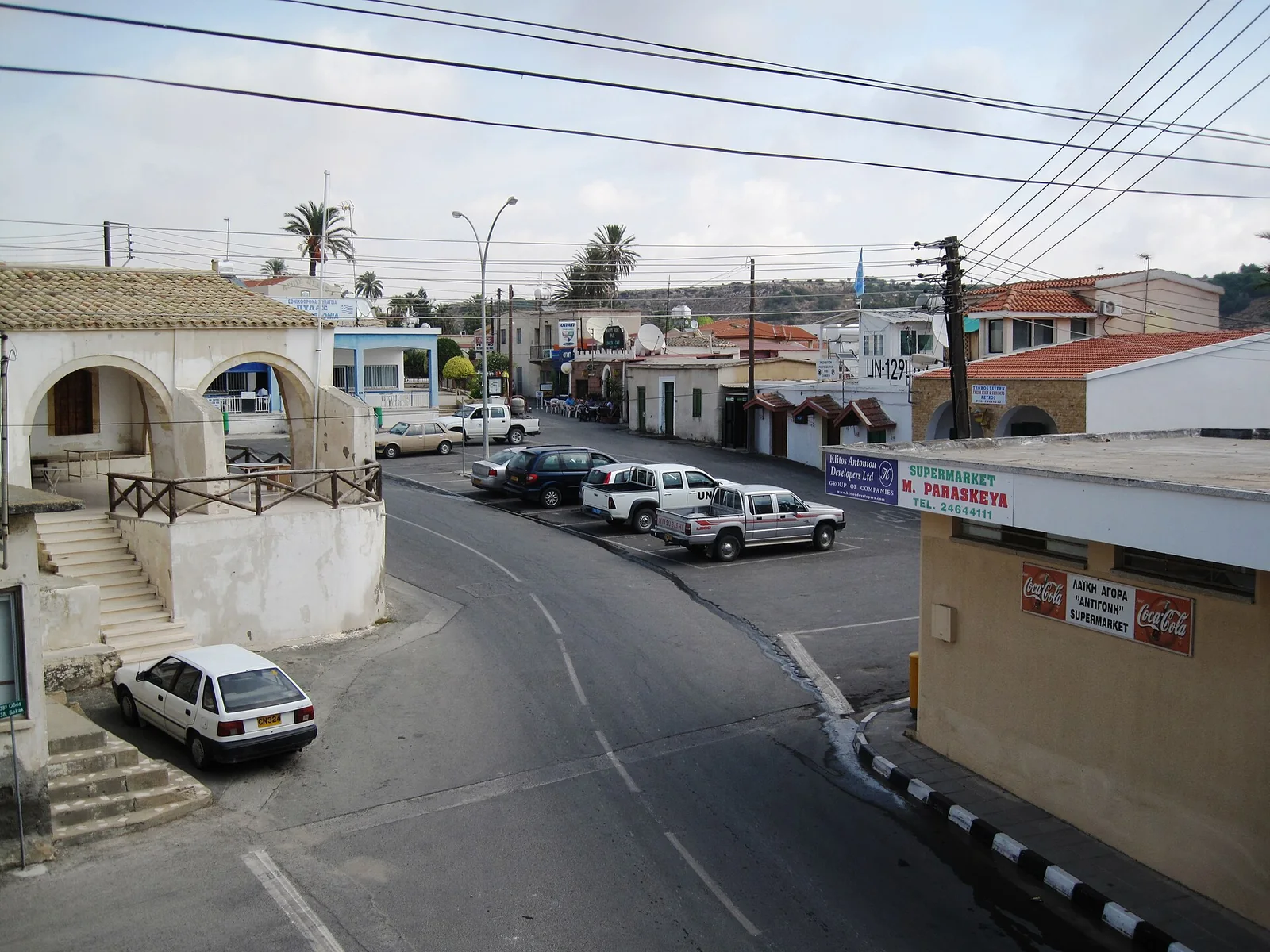
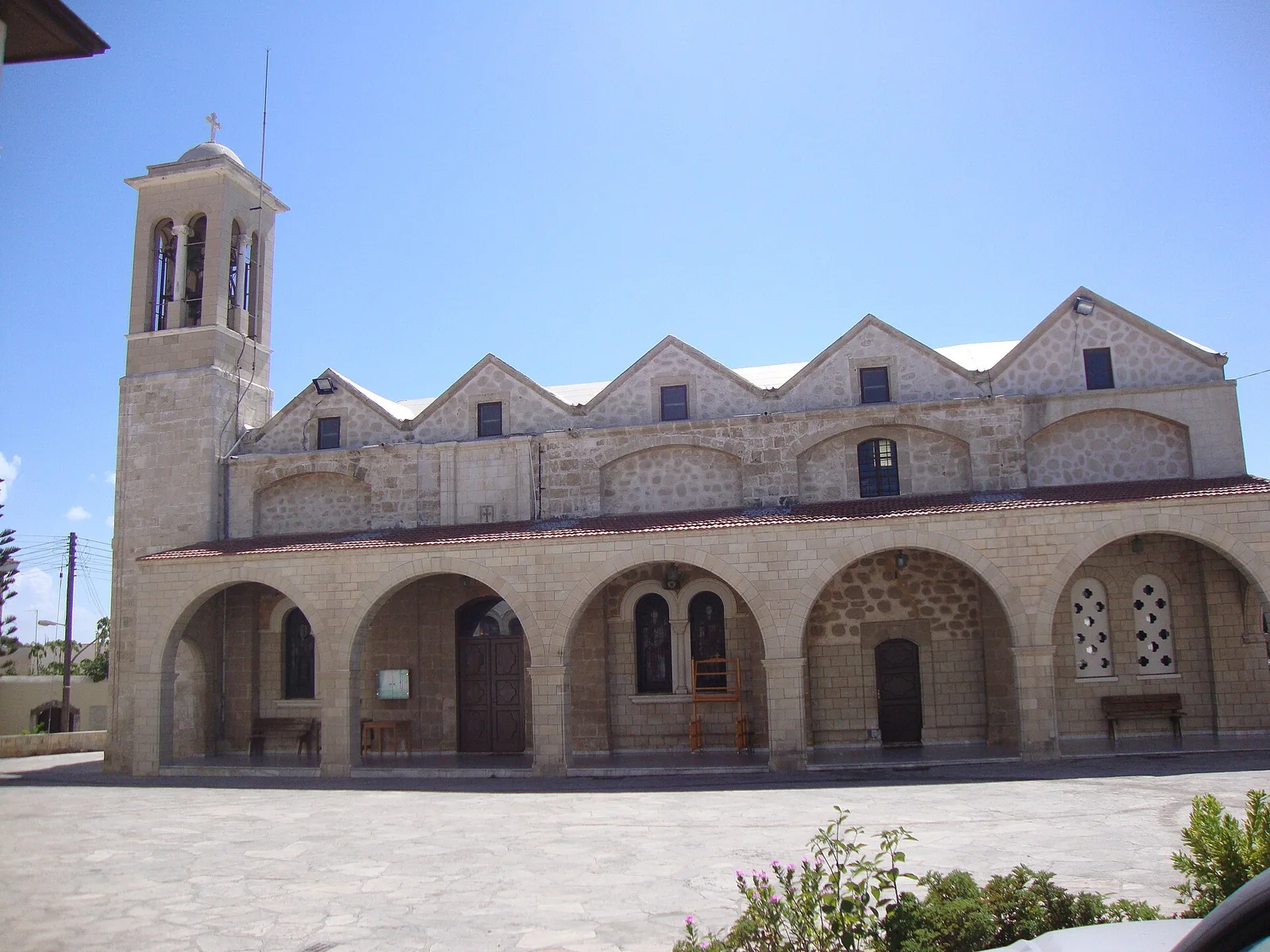
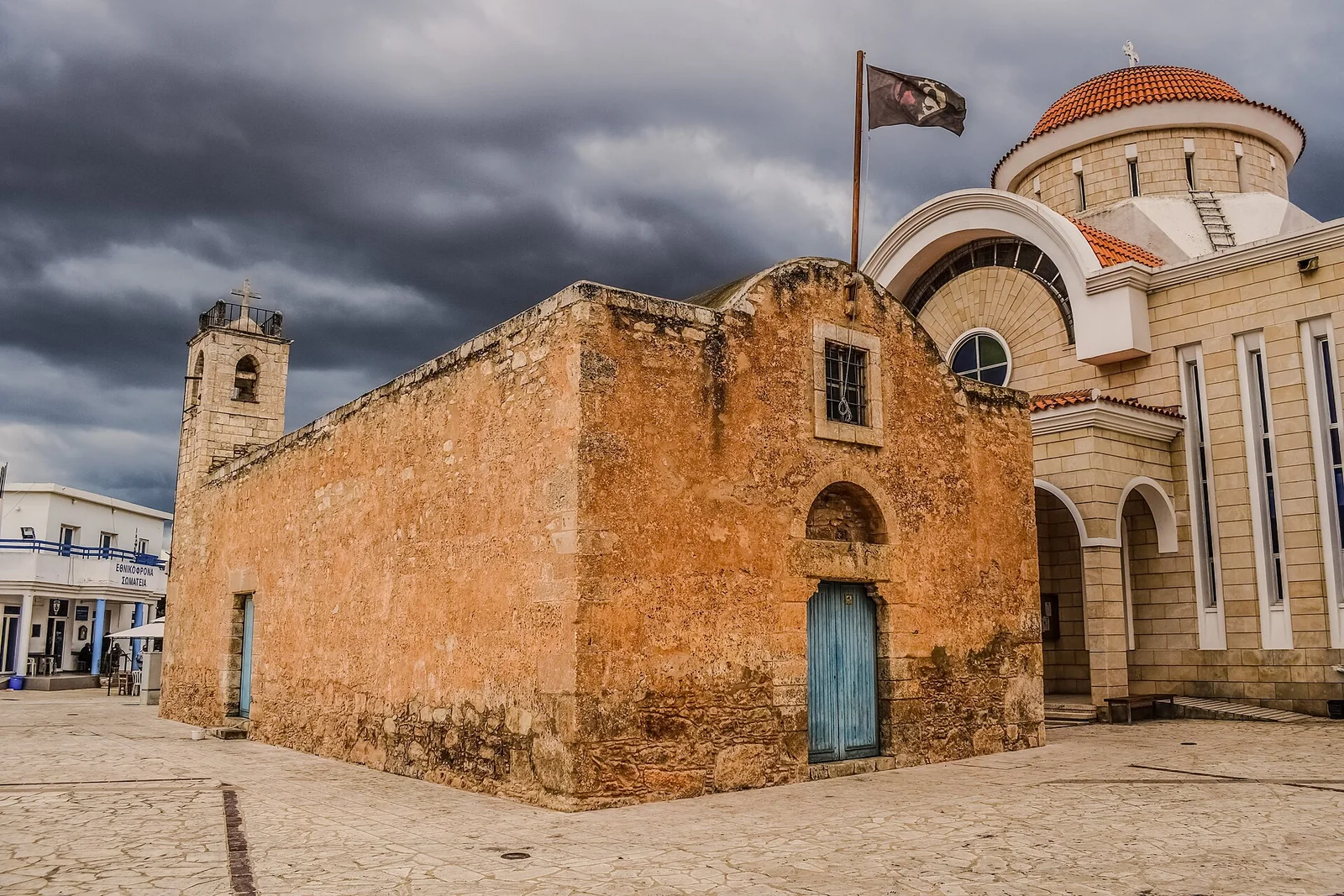
The old centre spreads over the northern side of a hill and is built around the restored 15th-century Church of Agios Georgios, known for its frescoes. Nearby are coffee shops, bakeries and the post office on Anastasi Manoli Street, and the 16-foot "Big Potato" statue, put up in 2021, celebrates the red-soil crop. The annual potato festival takes place each September.
The centre suits families and retirees who want shops, school and village life on foot. Older stone houses come up here, often needing renovation.
The hillside villa areas
Newer residential areas of villas, bungalows and townhouses spread across the surrounding slopes, many with views towards the sea. Three-bedroom houses had a median asking price of about €305,000 in October 2026.
These areas suit families and remote workers who want space, a garden and a pool. Tip: long-term rentals are rare, so ask local agents rather than relying on the portals.
The coast, the fishing shelter and the caves
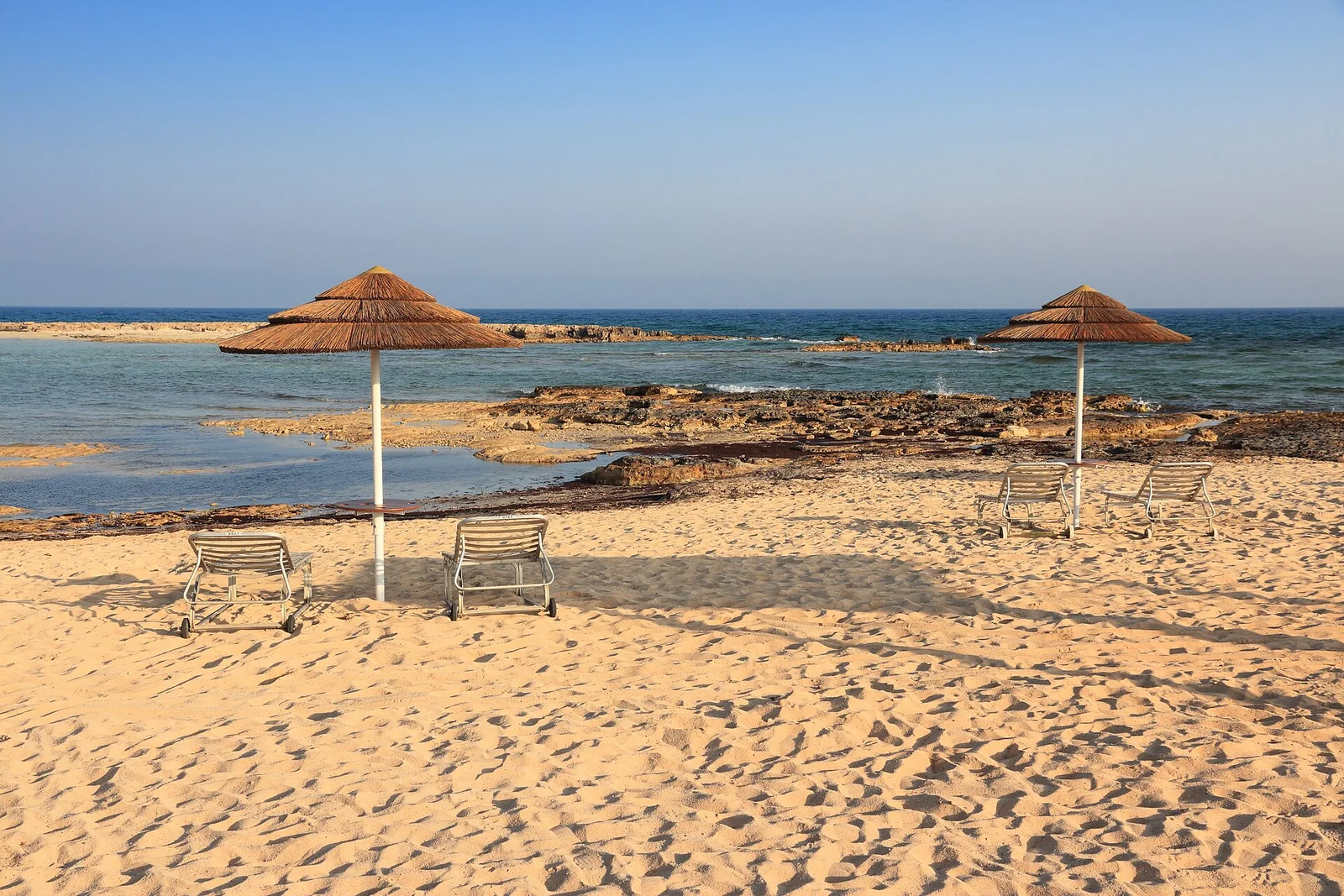
Below the village, a rocky coastline of hidden coves and sea caves is reached from a small fishing shelter or on guided kayak tours. Divers come for the Skopia site and the Mavrospilios cave, whose entrance is about three metres below the surface. On land, the Cave of Agioi Saranta (Forty Saints), where fossilised hippopotamus bones have been found, sits where the cliff drops into the sea, and the Cave of Eglezou is named after the British palaeontologist who found fossils there in 1903. The village's medieval Venetian watchtower is a stop on the region's Venetian Watchtower Route East cycling route.
This side suits divers, kayakers and walkers. For sandy beaches, residents usually drive towards Ayia Napa or Larnaca Bay.
Panagia tou Syrmatou
The small chapel of Panagia tou Syrmatou sits among acacia trees above the sea, with a cave nearby and a designated picnic site. It makes a peaceful spot for a picnic close to home.
Towards Ormideia and Dhekelia
West of the village, neighbouring Ormideia and the British Sovereign Base Area at Dhekelia are a few minutes away along the coast road and the A3. Ormideia adds more shops and services.
Living on this side suits people who commute to Larnaca, as the motorway is close.
Map it · Driving route
Xylofagou village and coast by car
- Church of Agios Georgios
- Big Potato statue
- Xylofagou fishing shelter
- Venetian watchtower
- Cave of Agioi Saranta
- Panagia tou Syrmatou
Opens Google Maps with every stop in order. Opening hours can change, so check before you go.
Who is Xylofagou best for?
- Families wanting a house with a garden and outdoor space.
- Retirees looking for a calm village with an existing expat community.
- Remote workers who want space and quiet but easy access to the coast.
- Those working in Larnaca or the Ayia Napa–Protaras areaAs the village sits between both.
Homes and cost of living
Housing is mostly detached villas, bungalows and townhouses, with a growing number of newer developments on the edges of the village and older stone houses in the centre. Apartments are less common than in Larnaca town. Xylofagou is generally more affordable than Larnaca's coastal suburbs, such as Oroklini and Livadia, and you usually get more land for your budget.
As of October 2026, three-bedroom houses had a median asking price of about €305,000 (most between €140,000 and €510,000), and apartments were advertised from about €120,000 for a one-bedroom to about €170,000 for a three-bedroom. Long-term rentals are rare: there were none on the main portals in October 2026, so ask local agents.
Running costs are typical of village life: larger homes mean higher cooling bills in summer, and you will drive for most errands.
Schools, healthcare and everyday services near Xylofagou
Schools
- Periferiako Gymnasio Xylofagou: the state lower-secondary school serving the village and nearby communities.
- State lyceums: the nearest listed by the Ministry of Education include the Lykeio Kokkinochorion Foti Pitta in Frenaros and the lyceums in Larnaca town; the Larnaca District Education Office in Aradippou confirms which school serves your address. Lessons are in Greek.
- Private schools: Xenion runs a private junior school and high school in Paralimni. In Larnaca, about 25–30 minutes away, are The American Academy Larnaca, Med High Private English School and Pascal Private English School Larnaka.
See our international schools guide.
Hospitals and clinics
- Larnaca General Hospital: public hospital with 24-hour accident and emergency, about 25–30 minutes away.
- Famagusta General Hospital: the public hospital for the east coast, on Christou Ketis Street in Paralimni.
- Private hospitals: Lito Private Hospital in Paralimni and St Raphael Private Hospital in Larnaca.
- GESY: register with a personal doctor at gesy.org.cy; see our GESY guide.
Shopping and services
- Supermarkets: the village has supermarkets, bakeries, pharmacies and cafés, with more choice in Ormideia and Larnaca. See our supermarkets guide.
- Local government: Xylofagou is a community in the Dhekelia community cluster, with Ormideia and Xylotymvou.
- Post office and citizen services: Xylofagou Post Office, at 17 Anastasi Manoli Street, also runs a Cyprus Post citizen service centre for many government services.
- Buses: Cyprus Public Transport runs services towards Larnaca and the eastern resorts, but they are limited.
Things to do in and around Xylofagou
- The Xylofagou coastlineWith coves, sea caves and dive sites, including caves reachable only by divers.
- The Venetian watchtower and the 15th-century Church of Agios Georgios, with restored frescoes.
- Panagia tou Syrmatou chapelSet among acacia trees above the sea.
- Ayia Napa and Protaras beachesAbout 20–30 minutes away.
- Larnaca townWith the Finikoudes promenade and Salt Lake.
Dining locally means village tavernas and fish restaurants.
Pros and cons of living in Xylofagou
Pros
- More space and land for your money
- Between Larnaca and the Ayia Napa coast
- Established international community
- Authentic village character
Cons
- A car is essential
- About 30–35 minutes from the airport
- Quiet in winter
- Limited choice of private schools nearby
Compare Xylofagou with coastal options in our Larnaca area guides or explore the east coast in our Famagusta guides. You can also try the area finder.
Plan my trip
Want us to plan your days in Cyprus?
Tell us where you’re going, for how many days and what you love. We’ll send you a plan made for you, with places to see, where to eat and a Google Maps route for each day.
Compare other areas in Larnaca
Recommended for this guide
Contains affiliate links Booking.com
Frequently asked questions
Is Xylofagou a good place to live for expats?
Yes, for people who want space, a traditional village setting and quick access to both Larnaca and the Ayia Napa coast. It has an established international community, but daily life depends on a car.
Is Xylofagou good for families?
Yes. Family homes with gardens are common, the village has public schooling and everyday shops, and beaches are close by. The main drawback is the drive to private and international schools in Larnaca.
How far is Xylofagou from Larnaca, the airport and the beach?
Larnaca town centre is about 25 minutes by car, Larnaca Airport about 30–35 minutes and Ayia Napa about 20 minutes. The village's own rocky coastline is a few minutes away, and sandy beaches towards Ayia Napa and Larnaca Bay are about 10–20 minutes' drive.
Do you need a car in Xylofagou?
Yes. Some bus routes pass through the area, but services are limited and the village is spread out.
What is Xylofagou like in summer and winter?
Summers are hot, with the eastern resorts nearby at their busiest. Winters are calm and mild, and village life carries on with its own events, including an annual potato festival in September.
Which schools and hospitals serve Xylofagou?
The village has its own state gymnasium, and the nearest lyceums are in Frenaros and Larnaca. Private schools are in Paralimni and Larnaca. For hospitals, Larnaca General is about 25–30 minutes away and Famagusta General is in Paralimni.
Useful links
Sources (8)
- Xylofagou (Larnaka Tourism Board)
- Xylofagou: what the property listings reveal about prices (October 2026) – INDEX.cy
- Xylofagou – Wikipedia
- Local government reform (Cyprus) – Wikipedia
- Public secondary general education schools – Ministry of Education
- Private secondary schools – Ministry of Education
- List of hospitals in Cyprus – GOV.UK
- Citizens Centres (KE.PO.) – Cyprus Post