Summarise this page 16 key points · 1 minute
- The 10 at a glanceThe ten grapes to know are eight local varieties, led by Mavro and Xynisteri, plus the international Shiraz and Cabernet Sauvignon.
- Where are the wine regions of Cyprus?Almost all Cypriot vineyards sit on the Troodos slopes, and labels show five wine PDOs, such as Pitsilia, or wider PGIs such as Lemesos.
- 1. MavroMavro is the island's traditional red, making light, juicy reds with cherry fruit, and is one of the two grapes in Commandaria and Zivania.
- 2. XynisteriXynisteri is Cyprus's most widespread white and flagship grape, with the most talked-about examples from Pitsilia and the Laona-Akamas plateau.
- 3. MaratheftikoMaratheftiko is the best-known indigenous red, giving deep-coloured wines with dark berry fruit, and Zambartas makes one of the finest examples.
- 4. LefkadaLefkada is a deeply coloured, very tannic red brought to Cyprus in the Byzantine era, usually found in blends.
- 5. YiannoudiYiannoudi is a rediscovered old red with bay leaf and balsamic notes, grown in Pitsilia, the Paphos hills and around Koilani.
- 6. PromaraPromara is a textured white with pear to melon fruit and usually the first Cypriot grape to ripen, picked in August.
- 7. SpourtikoSpourtiko is a light, citrusy white that nearly disappeared, now grown mostly in the Paphos hills, where it also pollinates Maratheftiko.
- 8. MorokanellaMorokanella is a rare aromatic white with stone fruit and pine honey notes, planted in small amounts in the Paphos and Nicosia hills.
- 9. ShirazShiraz gives deep purple wines with black fruit and pepper, and some of the best-known examples come from the Limassol hills.
- 10. Cabernet SauvignonCabernet Sauvignon offers cassis and firm tannins in the Limassol wine villages, Pitsilia and the Paphos hills, as in the Vlassides blend.
- Commandaria and Zivania: the same two grapesCommandaria and Zivania are both made from Mavro and Xynisteri, and Commandaria can only be made in 14 designated Troodos villages.
- When is the grape harvest in Cyprus?The harvest usually starts in early August, making late summer and autumn the best time to visit wineries, and the 2026 Limassol Wine Festival ran 26 September to 4 October.
- What to try firstMatch your taste to a grape, such as mountain Xynisteri for crisp whites, Mavro for light reds and PDO Commandaria for dessert wine.
- Tips for tastingCall wineries ahead, compare the same grape from different altitudes, check PDO names on labels, and plan a driver.
Quick answer
The two grapes that define Cyprus wine are the white Xynisteri and the red Mavro, which together also make Commandaria and Zivania. Beyond them, look for the rediscovered local varieties Maratheftiko, Yiannoudi, Promara, Spourtiko and Morokanella, the long-established Lefkada, and international grapes such as Shiraz and Cabernet Sauvignon grown in the Troodos foothills. The harvest runs from August into October, so autumn is the best time to taste them at the wineries.
- Xynisteri is the most widespread white grape in Cyprus and Mavro the main red; both go into Commandaria and Zivania.
- Maratheftiko and Yiannoudi have only female flowers, so they need another variety planted nearby to pollinate them.
- Promara is usually the first Cypriot grape to ripen, picked in August, while Lefkada is a late ripener.
- Lefkada is not strictly indigenous: it is thought to have been brought to the island in the Byzantine era.
- Commandaria is a protected designation of origin made from sun-dried Mavro and Xynisteri in 14 designated villages.
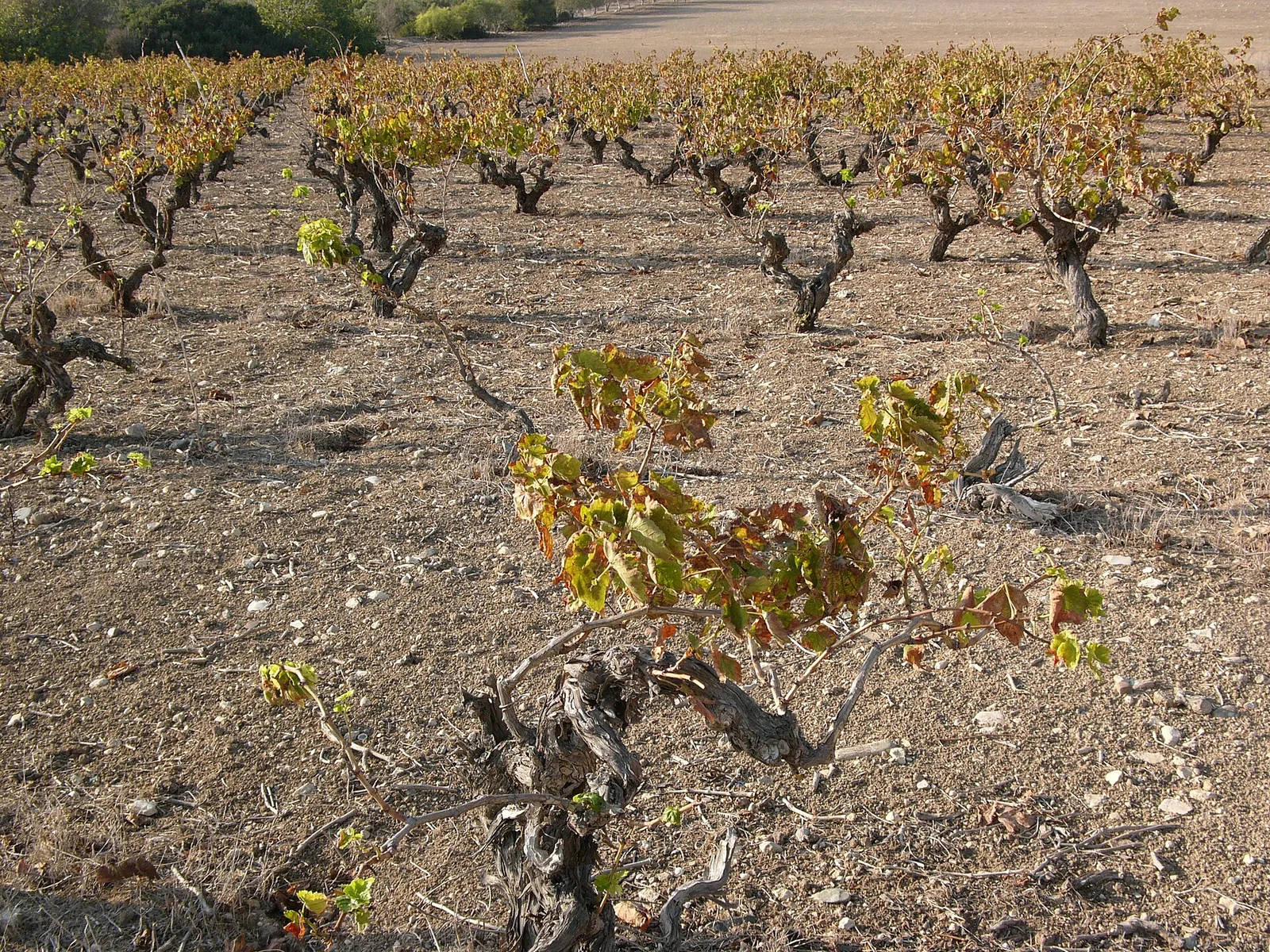
Cyprus has been making wine for thousands of years, and its vineyards were never hit by phylloxera, so many vines still grow on their own roots as low, free-standing bushes. Two grapes dominate, the white Xynisteri and the red Mavro, but a handful of rediscovered local varieties now make some of the island's most interesting bottles. Here are the ten grapes worth knowing, what they taste like, where they grow and which wineries to look for. To visit the producers, use our 10 best wineries to visit in Cyprus and our guide to the wine routes of Cyprus.
The 10 at a glance
| # | Grape | Colour | Style in the glass | Where to look |
|---|---|---|---|---|
| 1 | Mavro | Red | Light, juicy, cherry fruit; base of Commandaria | Across the island; old vines around Farmakas |
| 2 | Xynisteri | White | Fresh citrus, floral at altitude | Everywhere, from Pitsilia to Laona-Akamas |
| 3 | Maratheftiko | Red | Dark berries, structured | Krasochoria of Limassol, Paphos hills, Pitsilia |
| 4 | Lefkada | Red | Deep colour, firm tannins | Paphos (Stroumbi, Polemi), Malia, Omodos |
| 5 | Yiannoudi | Red | Bay leaf, red and black fruit | Pitsilia, Paphos hills, Koilani |
| 6 | Promara | White | Textured, pear to melon | Pitsilia, Paphos hills, Limassol hills |
| 7 | Spourtiko | White | Light, lemon and lime | Paphos hills |
| 8 | Morokanella | White | Aromatic, stone fruit and honey | Paphos hills, Nicosia district |
| 9 | Shiraz | Red | Black fruit and pepper | Limassol hills, Paphos |
| 10 | Cabernet Sauvignon | Red | Cassis, firm structure | Limassol wine villages, Pitsilia |
Where are the wine regions of Cyprus?
Almost all vineyards sit on the slopes of the Troodos Mountains, from about 500 m up to more than 1,500 m. Cyprus has five protected designations of origin (PDO) for wine: Commandaria, Krasochoria Lemesou (the wine villages of Limassol, with the Afames and Laona sub-areas), Pitsilia, Laona Akamas and Vouni Panagias–Ampelitis. Wider regional wines are labelled with a protected geographical indication (PGI): Lemesos, Pafos, Lefkosia or Larnaca. You will see these names on labels, so they are a good clue to where a wine comes from.
1. Mavro
Colour: red.
What it tastes like: Mavro ("black") is the island's traditional red workhorse. Its berries are large and juicy, and much of the old production gave pale, lightly flavoured wine. In good hands it makes light-bodied, juicy reds with cherry fruit and fine tannins, the kind of wine that suits a long Cypriot dinner.
Where it grows: Across the wine regions, often in old dry-farmed vineyards.
Wines to try: Santa Irene in Farmakas makes Laxia, a 100% Mavro from dry-farmed vines that average about a century old. Tsiakkas makes Moulos from 80-year-old Mavro vines. Mavro is also one of the two grapes in Commandaria and Zivania (see below).
2. Xynisteri
Colour: white.
What it tastes like: The most widespread white grape in Cyprus and its flagship variety. Classic Xynisteri is pale and light, often around 11 to 11.5% alcohol. From high vineyards it shows lemon, floral and beeswax notes; from lower, warmer sites it leans towards nectarine, stone fruit and melon. It ranges from bone dry to very sweet.
Where it grows: Everywhere, but the most talked-about examples come from the mountains of Pitsilia and the old bush vines of the Laona-Akamas plateau.
Wines to try: Kyperounda Winery's Petritis, partly matured in oak, is the best-known Xynisteri on the island. Also look for Tsiakkas's Pitsilia Xynisteri from vineyards at about 1,300 m, the Zambartas Single Vineyard Xynisteri, Vlassides's Alátes from non-irrigated vines, and Vouni Panayia's Alina. Vasilikon in Kathikas, where Xynisteri is the main grape, is the place to taste it in the Paphos hills.
3. Maratheftiko
Colour: red.
What it tastes like: The best-known indigenous red, also called Vamvakada (and Pampakina in Pitsilia). It gives deep-coloured wines with mulberry, blackberry and blueberry fruit. Early versions were often heavily tannic; newer ones are gentler and more elegant.
Growing note: The vine has only female flowers and cannot pollinate itself, so growers plant it next to another variety, often Spourtiko, which flowers at the same time.
Where it grows: The Krasochoria of Limassol, the Paphos hills and Pitsilia.
Wines to try: Zambartas Maratheftiko from Agios Amvrosios has been singled out by wine writers as one of the finest examples; Vouni Panayia's Barba Yiannis, Kyperounda's Alma, Tsiakkas's Vamvakada and Tsangarides's Maratheftiko from Lemona near Paphos are other good starting points.
4. Lefkada
Colour: red.
What it tastes like: Intensely coloured, structured and very tannic. Winemakers handle it gently to avoid harshness, and with barrel ageing it develops red-fruit aromas that soften over time.
Is it Cypriot? Not strictly. The Cyprus Wine Museum says it was brought to the island in the Byzantine era, but it has been grown here for so long that it is part of the local tradition.
Where it grows: Mainly in the Paphos area around Stroumbi and Polemi, and in the wine villages of Malia and Omodos. It ripens late and needs another variety nearby for pollination.
Wines to try: It usually appears in blends. Zambartas makes a Shiraz/Lefkada red, and Kyperounda blends Lefkada with Mavro in its Akti rosé.
5. Yiannoudi
Colour: red.
What it tastes like: A rediscovered old variety (the name is also spelt Giannoudi) with bay leaf and balsamic notes and roasted red and black fruit. Higher vineyards give more floral, black-fruited wines; lower, warmer sites give fuller, red-fruited ones with firm tannins.
Growing note: Like Maratheftiko, it has only female flowers and is planted with Xynisteri, Mavro or Shiraz to pollinate it.
Where it grows: Pitsilia, the Paphos hills and around Koilani in the Limassol hills.
Wines to try: Tsiakkas grows it at about 1,200 m near Pelendri; Vouni Panayia makes a varietal Yiannoudi; and Vlassides's Óroman blends Yiannoudi with 10% Shiraz.
6. Promara
Colour: white.
What it tastes like: Thick-skinned and textured, with slightly more acidity than Xynisteri and fruit ranging from pear to green melon and cantaloupe. It is low-yielding and usually the first Cypriot grape to ripen, picked in August.
Where it grows: Pitsilia, the Paphos hills and the Limassol hills.
Wines to try: Compare Tsiakkas's high-altitude Promara, which is finer and more floral, with the fuller, riper version from Vlassides. Vouni Panayia has bottled single-vineyard Promara.
7. Spourtiko
Colour: white.
What it tastes like: Light and citrusy, with lemon and lime notes. The grape is thin-skinned and splits easily, which helps explain why it nearly disappeared before being rediscovered.
Where it grows: Mostly in the Paphos hills, where it also serves as a pollinator for Maratheftiko.
Wines to try: Vouni Panayia makes a Spourtiko from vineyards near the Paphos forest. Fikardos first bottled a Spourtiko in 2007.
8. Morokanella
Colour: white.
What it tastes like: Aromatic, with nectarine, citrus and nutty notes and a touch of pine honey. It was widespread centuries ago but became rare, and it is another variety with only female flowers.
Where it grows: Small plantings in the Paphos hills and the hills of the Nicosia district.
Wines to try: Vouni Panayia's The Women in the Wine Press is made from it, and Aes Ambelis in Kalo Chorio Orinis has produced a Morokanella too. Ktima Gerolemo and Vasilikon have also worked with it.
9. Shiraz
Colour: red.
What it tastes like: Deep purple wines with black cherry, plum, blackberry, black pepper and sweet spice.
Where it grows: Several regions; some of the best-known examples come from the Limassol hills.
Wines to try: Vlassides makes a 100% Shiraz from non-irrigated vineyards around Koilani, Vouni and Pachna, aged 12 months in French oak. Tsangarides makes a Shiraz rosé, and Shiraz also turns up in blends with Lefkada and Yiannoudi.
10. Cabernet Sauvignon
Colour: red.
What it tastes like: Cassis, blackberry and plum with firm, polished tannins, sometimes with a little Cabernet Franc in the blend.
Where it grows: The Limassol wine villages, Pitsilia and the Paphos hills.
Wines to try: The Vlassides Cabernet Sauvignon (90% Cabernet Sauvignon, 10% Cabernet Franc) comes from vineyards in Koilani and Vouni. Kyperounda uses Cabernet Sauvignon and Chardonnay in its Epos range.
Other international grapes you will see
The Deputy Ministry of Tourism lists several more international varieties grown in Cyprus, including Mataro (Mourvèdre), Grenache Noir, Cabernet Franc, Chardonnay, Sauvignon Blanc and Semillon. Tsangarides in Lemona makes a varietal Mataro, and Tsiakkas has grown Chardonnay since the late 1990s. You may also see Ofthalmo, an old local red used in blends, and Muscat of Alexandria.
Commandaria and Zivania: the same two grapes
Commandaria is the island's historic sweet wine, made only from Mavro and Xynisteri. The grapes are picked late in the season and dried in the sun on mats, traditionally for about 8 to 15 days, before pressing. It can only be made in 14 designated villages on the southern slopes of the Troodos in the Limassol district, and it is registered as a protected designation of origin at national and EU level. The Commandaria wine route links the villages, and Tsiakkas in Pelendri is one of the wineries that make it.
Zivania, the clear national spirit, uses the same pair: it is distilled from grape pomace mixed with wine from Mavro and Xynisteri.
When is the grape harvest in Cyprus?
The harvest usually begins in early August, with Promara normally the first local grape to ripen, and red varieties ripen through August and September. Late ripeners such as Lefkada, and the grapes for Commandaria, which are picked late in the season, come in last. Vlassides in Koilani described its 2023 harvest as one of the longest in recent years, running from early August to late October. Late summer and autumn are therefore the best time to visit wineries, when the new vintage is being made.
The main autumn wine event is the Limassol Wine Festival in the Municipal Gardens, with stands from local wineries, food and music. In 2026 it ran from 26 September to 4 October, with some events in the wine villages of Agios Mamas and Arsos. Many villages also hold zivania and other harvest-time festivals in autumn; see our Cyprus festivals month by month guide.
What to try first
| If you like... | Try | Example bottle |
|---|---|---|
| Crisp, fresh whites (Sauvignon Blanc, Albariño) | Xynisteri from the mountains | Kyperounda Petritis or Tsiakkas Pitsilia Xynisteri |
| Fuller, textured whites | Promara | Tsiakkas or Vlassides Promara |
| Light reds (Pinot Noir, Beaujolais) | Mavro from old vines | Santa Irene Laxia |
| Medium to full reds with dark fruit | Maratheftiko | Zambartas Maratheftiko or Vouni Panayia Barba Yiannis |
| Something rare | Yiannoudi or Morokanella | Vlassides Óroman, Vouni Panayia The Women in the Wine Press |
| Rosé for summer | Local blends | Kyperounda Akti (Lefkada and Mavro) |
| Dessert wine | Commandaria | Any PDO Commandaria from the 14 villages |
Tips for tasting
- Taste at the source. Several wineries work by appointment, so call ahead; our wineries guide lists visiting details.
- Compare altitudes. The same grape from Pitsilia and from lower Limassol or Paphos vineyards can taste very different, so ask for a side-by-side tasting.
- Look at the label. PDO names such as Pitsilia or Vouni Panagias–Ampelitis tell you the wine comes from a specific mountain area.
- Try local wine with local food. Xynisteri goes well with grilled halloumi and fish meze, Mavro and Maratheftiko with souvla and afelia.
- Plan a driver. Mountain roads and tastings do not mix, and many wineries are a long drive from the coast.
Related guides
Recommended for this guide
Contains affiliate links GetYourGuide
Skip-the-line tickets, day trips and guided tours, usually with free cancellation up to 24 hours before.
See things to do in Cyprus
Hotels & places to stay
 Booking.com
The widest choice of hotels, apartments and villas, with free cancellation on many rooms.
Find hotels in Cyprus
Flights & car hire
 Discover Cars
Compare car hire from local and international companies at Larnaca and Paphos airports.
Compare car hire
Flights & car hire
 GetRentacar
Rent a car directly from local rental companies, with the price and conditions shown before you book.
Find a rental car
Frequently asked questions
What is the most popular grape in Cyprus?
Xynisteri is the most widespread white grape and Mavro the most widespread red.
Which Cypriot red wine should I try first?
Maratheftiko is the best-known indigenous red, with dark berry fruit. If you prefer something lighter, try a Mavro from old vines; for something rarer, look for Yiannoudi from Tsiakkas, Vouni Panayia or Vlassides.
When is the grape harvest in Cyprus?
It usually starts in August with early varieties such as Promara and can continue into late October for late ripeners and grapes picked at high altitude. Grapes for Commandaria are picked late and then dried in the sun.
What grapes are used to make Commandaria?
Only the indigenous Mavro (red) and Xynisteri (white). The grapes are dried in the sun to concentrate their sugars before pressing, and the wine can only be made in 14 designated villages in the Limassol district.
Do Cyprus wineries grow international grapes?
Yes. Shiraz, Cabernet Sauvignon, Mataro (Mourvèdre), Chardonnay, Merlot and others are grown, often blended with local varieties, such as Zambartas's Shiraz/Lefkada.
Useful links
- Visit Cyprus – Commandaria Wine RouteOfficial route through the Commandaria villages
- Limassol Tourism Board – WineriesWineries in the Limassol wine villages with visiting notes
- Vlassides Winery – 2023 harvest diaryKoilani winery: Xynisteri, Yiannoudi, Shiraz and Cabernet Sauvignon
- Tsiakkas WineryPelendri, Pitsilia: Yiannoudi, Promara and mountain Xynisteri
- Zambartas WineriesAgios Amvrosios: Maratheftiko, Xynisteri and Shiraz/Lefkada
- Kyperounda Winery – Photos Photiades GroupHigh-altitude winery behind Petritis Xynisteri
- Cyprus Agrotourism – Vouni Panayias WineryPaphos hills winery working only with local varieties
- Cyprus Wine Museum – LefkadaMuseum in Erimi with notes on local grape varieties
Sources (8)
- Wines – Deputy Ministry of Tourism (visitcyprus.com)
- Cyprus National Commission for UNESCO – Commandaria and the wine traditions of the Commandaria villages
- JancisRobinson.com – Cyprus's vineyard treasure trove (José Vouillamoz, May 2017)
- Decanter – Wines from Cyprus: current trends plus top bottles to seek out (February 2022)
- World of Fine Wine – Cyprus: going native in the mountains (April 2024)
- FNL Guide – Cyprus: a complete wine experience, part 1 (August 2025)
- Cyprus Mail – Tsangarides winery in the Paphos region (3 July 2025)
- Limassol Tourism Board – The Cyprus Wine Festival 2026