Summarise this page 8 key points · 1 minute
- Is there an electric car grant in Cyprus in 2026?The government's electromobility grant scheme, run by the Road Transport Department (Τμήμα Οδικών Μεταφορών, TOM) and funded through the EU Recovery and Resilience Plan, has had four calls since December 2021.
- Do electric cars pay road tax in Cyprus?Cars first registered in Cyprus from 1 January 2014 pay road tax according to their CO2 emissions in grams per kilometre, with each band charged per gram.
- How much does it cost to register an electric car?A new car is registered by the dealer, and the fee is normally built into the on-the-road price.
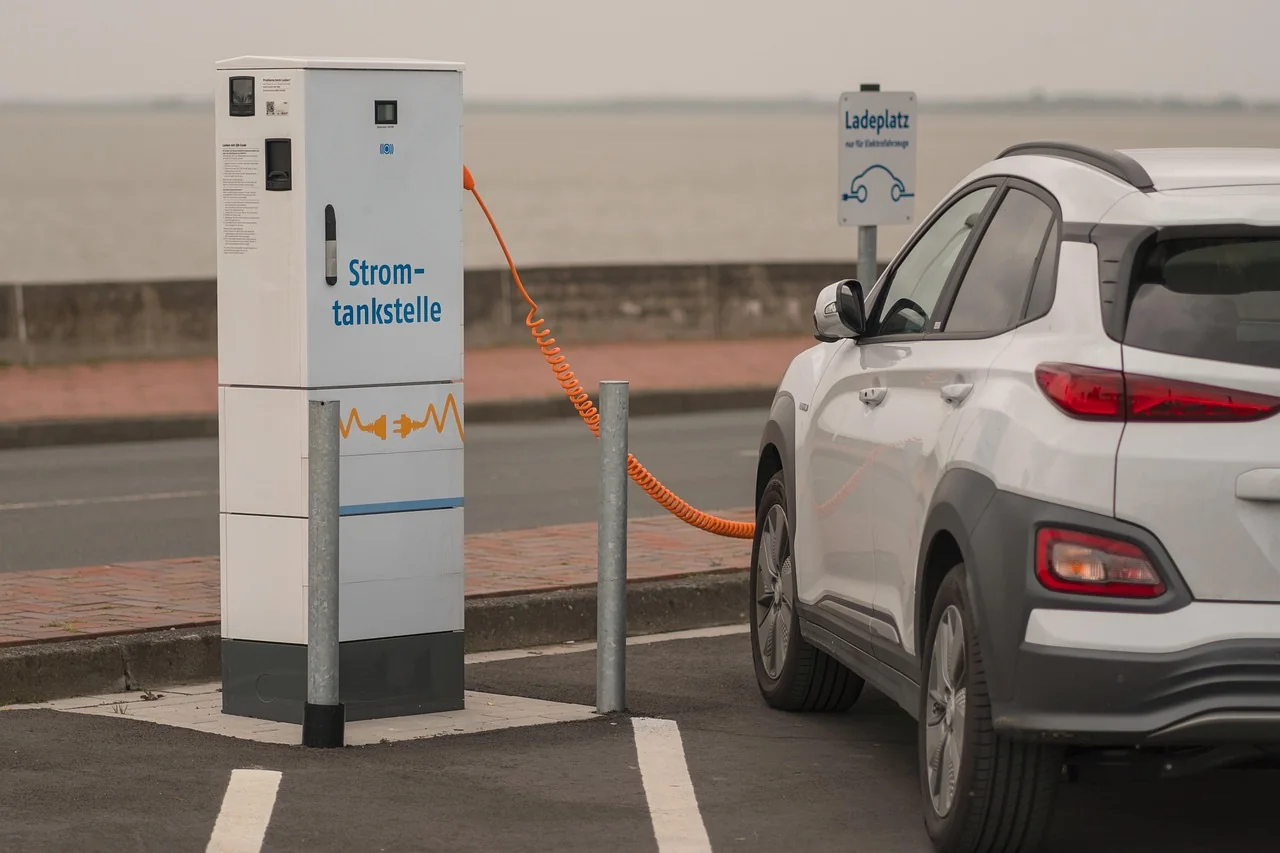
- Where can you charge an electric car in Cyprus?Public charging in Cyprus is still thinner than in most of the EU, so most owners rely on charging at home or at work and use public points for longer trips.
- How much does it cost to charge an EV at home?On EAC's 2026 domestic tariff code 01 (single rate), the energy charge is 17.89 cents per kWh plus a network charge of 3.93 cents, before the monthly fuel adjustment, levies and 9% VAT (the reduced rate runs to 31 March 2027).
- Can you install a charger in an apartment or a house?A licensed electrician installs a wallbox (typically 7 kW on a single-phase supply, more on three-phase) on its own circuit with suitable protection.
- Can you bring an electric car to Cyprus from abroad?Yes, and the rules are the same as for any car.
- Where can you buy an electric car in Cyprus?New EVs are sold through each brand's official importer and its dealer network, which handles registration and warranty.
Quick answer
As of October 2026 there is no government grant open for buying an electric car in Cyprus: the fourth and last call of the Road Transport Department's scheme (€9,000 for a new or used private EV, €20,000 for large families and disabled drivers) ran in December 2025, and a narrower, targeted scheme is expected in 2027. A fully electric car pays no CO2-based road tax, registration costs the same as any car, and charging at home on EAC's 2026 single-rate tariff works out at roughly 27 cents per kWh including VAT.
- No EV purchase grant is open in 2026; the fourth call closed in December 2025 and a targeted scheme is expected in 2027.
- The last call paid €9,000 for a new or used private EV, €20,000 for large families and disabled drivers and €15,000 for small vans.
- Road tax for cars registered since 2014 is charged per gram of CO2, so a fully electric car at 0 g/km pays nothing.
- EAC's 2026 single-rate home tariff comes to roughly 27 cents per kWh with VAT, which is about €4 per 100 km for a typical EV.
- EAC's public e-charge network costs €0.42 per kWh for normal and €0.45 for fast charging, VAT included, paid by card in its app.
If you are thinking about an electric car in Cyprus, the short answer for 2026 is this: there is no purchase grant open this year, but an EV still pays no road tax, costs the same to register as any other car and is cheap to charge at home. The public charging network is growing, slowly, with new state fast chargers at hospitals and bus stations.
This guide sets out what the last grant scheme paid and what is expected next, how road tax and registration work for EVs, what home charging costs on the 2026 EAC tariff, what to check before installing a wallbox in a flat or a house, and how to bring an electric car from abroad.
Is there an electric car grant in Cyprus in 2026?
No. The government's electromobility grant scheme, run by the Road Transport Department (Τμήμα Οδικών Μεταφορών, TOM) and funded through the EU Recovery and Resilience Plan, has had four calls since December 2021. The fourth and most recent opened on 5 December 2025 and closed on 9 December 2025, with a lottery deciding who got a place when applications outnumbered grants (Cyprus Mail, 1 December 2025).
According to a car importer's guide updated in July 2026, there is no electromobility grant in the 2026 state budget, and a narrower programme aimed at priority groups is being prepared for 2027. Its rules have not been published. Until they are, do not delay a purchase in the hope of a grant this year, and do not assume the 2027 scheme will be open to everyone.
What did the last call pay?
These are the amounts of the fourth call (December 2025), useful as a guide to what a future scheme may look like:
| Category | Grant | Places |
|---|---|---|
| New private electric car | €9,000 | 380 |
| Car for a disabled driver | €20,000 | 40 |
| Large family (four or more dependent children) | €20,000 | 40 |
| Used electric car imported from abroad | €9,000 | 50 |
| New small van (N1 category) | €15,000 | 10 |
Only fully electric vehicles qualified: hybrids and plug-in hybrids got nothing. The same importer's guide reports price caps of €80,000 including VAT for new cars and €35,000 for used imports, and a rule that you keep the car for two years (five years for the €20,000 categories) or repay the grant.
How did you apply?
- Wait for the call to be announced by the Road Transport Department and in the news.
- Apply online during the short window, before ordering the car.
- If there are more applications than places, a lottery draws a priority list.
- Only once you receive preliminary approval do you order and register the car.
- Send the registration and payment documents by the deadline to receive the money.
The key lesson from past calls: never order the car before approval, and expect the window to be days, not weeks. Watch the Road Transport Department pages for the 2027 call.
Do electric cars pay road tax in Cyprus?
No, in practice. Cars first registered in Cyprus from 1 January 2014 pay road tax according to their CO2 emissions in grams per kilometre, with each band charged per gram. The lowest band, up to 120 g/km, is charged at €0.50 per gram. A fully electric car has 0 g/km, so the calculation comes to nothing. Hybrids still pay, but usually little: a hybrid at 100 g/km pays about €50 a year (2026).
You still renew the circulation licence each year on the gov.cy road tax service, and the portal shows the amount for your car. Our guide to paying road tax in Cyprus has the full band table and deadlines.
How much does it cost to register an electric car?
The same as any car. A new car is registered by the dealer, and the fee is normally built into the on-the-road price. For a car you import yourself, registration with the Road Transport Department costs about €150 (2026), plus the roadworthiness test of about €40 for a used car and your insurance. Cyprus has not charged excise duty on cars since 2019, so the CO2 figure no longer affects the import tax, only the road tax. The steps are on the gov.cy registration page and in our guide to registering an imported car.
Where can you charge an electric car in Cyprus?
Public charging in Cyprus is still thinner than in most of the EU, so most owners rely on charging at home or at work and use public points for longer trips. About 250 public charging stations were operating at the start of 2026, mostly in and around Limassol and Nicosia, with gaps in rural areas (Cyprus Mail, 6 August 2026).
| Network | Who runs it | How you pay | Price (official, dated) |
|---|---|---|---|
| EAC e-charge | Electricity Authority of Cyprus | e-charge app (Android and iOS), bank card | €0.42/kWh normal (up to 22 kW AC), €0.45/kWh fast (up to 120 kW DC), VAT included; tariff dated November 2022, page checked October 2026 |
| State fast chargers | Ministry of Transport, coordinated by the Department of Electromechanical Services | App or payment card | Not published in the announcement |
| pcharge | Petrolina, at its forecourts | Operator app | Check in the app |
| Other operators | Companies such as EV Power, plus retailers such as Lidl, hotels and municipalities | Operator apps | Check in the app |
EAC e-charge
The Electricity Authority's e-charge stations form the backbone of the public network. Each station has two sockets, a Type 2/CCS and a CHAdeMO, so two cars can charge at once. You start, watch and stop a session in the e-charge app and pay by debit or credit card; you do not need an account, and you only give an email address if you want an invoice.
State fast chargers
The Ministry of Transport has been installing fast chargers at public sites. In May 2026 it announced eleven fast-charging points, at a cost of €918,000, at locations including the car parks of Nicosia General Hospital and Limassol General Hospital, the church in Trimiklini on the Troodos road and the Tombs of the Kings bus station in Paphos (Cyprus Mail, 27 May 2026). They are coordinated by the Department of Electromechanical Services, and you pay through a mobile app or a payment card. Further expansion is planned.
Ten 100 kW fast chargers funded by the EU Recovery and Resilience Facility were switched on in late 2025, and a government grant scheme for 1,000 private charging points has €1.85 million for its second phase in 2026, covering 45% to 55% of eligible installation costs (Cyprus Mail, 6 August 2026).
Commercial and destination chargers
Petrolina runs fast chargers under its pcharge brand at its petrol stations, and other operators such as EV Power focus on higher-power DC chargers at shopping centres, service stations and inter-city routes. Supermarkets, hotels and some municipalities also offer charging. A private company, Energypoint, has announced plans for more than 70 stations over seven years. Prices and payment methods differ from one operator to the next, and we have not found official, dated price lists for them, so check the price per kWh in the operator's app before you plug in. Even the EAC's public rate is well above what you pay at home.
Since January 2025, new non-residential buildings with 20 or more parking spaces must install at least one charging point, so new offices and shops are gradually adding them.
Tips for public charging
- Install two or three operator apps before a long drive, because roaming between networks is patchy.
- Plan trips to the Troodos with a margin: climbs use more energy, and you get some back on the way down.
- In summer, charge in the shade where you can, and do not leave the car sitting at 100% in the heat.
How much does it cost to charge an EV at home?
Home charging is the big saving. On EAC's 2026 domestic tariff code 01 (single rate), the energy charge is 17.89 cents per kWh plus a network charge of 3.93 cents, before the monthly fuel adjustment, levies and 9% VAT (the reduced rate runs to 31 March 2027). Added together, that is roughly 27 cents per kWh all-in (our own calculation, autumn 2026). Under the 2026 tariffs the two-rate code 02 gives almost no discount at night, so it is not worth switching to just for an EV. Check the current figures on the EAC website.
Running cost example
The table uses an example consumption of 15 kWh per 100 km, typical for a small to mid-size EV in mixed driving. Your own car's figure will differ.
| Item | Electric car, charged at home | Notes |
|---|---|---|
| Electricity price | About €0.27 per kWh (2026) | EAC code 01, all-in, with 9% VAT |
| Energy per 100 km | 15 kWh (example) | Check your car's real consumption |
| Cost per 100 km | About €4 | 15 × €0.27 |
| 15,000 km a year | About €610 | Home charging only |
| Same distance on EAC fast chargers | About €1,010 | 15 kWh × €0.45 per 100 km |
| Road tax | €0 | 0 g/km on the CO2 scale |
For a petrol car, multiply your litres per 100 km by the pump price on the day, and add CO2-based road tax. If you have rooftop solar panels, charging during the day can bring the cost down further.
Can you install a charger in an apartment or a house?
Houses and villas
This is the easy case. A licensed electrician installs a wallbox (typically 7 kW on a single-phase supply, more on three-phase) on its own circuit with suitable protection. Ask the electrician to check whether your supply capacity is enough when the air conditioning, water heater and charger all run together; if not, they can set the charger to a lower power or you can ask EAC about upgrading the supply. Always use a registered electrician and keep the paperwork for the work, in case your home insurer or a future buyer asks for it.
Apartments
Charging in a block of flats takes more planning:
- Check whether your parking space is yours (on the title deed) or a common area.
- Ask the management committee for approval before any cabling through common parts.
- Agree how the electricity is metered: ideally the charger is connected to your own meter, not the common supply.
- Have a licensed electrician survey the route and the building's capacity.
- Get the agreement in writing, especially if you rent.
If you rent, the landlord's written consent is essential. If home charging is not possible, look for a flat with a charger already installed, or a workplace with charging.
Can you bring an electric car to Cyprus from abroad?
Yes, and the rules are the same as for any car. A used car from another EU country normally pays no duty or VAT; a car from the UK or another non-EU country pays 10% import duty and 19% VAT unless you qualify for transfer-of-residence relief. Check the charging connector before shipping: cars sold in Europe, including the UK, use the Type 2 and CCS sockets found in Cyprus, while some cars from other markets use different plugs. See our guides to importing a car to Cyprus and bringing a car from the UK.
Where can you buy an electric car in Cyprus?
New EVs are sold through each brand's official importer and its dealer network, which handles registration and warranty. Electric cars are still a small share of the market: fully electric models took 4.9% of new registrations in the first half of 2026, while hybrids took more than half of passenger car registrations and about two in three cars registered were used imports (Cyprus Mail, 6 August 2026). One newer arrival is BYD, which opened a flagship showroom in Nicosia (bydauto.com.cy). For other brands, use the official importer listed on the manufacturer's own website rather than a grey importer, so warranty and battery support are local. Ask any dealer three things before you sign: who services the high-voltage battery locally, how long the battery warranty is, and whether a charger installation is included. For a used EV, ask for a battery health report and check that the car's software and charging cable suit Cyprus.
What to do next
- Work out your yearly tax with our guide to paying road tax in Cyprus.
- Compare cover in our guide to car insurance for expats in Cyprus.
- Open or transfer your electricity account with our guide to setting up electricity and water.
- Cut charging costs further with solar: see sustainable living in Cyprus.
Recommended for this guide
Contains affiliate links Airalo
 Discover Cars
Frequently asked questions
Is there a grant for electric cars in Cyprus in 2026?
No. The fourth call of the government EV scheme opened in December 2025 and no new call is planned for 2026. A more targeted programme for priority groups is expected in 2027, with rules not yet published.
Do electric cars pay road tax in Cyprus?
Cars first registered from 2014 pay road tax per gram of CO2 emitted, so a fully electric car with 0 g/km pays no road tax. The renewal portal shows the exact amount for your car.
How much does it cost to charge an electric car at home in Cyprus?
On EAC's 2026 single-rate domestic tariff the all-in price is roughly 27 cents per kWh including the fuel adjustment and 9% VAT. A typical EV using 15 kWh per 100 km costs about €4 per 100 km to charge at home.
Can I install an EV charger in my apartment building in Cyprus?
Usually yes, but you need the agreement of the building's management committee for any work in the common parts, a licensed electrician to install it, and a check that your supply can take the extra load.
How much does public EV charging cost in Cyprus?
On the EAC e-charge network, €0.42 per kWh for normal charging and €0.45 per kWh for fast charging, VAT included, as listed on EAC's site in October 2026. Other operators set their own prices, shown in their apps.
Can I get the EV grant on an imported used electric car?
The last call had a category for used electric cars imported from abroad and never registered in Cyprus, with a €35,000 price cap. That call is closed, and no scheme is open in 2026.
Useful links
- Road Transport Department – gov.cyRuns EV grant calls and vehicle registration
- gov.cy – Renewal of road tax
- gov.cy – Registration of motor vehicle
- Electricity Authority of Cyprus (EAC)Domestic tariffs and supply changes
- EAC e-charge – public charging stations and pricesPay by card in the e-charge app
- BYD Cyprus
- Customs and Excise Department – Import of motor vehicles from third countriesDuty and VAT on cars from the UK and other non-EU countries
- Customs and Excise Department – Vehicles from other EU member states
Sources (9)
- Cyprus Mail – Cyprus opens fourth phase of EV grant scheme (1 December 2025)
- EAC – e-charge service (page updated 21 October 2026, checked 25 October 2026)
- Cyprus Mail – Cyprus's EV charging network and the 85,000 target (6 August 2026)
- Cyprus Mail – New BYD Sealion 5 DM-i makes Cyprus debut (20 February 2026)
- Cyprus Mail – Fast chargers for e-vehicles installed across the island (27 May 2026)
- iSellCars.cy – Cyprus EV grant: the real rules, and the 2027 outlook (updated 28 July 2026)
- gov.cy – Renewal of road tax
- gov.cy – Registration of motor vehicle
- Electricity Authority of Cyprus