Summarise this page 6 key points · 1 minute
- How does recycling work in Cyprus?Household recycling is organised mainly by Green Dot Cyprus, working with each municipality or community.
- Is recycling compulsory, and when does Pay As You Throw start?As of September 2026, Pay As You Throw (PAYT), where households pay according to how much mixed waste they throw away, had not been rolled out nationwide.
- What are Green Points and where are they?Green Points are free drop-off centres where households can leave waste that does not go in the street bins.
- Which solar and energy-saving grants are open in 2026?The energy ministry's €20 million Save and Upgrade Homes scheme opens at 09:00 on Tuesday 20 October 2026 and closes at 23:59 on 30 December 2026, or earlier if the money runs out.
- How can you cut waste day to day in Cyprus?The Zero Waste Alliance Cyprus, founded in Limassol in 2021, brings together Friends of the Earth Cyprus, Zero Food Waste Cyprus, the Ecological Movement and Let's Make Cyprus Green, and runs campaigns and local clean-ups.
- Where can you buy local and organic produce in Cyprus?Buying local cuts transport and packaging, and Cyprus has a long growing season.
Quick answer
In Cyprus you sort packaging (plastic, metal and drink cartons), paper and glass for Green Dot collection, and take bulky, electrical and hazardous household waste to a free Green Point. As of October 2026, Pay As You Throw and a bottle deposit scheme are still not in force. The main 2026 home energy grants are the €20 million Save and Upgrade Homes scheme, open from 20 October to 30 December 2026, and a solar water heater grant of €500 to €900.
- Packaging (PMD), paper and glass are collected separately; glass goes in green bell-shaped bins.
- Green Points are free for households; Limassol district's four sites open Monday to Saturday, 08:00–16:00.
- Pay As You Throw is planned but not yet nationwide; municipalities say full roll-out is unlikely before 2029.
- The 2026 Save and Upgrade Homes scheme opens on 20 October 2026, with grants of up to €32,000, applications online only.
- A solar water heater grant pays €500, or €900 for mountain areas and vulnerable households, until 20 December 2026 or 2,000 applications.
Living sustainably in Cyprus starts with three habits: sort your packaging, paper and glass for collection, take everything else to a free Green Point, and cut your electricity bill with the sun. In 2026 the big news is a €20 million home energy upgrade scheme that opens on 20 October, while Pay As You Throw and a bottle deposit scheme are still on the way.
Cyprus is behind much of the EU on recycling, so a little knowledge goes a long way. This guide explains the rules as they stand in October 2026, where to take bulky and hazardous waste, which grants are open, and how to shop more locally and with less packaging.
How does recycling work in Cyprus?
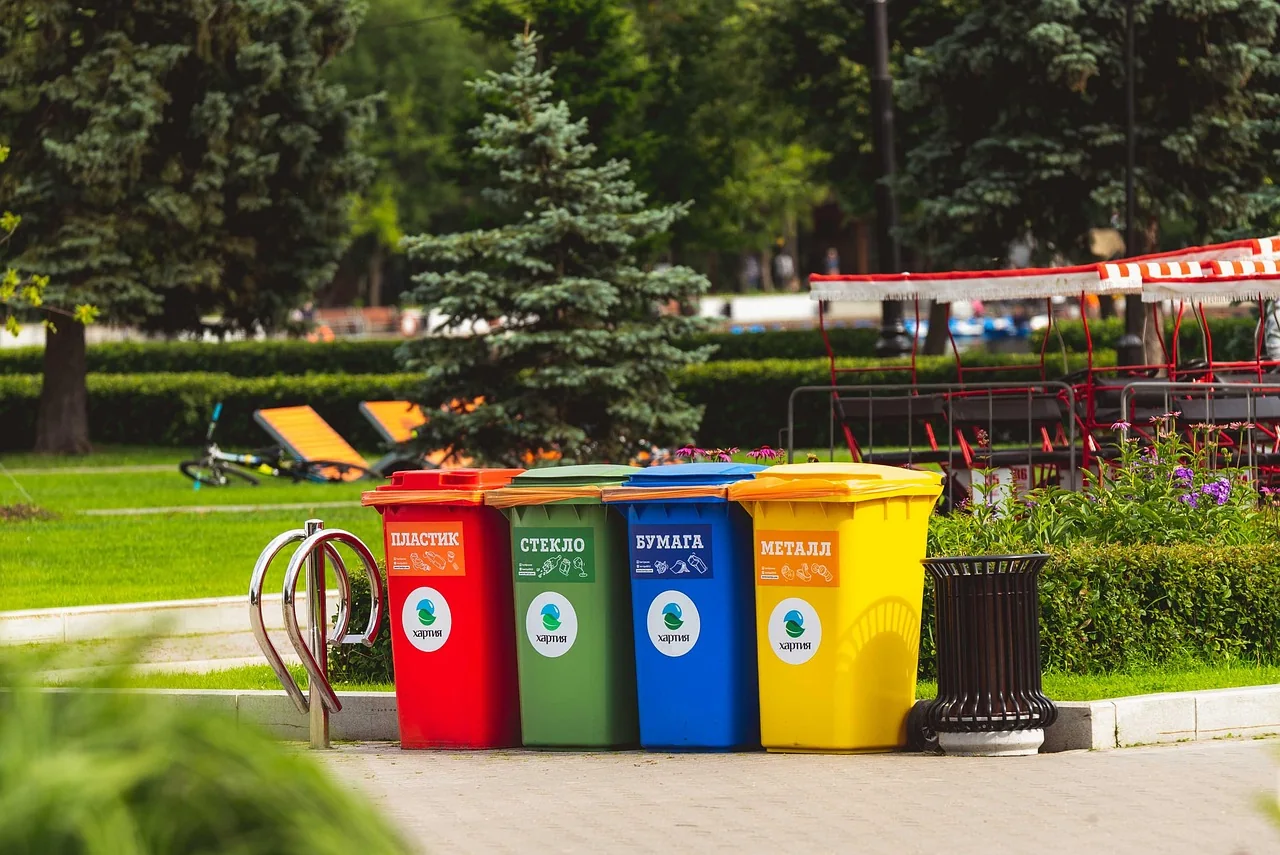
Household recycling is organised mainly by Green Dot Cyprus, working with each municipality or community. You separate three streams:
| Stream | What goes in | What stays out |
|---|---|---|
| PMD (plastic, metal, drink cartons) | Plastic bottles and packaging, detergent bottles, cans, drink cartons | Disposable plates, cups and cutlery, foam, cling film, foil wrap, vacuum packs |
| Paper and cardboard | Boxes, paper packaging, newspapers, magazines, office paper, flyers | Paper cups and plates, takeaway boxes, napkins, kitchen roll, receipts, cigarette packets |
| Glass | Bottles and jars (lids off) | Window glass, mirrors, ceramics, light bulbs |
Rinse containers, flatten boxes and keep food out of everything. Contaminated paper and heavily soiled plastic cannot be recycled.
How it is collected depends on where you live. Many areas have door-to-door collection of PMD and paper on set days, with bags left outside the night before; others use blue PMD and brown paper bins in the street. The bag colours vary: in the Exapolis cluster west of Nicosia, which joined the door-to-door programme in November 2025, PMD goes in a transparent bag and paper in a brown bag. Glass is almost always collected in green, bell-shaped bins at central points. The RecyclingCy app shows collection days, glass bins and battery drop-off points near you.
Other items have their own routes:
- Clothes and shoes: purple textile bins, charity shops or the Red Cross. See our guide to second-hand shops, charity shops and flea markets.
- Batteries: collection boxes in supermarkets, electrical shops, shopping centres, schools and bank branches.
- Electrical items, furniture, garden waste and paint: your nearest Green Point.
Is recycling compulsory, and when does Pay As You Throw start?
Not yet. As of September 2026, Pay As You Throw (PAYT), where households pay according to how much mixed waste they throw away, had not been rolled out nationwide. The government had aimed for early 2027, but municipalities said full implementation was unlikely before 2029, citing a funding gap of around €55 million and long delivery times for organic-waste lorries.
The municipalities' proposed timeline is:
- End of 2026: agreement on the waste management framework.
- Mid-2027: compulsory recycling across Cyprus, with inspectors' spot checks and fines for recyclables found in mixed waste.
- Late 2028 or early 2029: separate collection of household food waste, then full PAYT.
A deposit return scheme for bottles and cans has also been in preparation for years, but in April 2026 its regulations had still not been finalised. Cyprus collects about 46% of single-use drink bottles separately, against an EU average of 71%. Countries that miss the EU's 90% target by 2029 must introduce a deposit scheme by 1 January 2029.
What are Green Points and where are they?
Green Points are free drop-off centres where households can leave waste that does not go in the street bins. They are for households only: businesses, builders and other professionals cannot use them.
| District | Green Points | Opening hours (as published) |
|---|---|---|
| Nicosia | Strovolos | Mon–Sat 07:00–19:00, Sun 07:00–14:00 |
| Nicosia | Alambra, Ergates, Mallouda, Astromeritis, Kokkinotrimithia, Peristerona, Linou | Mon–Sat 08:00–19:00, Sun 08:00–14:00 |
| Nicosia (municipality) | Temporary Green Points at Kaimakli and Agios Dometios | Check with Nicosia Municipality |
| Limassol | Fasoula, Kolossi, Pareklissia, Avdimou | Mon–Sat 08:00–16:00, closed public holidays |
| Larnaca | Temporary Green Point, Vassilis Michaelidis Street | Seasonal hours set by Larnaca Municipality |
Hours change around holidays and in August, when some temporary sites close for two weeks, so check before you load the car. In Paphos and Famagusta districts, ask your municipality or community council for the nearest site.
What can you take to a Green Point?
Bring your waste already sorted. The Limassol district rules give a good idea of what is accepted island-wide and the limits per household:
- Bulky waste such as furniture, mattresses and carpets: 2 m³ every six months.
- Electrical and electronic appliances: no limit, as long as they are intact (no fridges without compressors).
- Garden waste: 3 m³ every four months.
- Paper, cardboard, aluminium and metals: no limit.
- Glass: 0.5 m³; wood: 1 m³; textiles: 20 kg, all per six months.
- Building and DIY waste such as tiles and sanitary ware: up to 200 kg every six months (no plasterboard).
- Household hazardous waste: medicines (20 items), light bulbs (20), paints and adhesives (30 litres), engine oil (5 litres), and unlimited household batteries and used cooking oil.
Mixed rubbish and kitchen food waste are not accepted.
In the Limassol mountain villages, smaller Green Kiosks take plastic, paper, metal, glass, batteries, lamps and reusable items such as books and clothes. The first were installed in Palodia, Apaisia, Trimiklini, Foini and Monagri.
Which solar and energy-saving grants are open in 2026?
Save and Upgrade Homes 2026
The energy ministry's €20 million Save and Upgrade Homes scheme opens at 09:00 on Tuesday 20 October 2026 and closes at 23:59 on 30 December 2026, or earlier if the money runs out. Applications are first come, first served and only online through the ministry's grants platform, fundingapps.meci.gov.cy.
- What it funds: insulation, new windows and doors, shading, solar water heaters, efficient air conditioning and heat pumps, photovoltaics with battery storage, and energy experts' fees.
- How much: up to €32,000 for upgrades to a nearly zero-energy home (at least 60% primary energy savings), or up to €24,000 for at least 60% savings without reaching that standard. Higher grants apply to vulnerable consumers, mountain areas and refugee housing.
- Who can apply: individuals who own the home, with a domestic electricity account in an individual's name. The home must have been connected to the grid before 1 January 2008, or had its planning or building permit applied for before 21 December 2007.
- Before you start: you need an Energy Performance Certificate issued on or after 15 May 2026 by a registered expert, and work must start only after that certificate. A final certificate after the work proves the savings.
Solar water heater grant
In July 2026 the cabinet approved a €1 million scheme for installing or replacing a domestic solar water heater: €500 per household, or €900 in mountain areas and for vulnerable households. Systems must be on the approved equipment list and fitted by a registered installer. Applications close on 20 December 2026, or sooner once 2,000 have been received. The scheme is run by the RES and Energy Conservation Fund.
What happened to "Photovoltaics for All"?
The 2024–2025 home grant scheme, which included the Photovoltaics for All category with repayments through the electricity bill, closed on 20 December 2025. A separate scheme for home battery storage was reported as being prepared in September 2025; check the Fund's website for any new call. For setting up your electricity account, see our guide to utilities in Cyprus.
How can you cut waste day to day in Cyprus?
- Join the zero-waste movement. The Zero Waste Alliance Cyprus, founded in Limassol in 2021, brings together Friends of the Earth Cyprus, Zero Food Waste Cyprus, the Ecological Movement and Let's Make Cyprus Green, and runs campaigns and local clean-ups.
- Take your own bags and containers. Municipal markets and farmers' markets are the easiest places to buy loose produce, nuts and pulses without packaging.
- Refill where you can. Some health food shops sell pulses, grains and detergents by weight; ask before you go.
- Buy and sell second-hand rather than new for furniture, baby equipment and clothes.
- Save water. Cyprus faces regular droughts, so fix leaks, water gardens in the evening and choose drought-tolerant plants.
Where can you buy local and organic produce in Cyprus?
Buying local cuts transport and packaging, and Cyprus has a long growing season. Covered municipal markets and open-air farmers' markets run in every city, such as Ochi Square market in Nicosia on Wednesdays and Saturdays; our guide to the best markets in Cyprus lists them by town.
Organic farming is growing too. In September 2026 the agriculture minister said organic farming covered 8.6% of cultivated land, above the 7.5% target for 2027, with about 1,500 organic producers. Look for the EU organic leaf logo on packaged products, and ask stallholders at farmers' markets how they grow their produce. For eating seasonally, see our guide to healthy eating in Cyprus.
What to do next
If you own an older home, book an Energy Performance Certificate now so you can apply for the Save and Upgrade Homes grant before the budget runs out. Then find your nearest Green Point and recycling days, and use our moving checklist to plan the rest of your set-up.
Recommended for this guide
Contains affiliate links Booking.com
The widest choice of hotels, apartments and villas, with free cancellation on many rooms.
Find hotels in Cyprus
Tours & activities
 GetYourGuide
Skip-the-line tickets, day trips and guided tours, usually with free cancellation up to 24 hours before.
See things to do in Cyprus
Flights & car hire
 Skyscanner
Search every airline flying out of Larnaca and Paphos at once and set price alerts.
Search flights
Frequently asked questions
Is recycling compulsory in Cyprus?
Not yet enforced across the island. Under the municipalities' proposed timeline reported in September 2026, compulsory recycling would come in nationwide around mid-2027, with spot checks and fines for recyclables found in mixed waste.
What goes in the PMD recycling bag in Cyprus?
Plastic packaging such as drink and detergent bottles, metal cans and drink cartons, rinsed. Disposable plates, cups and cutlery, foam, cling film and foil wrapping do not go in.
What can I take to a Green Point in Cyprus?
Households can take bulky waste such as furniture and mattresses, electrical appliances, garden waste, paper, glass, metals, wood, textiles, toys, small amounts of building waste and household hazardous waste such as batteries, light bulbs, paint and used cooking oil. It is free, but quantity limits apply.
Is there a solar panel grant in Cyprus in 2026?
The 2024–2025 photovoltaics grant scheme closed on 20 December 2025. In 2026, photovoltaics and batteries can be funded as part of a whole-home upgrade under the Save and Upgrade Homes scheme, which opens on 20 October 2026.
Does Cyprus have a bottle deposit return scheme?
No. A deposit return scheme has been in preparation for years, but as of April 2026 its regulations had not been finalised. Under EU rules, countries that miss bottle collection targets must introduce one by 1 January 2029.
Useful links
- Save and Upgrade Homes 2026 – online grants platform
- RES and Energy Conservation Fund (solar water heater and home grants)
- EOA Lemesos – Green Points in Limassol district
- EOA Lemesos – Green Points FAQs
- Zero Waste Alliance Cyprus
- Electricity Authority of Cyprus
- Funding Programmes Portal – home energy grant calls
Sources (11)
- EOA Lemesos – Green Points
- EOA Lemesos – Frequently asked questions: Green Points
- EOA Lemesos – Memorandum on Green Kiosks in Limassol district (15 September 2025)
- Funding Programmes Portal – Grant scheme for RES and energy saving in homes (2024–2025)
- Cyprus Mail – €20 million home energy upgrade scheme opens on October 20 (30 September 2026)
- Cyprus Mail – Cabinet approves €1m solar water heating grant scheme (22 July 2026)
- Politis – Pay As You Throw unlikely to be fully implemented before 2029 (6 September 2026)
- Politis – Bottles piling up: Cyprus falls short on EU plastic targets (20 April 2026)
- Politis – Temporary Green Points to close for two weeks in August (27 July 2026)
- Cyprus Mail – Basic principles of recycling in Cyprus (19 June 2024)
- Cyprus Mail – Organic farming reaches 8.6 per cent of cultivated land in Cyprus (23 September 2026)