Summarise this page 8 key points · 1 minute
- Why is carob called black gold in Cyprus?The carob tree (Ceratonia siliqua) is indigenous to Cyprus and has been cultivated here for around 4,000 years, according to the Deputy Ministry of Tourism.
- When is the carob harvest in Cyprus?The harvest takes place in late summer, typically from the end of August into September, once the pods have dried on the tree.
- Where is the Carob Museum in Limassol?The Old Carob Mill stands on Vasilissis Street, behind the Medieval Castle in Limassol's old town, a few minutes' walk from the Old Port.
- What is the Anogyra Pasteli Festival?Anogyra, a stone-built village in the west of the Limassol district, is the home of pastelli.
- What carob products can you buy in Cyprus?Carob syrup is also used in soaps and cosmetics, which you will find at village fairs.
- Where can you buy carob syrup and pastelli?Carob syrup, carob flour and carob bars from Cypriot producers are stocked all year in the big supermarket chains, usually near the honey or in the local products aisle.
- How do you cook with carob syrup?Carob syrup is sweet, with a deep, slightly cocoa-like flavour.
- A carob day out from LimassolYou can follow the story of carob in a single day by car: start at Zygi, the old carob village on the coast towards Larnaca, drive to the Carob Mill in Limassol's old town, then head west into the hills to Anogyra for pastelli…
Quick answer
Carob has been grown in Cyprus for thousands of years and was once the island's main export, which is why Cypriots call it "black gold". You can see how it was processed at the free Carob Mill museum behind Limassol Castle, and taste it as carob syrup (teratsomelo) and pastelli, a chewy carob toffee traditionally made only in Anogyra village. Carob syrup is sold in supermarkets all year, and the best time to buy pastelli is at the Anogyra Pasteli Festival each September.
- The carob tree is native to Cyprus and has been cultivated here for around 4,000 years; in the 1960s Cyprus ranked as the world's third-largest producer.
- The Old Carob Mill behind Limassol Castle was built in 1900; its machinery is on show and entry is free.
- Carob syrup is made by boiling the pods in water for about four hours and straining the pulp.
- Pastelli, the carob toffee, is traditionally made only in Anogyra, which holds a Pasteli Festival every September.
- Traditional Cypriot carob cultivation, harvesting and processing was added to the national intangible heritage inventory in 2018.
Carob is Cyprus's "black gold": a native tree whose pods were for centuries one of the island's most valuable exports. Today you can see its story at the free Carob Mill museum in Limassol, taste it as carob syrup (teratsomelo) and pastelli, and buy carob products in any supermarket or, best of all, in the village of Anogyra.
If you live in Cyprus you will see carob trees everywhere below the mountains, from gardens in Ypsonas to the hillsides above Pissouri. This guide explains why carob mattered so much, where to learn about it and how to use it in your own kitchen.
Why is carob called black gold in Cyprus?
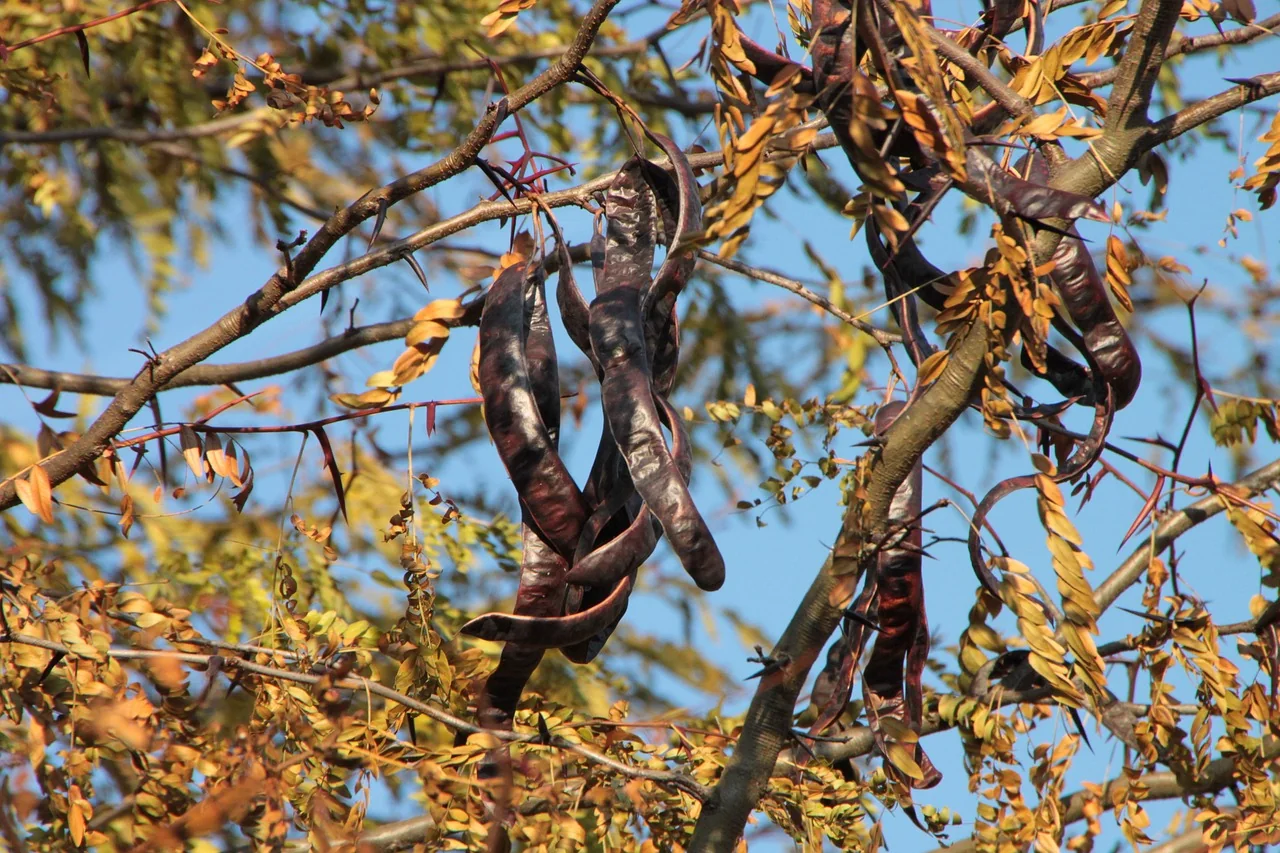
The carob tree (Ceratonia siliqua) is indigenous to Cyprus and has been cultivated here for around 4,000 years, according to the Deputy Ministry of Tourism. It is an evergreen, long-lived tree that grows at altitudes of up to about 600 metres and needs very little water, fertiliser or insecticide, which is why it thrives in the dry hills of the Limassol and Larnaca districts.
For generations carob pods were one of the island's main exports and an important source of income for rural families. The dark, glossy pods earned so much money that they became known as mavros chrysos, black gold. Anogyra and Ypsonas were among the main producing villages around Limassol, and Zygi, on the coast towards Larnaca, started out as a carob village: its name refers to the scale (zygos) used to weigh the crop. In the 1960s Cyprus was ranked the world's third-biggest carob producer.
Carob was used to make photographic film, medicines, sweets and chocolates. Today the most valuable part is often the seed, which is processed into locust bean gum (E410), a thickener used in the food industry. Global demand for the gum drives the price farmers get: AFP reported in 2022 that growers' prices had risen from about 35 cents a kilo in 2019 to close to €1, while carob pod and seed exports were worth almost €8 million a year. Egypt was the biggest buyer of pods for human consumption and Italy the biggest buyer of seeds.
Carob is a much smaller part of farming than it once was, but interest is growing again. The Cooperative Carob Marketing Federation runs the mill at Zygi and works with thousands of small producers, and a University of Cyprus project in 2017 planted almost 5,000 young carob trees and gave around 28,500 more to farmers. Researchers at the Agricultural Research Institute are studying Cypriot carob varieties because the tree copes so well with drought.
When is the carob harvest in Cyprus?
The harvest takes place in late summer, typically from the end of August into September, once the pods have dried on the tree. Production and processing are still largely small-scale, and many families grow carob as extra income alongside other work, sometimes with grandparents and grandchildren harvesting together.
In 2018 the traditional cultivation, harvesting and processing of Cypriot carob was added to the national inventory of intangible cultural heritage, with the Anogyra Community Council among the applicants.
Where is the Carob Museum in Limassol?
The Old Carob Mill stands on Vasilissis Street, behind the Medieval Castle in Limassol's old town, a few minutes' walk from the Old Port. It was built in 1900, when carob was a major export, as a complex of stone warehouses where pods were stored and processed before being shipped from the harbour.
The warehouses have been restored as the Lanitis Carob Mill complex. One part is a small museum where the original machinery is on display, along with sorting funnels, scales and the large needles used to sew the sacks, so you can follow how the pods were cleaned, broken and packed. The other part houses the Evagoras Lanitis Centre, an arts and exhibition space, and the complex also has restaurants and event halls. It is one of the main venues of the Limassol Carnival, with concerts, parties and exhibitions.
According to Visit Cyprus, the museum is open all year and closed on public holidays, and entry is free. Opening times are not published there, so check before a special trip. It pairs well with a walk round the old town; see our Limassol old town area guide.
What is the Anogyra Pasteli Festival?
Anogyra, a stone-built village in the west of the Limassol district, is the home of pastelli. According to Visit Cyprus, the sweet is only produced traditionally in this village. Anogyra has pastelli museums, the Oleastro olive park and a carob museum, and every September it holds a Pasteli Festival in the central square.
The 2025 festival took place on Sunday 21 September. The programme included demonstrations of pastelli being made the traditional way at three points in the day, 26 stalls selling carob and pastelli products, local goods, crafts and soaps and cosmetics made with carob syrup, tastings of a traditional carob drink, children's workshops using carob seeds and wood, live music and a Cypriot feast in the evening. A little train ran from the carob museum through the village, and the museum offered guided tours. The 2026 date had not been published when we checked; look for it in late summer on Visit Cyprus or in our events calendar.
What carob products can you buy in Cyprus?
| Product | What it is | How Cypriots use it |
|---|---|---|
| Carob syrup (teratsomelo) | A thick, dark syrup made by boiling pods in water for about four hours and straining the pulp | Drizzled on yoghurt or anari cheese; in place of honey or sugar in cakes, dressings, marinades and sauces |
| Pastelli | A chewy toffee of carob syrup, boiled down and pulled by hand | Eaten as a sweet; traditionally made in Anogyra in the cooler months |
| Carob flour | Ground roasted pods | Baking, often as a cocoa substitute |
| Carob chocolate and bars | Sweets and snack bars made with carob | A naturally sweet alternative to chocolate |
| Traditional sweets | Terdjellouthkia (also called loullouthkia), souppouthkia and halouvas kouvarkastos, a halva made with carob syrup | Village sweets, mainly where carob trees grow |
Carob syrup is also used in soaps and cosmetics, which you will find at village fairs.
Where can you buy carob syrup and pastelli?
- Supermarkets. Carob syrup, carob flour and carob bars from Cypriot producers are stocked all year in the big supermarket chains, usually near the honey or in the local products aisle. See our guide to supermarkets in Cyprus.
- Anogyra. The village is the place for pastelli, especially on festival day in September, when dozens of stalls sell it alongside syrup and other carob products.
- Village fairs and farmers' markets. Small producers sell home-made syrup and sweets at local festivals and markets, so look out for them on village festival days.
- Gift shops. Carob products make good presents to take home; our list of local products and souvenirs to buy in Cyprus includes pastelli.
Check the label if you want pure carob syrup: the traditional version is made only from carob pods and water.
How do you cook with carob syrup?
Carob syrup is sweet, with a deep, slightly cocoa-like flavour. Easy ways to start:
- With yoghurt or anari. Spoon it over thick strained yoghurt or fresh anari cheese, as Cypriots have done for generations.
- Instead of honey. Use it on loukoumades, the Cypriot honey puffs, for a vegan version.
- In baking. Replace some of the sugar or honey in cakes, biscuits and flapjacks.
- In savoury dishes. Add a spoonful to marinades, glazes and salad dressings.
- With tahini. Mixing carob syrup with tahini makes a quick sweet spread for bread.
For more Cypriot sweets made with local ingredients, see our guide to traditional Cypriot desserts.
A carob day out from Limassol
You can follow the story of carob in a single day by car: start at Zygi, the old carob village on the coast towards Larnaca, drive to the Carob Mill in Limassol's old town, then head west into the hills to Anogyra for pastelli and a walk round the village.
Map it · Driving route
Carob day out from Zygi to Anogyra
- Zygi
- Carob Mill
- Anogyra
Opens Google Maps with every stop in order. Opening hours can change, so check before you go.
Related guides
- Food in Cyprus: a deep dive into the island's cuisine
- Local products and souvenirs to buy in Cyprus
- Living in Limassol
Plan my trip
Want us to plan your days in Cyprus?
Tell us where you’re going, for how many days and what you love. We’ll send you a plan made for you, with places to see, where to eat and a Google Maps route for each day.
Recommended for this guide
Contains affiliate links GetYourGuide
Skip-the-line tickets, day trips and guided tours, usually with free cancellation up to 24 hours before.
See things to do in Cyprus
Hotels & places to stay
 Booking.com
The widest choice of hotels, apartments and villas, with free cancellation on many rooms.
Find hotels in Cyprus
Flights & car hire
 Discover Cars
Compare car hire from local and international companies at Larnaca and Paphos airports.
Compare car hire
Flights & car hire
 GetRentacar
Rent a car directly from local rental companies, with the price and conditions shown before you book.
Find a rental car
Frequently asked questions
Why is carob called black gold in Cyprus?
Because carob pods were for a long time one of the island's most valuable exports and an important source of income for rural families. Cyprus was ranked the world's third-biggest carob producer in the 1960s.
Where is the Carob Museum in Limassol?
The Old Carob Mill is on Vasilissis Street, behind Limassol's Medieval Castle near the Old Port. The restored mill shows the original processing machinery, and entry is free. It is closed on public holidays.
What is teratsomelo?
Teratsomelo is the Cypriot name for carob syrup, a dark, thick syrup made by boiling carob pods in water and straining the pulp. Cypriots drizzle it on yoghurt or anari cheese and use it instead of honey or sugar.
Where can I buy pastelli in Cyprus?
In Anogyra village in the Limassol district, where it is traditionally made, especially at the annual Pasteli Festival in September. Pastelli is made in the cooler months, so it is easiest to find from autumn to spring.
When is the carob harvest in Cyprus?
In late summer, usually from the end of August into September, when the pods have dried on the tree.
Useful links
- Visit Cyprus – The Old Carob Mill, LimassolFree entry; closed on public holidays
- Visit Cyprus – Carob syrup
- Visit Cyprus – Anogyra villagePastelli museums, Oleastro olive park and the September festival
- Anogyra Pasteli Festival 2025 – programme (PDF)
- Cyprus National Commission for UNESCO – Cypriot carob (intangible heritage)
- Limassol Tourism Board – Carnival events at the Lanitis Carob Mill
Sources (6)
- Visit Cyprus (Deputy Ministry of Tourism) – The Old Carob Mill
- Visit Cyprus – Carob syrup
- Cyprus National Commission for UNESCO – Cypriot carob: traditional cultivation, harvesting and processing techniques
- AFP via Oman Observer – Cypriot carob growers harvest their black gold (September 2022)
- Politis – Cultural sites and museums in Limassol
- Cyprus Mail – Anogyra festival celebrates black gold of Cyprus (September 2024)