Summarise this page 9 key points · 1 minute
- When does the olive harvest happen in Cyprus?According to the EU-funded ARTOLIO project, the local Ladoelia (also called Kypriaki or Dopia) is picked from late October in the lowlands and about a month later in the semi-mountain villages.
- How do people pick olives here?Most groves are still picked by family and friends at weekends.
- How do you take your own olives to an olive mill?Most villages with groves have a mill within a short drive.
- How is the 2025–26 harvest looking?In November 2025, Politis reported that many growers were getting only about 20% of a normal crop, and a farmers' union official said growers had been allocated about a quarter of the irrigation water a plantation needs,…
- What does olive oil cost in Cyprus in 2026?Buying straight from a grower or mill in tins is often cheaper per litre than buying bottles, but prices are set privately, so compare a few.
- Is there PDO or PGI Cypriot olive oil?Cyprus has EU-protected foods such as halloumi, commandaria and Lountza Pitsilias, but no olive oil or table olive has a PDO or PGI label.
- How do you cure olives at home?Tsakistes (cracked green olives): Crack each firm green olive with a stone or mallet.
- Where can you see olive traditions or join a harvest?Oleastro Olive Park (Anogyra) has an olive museum, a playground and a working mill in season.
- Can you burn olive prunings after the harvest?Pruning usually follows the harvest, in winter.
Quick answer
The olive harvest in Cyprus runs from late October in the lowlands to January in the hills, and most families pick by hand, with rakes or with battery shakers onto nets, then take their crates to a village olive mill (elaiotriveio) within a day or two. Mills charge either a fee per kilo or keep a share of the oil, so ask before you unload. After a drought-hit 2025 crop of roughly a fifth of normal, early-October 2026 rains have lifted hopes, and supermarket extra virgin oil has recently cost about €6.50–€10 a litre.
- Picking starts in late October on the coast and moves uphill into December and January; Cypriot Ladoelia is harvested first, Koroneiki later.
- Take olives to the mill within one or two days of picking; mills charge per kilo or keep a share of the oil, and terms vary from mill to mill.
- The 2025 harvest fell to about 20% of normal in many areas after drought; rain in the first half of October 2026 was already 157% of a normal October.
- Supermarket extra virgin olive oil has recently cost about €6.50–€10 a litre (2026, Consumer Protection Service price observatory, reported by Politis).
- No Cypriot olive oil currently holds an EU PDO or PGI label, so buy by producer, harvest date and acidity instead.
The olive harvest in Cyprus runs from late October to January. Most families pick onto nets by hand, with rakes or with battery-powered shakers, then take the crates to a village olive mill (ελαιοτριβείο, elaiotriveio) within a day or two. The mill either charges per kilo or keeps a share of the oil. If you have a few trees in your garden, or a neighbour who needs help, this is the season to join in.
When does the olive harvest happen in Cyprus?
It depends on altitude and variety. According to the EU-funded ARTOLIO project, the local Ladoelia (also called Kypriaki or Dopia) is picked from late October in the lowlands and about a month later in the semi-mountain villages. Koroneiki, the small Greek oil olive brought to Cyprus around 1977, is usually picked in November and December and sometimes into January. Table varieties such as Kalamon follow in November and December.
| Variety | Main use | Typical picking time | Notes |
|---|---|---|---|
| Ladoelia (Cypriot) | Oil and table olives, green or black | Late October (coast) to late November (hills) | About 22% oil, drought-tolerant, the most widely grown |
| Koroneiki | Oil only | November–December, into January | Small fruit, 15–27% oil, grows best below 500 m |
| Kalamon | Black table olives | November–December | Large fruit |
| Kato Dris, Korakou | Table olives | Varies | Older local types, low oil content |
Green olives for cracking (tsakistes) come off first, while they are firm. For the most oil, growers wait until the fruit is turning purple-black.
How do people pick olives here?
Most groves are still picked by family and friends at weekends. The usual kit:
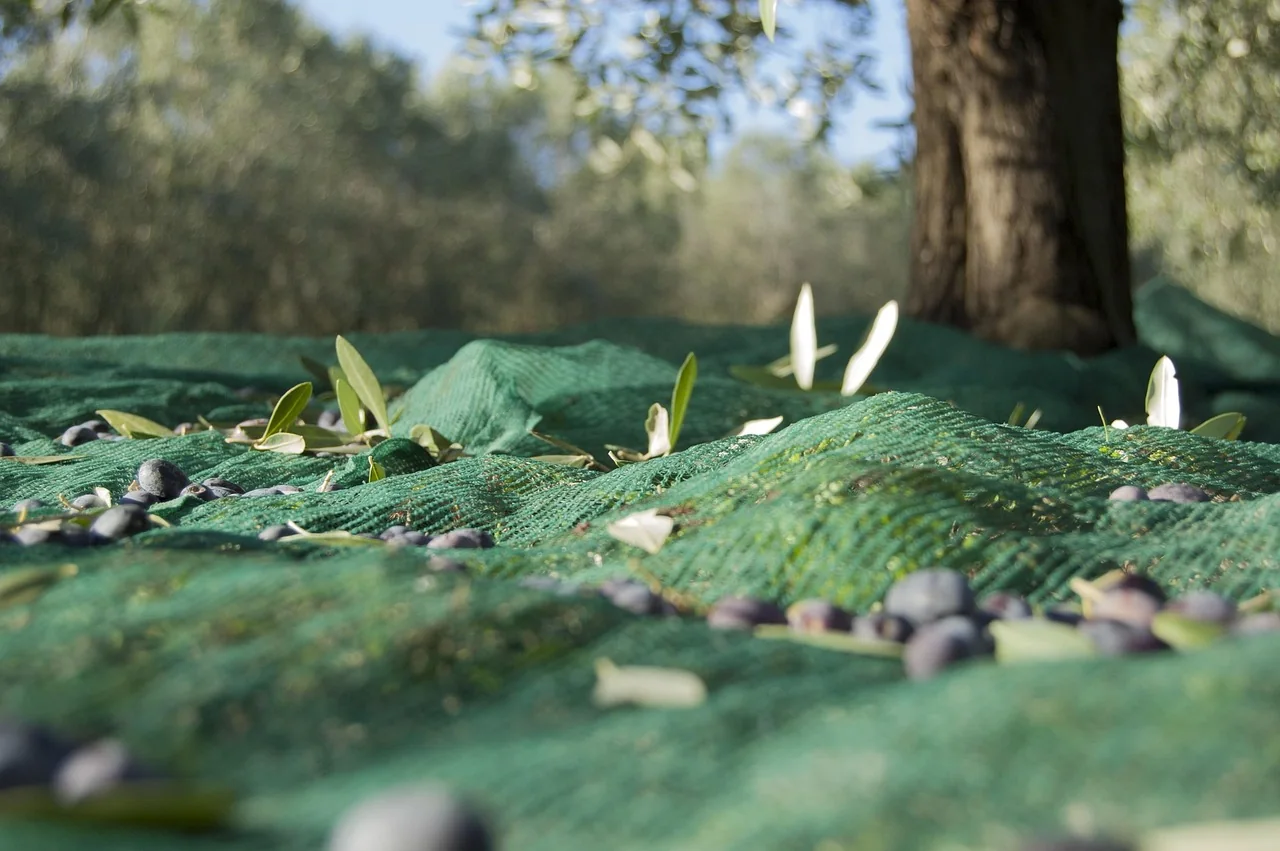
- Nets spread under the tree, then gathered up so the olives roll into crates.
- Hand rakes or olive combs, pulled through the branches. They're slow but gentle on the tree.
- Battery-powered shakers (vibrating combs on a telescopic pole). They're quicker on big trees and sold at agricultural supply shops.
- Long sticks, the old way of beating the branches. Many growers avoid this now because it damages next year's shoots.
Pick out the leaves and twigs before you go to the mill. Use plastic crates, not sacks, so the fruit can breathe. And don't leave olives sitting for days: they heat up and ferment, and that spoils the taste of the oil.
How do you take your own olives to an olive mill?
Most villages with groves have a mill within a short drive. They usually open from October or November until the crop is done, which can run into early spring. Here's how it normally works:
- Find a mill. Ask your neighbours or the village coffee shop, or search the Cyta Yellow Pages olive mill listings for your district.
- Phone ahead. In late November and December there can be queues, and some mills only press batches above a minimum weight or give you a time slot.
- Agree the payment before you unload. Some mills charge a fee per kilo of olives. Others keep a share of the oil instead. Terms change from mill to mill and year to year, so ask what's included (washing, containers) and whether small lots are mixed with other people's olives.
- Watch the weighing. Your crates are weighed, leaves are blown off and the fruit is washed.
- Milling. Most mills now crush the olives with steel hammers or discs, mix the paste (malaxing) and separate the oil in a centrifuge. A few, like Oleastro, still use millstones. Ask for "cold extraction" if you want the gentlest process.
- Take your oil home in clean tins or dark glass, and let it settle for a few weeks before you decant it off the sediment.
Yield depends on the variety, how ripe the fruit is and how dry the year was. In a drought year, expect much less oil per kilo. The weight slip from the mill is your best record.
| Where | District | What you can do | Link |
|---|---|---|---|
| Oleastro Olive Park, near Anogyra | Limassol | Watch the mill working from mid-October to February, have your own olives crushed, olive museum and shop | oleastro.com.cy |
| Ktima Erotokritos, Choirokoitia | Larnaca | Family-run mill since 2000, tours Monday–Saturday, harvest demonstrations October–February | |
| Terra Oliva, Pano Lefkara | Larnaca | Organic farm with its own production line and a 1,000-year-old protected olive tree | olivaterra.eu |
| Village mills across Nicosia, Paphos and Famagusta districts | All | Custom pressing for local growers | Cyta Yellow Pages |
How is the 2025–26 harvest looking?
Last season was poor. In November 2025, Politis reported that many growers were getting only about 20% of a normal crop, and a farmers' union official said growers had been allocated about a quarter of the irrigation water a plantation needs, enough only to keep the trees alive. Some trees dropped leaves from drought stress. International Olive Council figures put national output at only a few thousand tonnes a year, against about 7,500 tonnes a decade ago.
This autumn looks better so far. By August 2026, growers told Politis their groves were in better shape than a year earlier, though irrigation allocations were still tight. Then, between 1 and 15 October 2026, the island had 157% of a normal October's rain, and on 15 October the dams held 35.3%, against 11.6% a year before. If more rain falls before the fruit ripens, it should give the oil content a boost.
What does olive oil cost in Cyprus in 2026?
Prices have fallen from the 2024 peak but are still higher than a few years ago:
| Period | Supermarket extra virgin olive oil | Source |
|---|---|---|
| After the 2024 surge | About €10.50–€15 a litre | Politis, August 2026 |
| October–November 2025 | About €7.50 a litre (producer price about €5.50) | Politis, November 2025 |
| Summer 2026 | About €6.50–€10 a litre, depending on brand and packaging | Consumer Protection Service observatory, via Politis, August 2026 |
Buying straight from a grower or mill in tins is often cheaper per litre than buying bottles, but prices are set privately, so compare a few. Spain's harvest drives European prices, so this winter's prices will also depend on what happens there.
Is there PDO or PGI Cypriot olive oil?
Not at the moment. Cyprus has EU-protected foods such as halloumi, commandaria and Lountza Pitsilias, but no olive oil or table olive has a PDO or PGI label. So when you buy, check these:
- Harvest date (oil is best within about a year)
- Acidity on the label (extra virgin must be 0.8% or below)
- Producer and village (many small Cypriot estates bottle their own oil)
- Organic certificationIf that matters to you (Oleastro's oil, for example, is certified organic)
Farmers' markets are a good place to meet growers directly. See our guide to markets in Cyprus.
How do you cure olives at home?
Many Cypriot households still cure a jar or two of their own olives each year:
- Tsakistes (cracked green olives): Crack each firm green olive with a stone or mallet. Soak them in fresh water and change it daily for about a week or more, until the bitterness has gone. Then store them in salted brine and flavour them with lemon, garlic and coriander seeds when you serve them.
- Black olives: Pick fully ripe fruit and layer it with coarse salt in a basket or crate, so the bitter juices drain away over several weeks. Then rinse the olives and keep them in olive oil. Others cure them slowly in brine.
Ask an older neighbour for their family recipe. Brine strength and timing vary from village to village, and most people are delighted to show you.
Where can you see olive traditions or join a harvest?
- Oleastro Olive Park (Anogyra) has an olive museum, a playground and a working mill in season. There's a small entry fee, so check the current price before you go.
- Ktima Erotokritos (Choirokoitia) and Terra Oliva (Lefkara) both appear on the Larnaka Tourism Board's olive oil page.
- Olive festivals take place in mid-October. In 2026, Paramali (Limassol) held its Ancient Olive Trees Festival and Nikitari (Nicosia) its Olive & Traditional Products Festival, both on 11 October. Analyontas held an olive tree festival in October 2025. Check our events calendar and festivals by month for next year's dates.
- Agrotourism stays in hill villages sometimes let guests help with picking. See our agrotourism guide.
Can you burn olive prunings after the harvest?
Pruning usually follows the harvest, in winter. Be careful about fires: lighting a fire inside a state forest, or within 2 km of its edge, without a permit is an offence under the Forests Law. Since a 2025 amendment, causing a fire there can mean up to 12 years in prison or a fine of up to €100,000. If your grove is near a forest, contact the local Forest Station of the Forestry Department before burning anything. Never burn on windy days. A safer option is to chip the prunings for mulch or take them to your municipality's green waste point. To report smoke, call 1407 or 112. Our summer survival guide covers fire safety in more detail.
What to do next
- If you have trees, check them now: Ladoelia on the coast may already be ready.
- Ask locally for the nearest mill, and confirm the payment terms and any minimum batch size by phone.
- Book a visit to Oleastro or Ktima Erotokritos to see a mill working this winter.
- Read our guide to food in Cyprus for dishes that make the most of new-season oil.
Recommended for this guide
Contains affiliate links GetYourGuide
Skip-the-line tickets, day trips and guided tours, usually with free cancellation up to 24 hours before.
See things to do in Cyprus
Hotels & places to stay
 Booking.com
The widest choice of hotels, apartments and villas, with free cancellation on many rooms.
Find hotels in Cyprus
Flights & car hire
 Discover Cars
Compare car hire from local and international companies at Larnaca and Paphos airports.
Compare car hire
Flights & car hire
 GetRentacar
Rent a car directly from local rental companies, with the price and conditions shown before you book.
Find a rental car
Frequently asked questions
When is olive picking season in Cyprus?
From late October to January. Lowland groves, especially of the local Ladoelia variety, are picked first; hill villages and Koroneiki groves follow in November, December and into January.
How much does an olive mill charge in Cyprus?
Mills either charge a fee per kilo of olives or keep a share of the oil as payment, and the terms differ by mill and by year. Ask the mill before you unload, and check whether bottles or tins are included.
How many kilos of olives make a litre of olive oil?
It depends on the variety, ripeness and how dry the year was. Ladoelia fruit holds about 22% oil and Koroneiki 15–27%, so the mill's printed weight and oil figures for your batch are the only reliable answer.
How much is olive oil in Cyprus in 2026?
Politis reported in August 2026 that supermarket extra virgin olive oil had recently cost about €6.50–€10 a litre, depending on brand and packaging, down from €10.50–€15 after the 2024 price surge.
Can I burn olive prunings in Cyprus?
Lighting a fire inside a state forest or within 2 km of one without a permit is an offence. Ask the local Forest Station of the Forestry Department for a permit, or chip the prunings or take them to a green waste point instead.
Where can I see an olive mill working in Cyprus?
Oleastro Olive Park near Anogyra (Limassol district) shows its mill working from mid-October to February, and Ktima Erotokritos in Choirokoitia (Larnaca district) runs harvest demonstrations from October to February.
Useful links
- Oleastro Olive Park – AnogyraOlive museum, working mill mid-October to February, organic Koroneiki oil
- Ktima Erotokritos olive mill – Choirokoitia (Facebook)Family mill with tours and harvest demonstrations October–February
- Larnaka Tourism Board – traditional olive oil experiencesKtima Erotokritos and Terra Oliva visits
- Terra Oliva organic olive farm – Pano Lefkara
- Cyta Yellow Pages – olive mills in CyprusFind a mill near your village
- Forestry Department – forest stations and fire permits
- Consumer Protection ServiceRuns the price observatory that tracks olive oil prices