Summarise this page 8 key points · 1 minute
- Where are the Troodos Mountains?The Troodos range fills the centre and west of the island, covering roughly a third of Cyprus across the Limassol, Nicosia and Paphos districts.
- The five areas of TroodosThe mountains are easiest to understand as five areas, each with its own landscape and character.
- What to see in the TroodosTen Byzantine churches, nine in Nicosia district and one in Limassol district, form a single UNESCO World Heritage property, with wall paintings from the 11th to the 16th century.
- What to do in the TroodosOur hiking routes finder lists these and many more by length and difficulty, and our autumn walks guide picks the best for the colours of October and November.
- Where to stay in the TroodosA night or two in the mountains lets you see the villages in the quiet of the morning and evening.
- Where to eatThe dishes to look for are trout (farmed in the mountain streams, especially around Kakopetria and Platres), village sausages and lountza, kleftiko from the wood oven, and in season cherries, apples, walnut spoon sweets and…
- Practical tipsBuses reach a few villages but not the trails or churches.
- Plan your tripFor a first visit, pick one area and stay a night: Solea and Kakopetria from Nicosia, Platres and the Forest Park from Limassol, or Marathasa and Kykkos for a longer weekend.
Quick answer
The Troodos Mountains fill the centre of Cyprus, rising to 1,952 m at Mount Olympos, and are the island's favourite escape from the coast: cool pine forest in summer, snow and skiing in winter, and green valleys of cherries, roses and vines in spring and autumn. The range divides into five areas, each with its own character: the Troodos National Forest Park around Troodos Square, the Marathasa and Solea valleys with their painted churches, Pitsilia with its roses, and the wine villages above Limassol. Most places are about an hour from Limassol or Nicosia by car, and a weekend is the ideal way to see them.
- Mount Olympos (Chionistra), at 1,952 m, is the highest point in Cyprus; Troodos Square, the hub of the National Forest Park, is just below it.
- Ten Troodos churches with Byzantine wall paintings form one UNESCO World Heritage property; most open Tuesday to Sunday.
- The classic nature trails start at or near Troodos Square: Persephone (3 km), Artemis (7 km, circular) and Atalante (14 km, circular).
- The Troodos Observatory at Agridia, near Agros, offers day visits and night stargazing sessions; book online.
- Platres, Kakopetria, Kalopanayiotis, Agros and Omodos are the best bases, with hotels and restored village houses.
- A car is essential: buses are very limited and the roads are winding, and after snow police may restrict them to 4x4s or cars with chains.
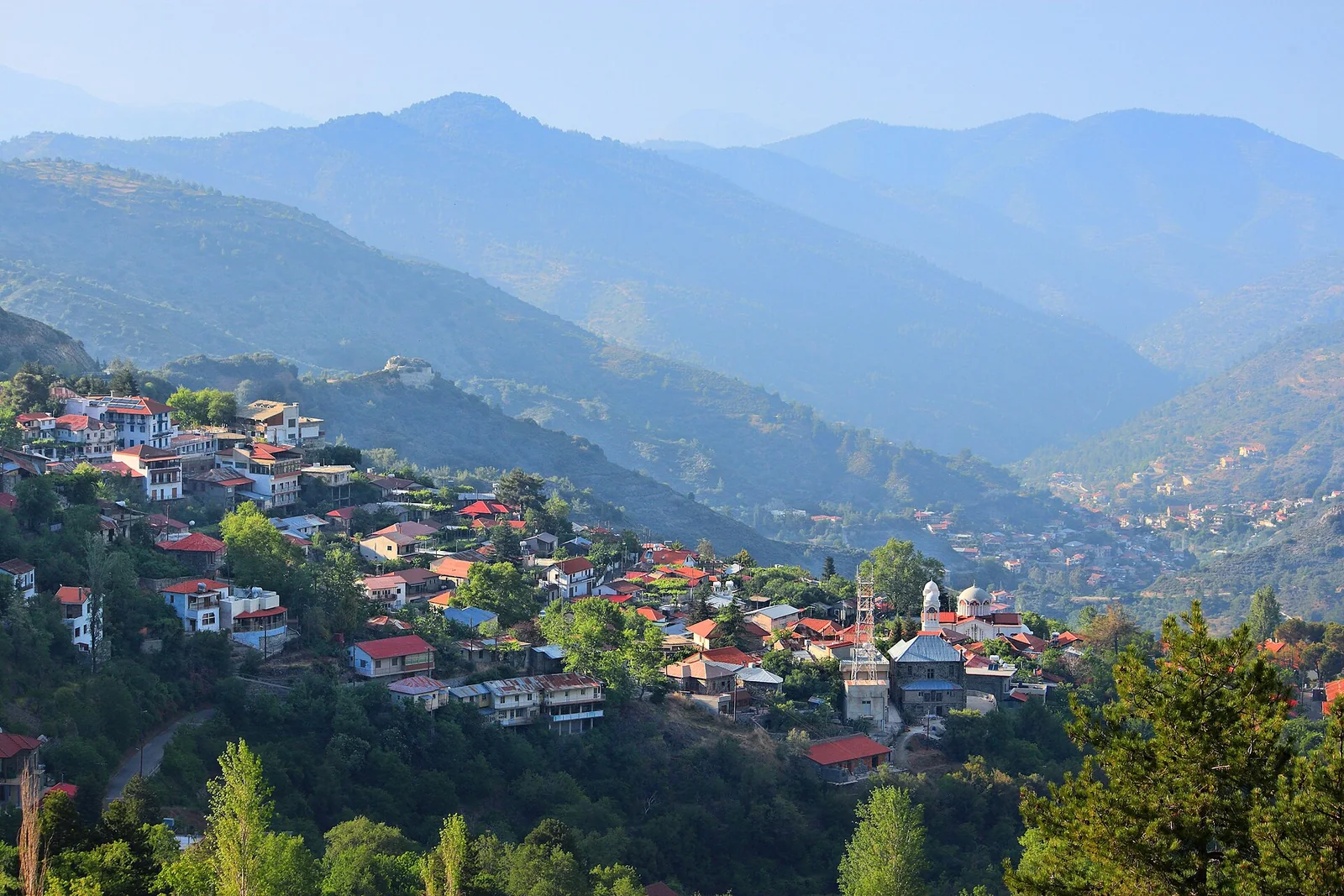
The Troodos Mountains are the green heart of Cyprus. Pine forest, stone villages, Byzantine churches painted from floor to ceiling, waterfalls, vineyards and, in winter, real snow, all within about an hour of Limassol and Nicosia. Kakopetria and Kalopanayiotis are two of our own favourite mountain stops, and every season up here feels like a different trip.
This guide brings everything together: the areas and villages, what to do and see, where to stay and eat, and how to plan your visit. Each section links to our detailed guides when you want to go deeper.
Plan your Troodos trip at a glance
| If you have… | Do this | Start from |
|---|---|---|
| Half a day | Platres, the Millomeris waterfall and lunch with trout | Limassol |
| Half a day | Kakopetria's old quarter and Agios Nikolaos tis Stegis | Nicosia |
| A full day | Troodos Square, the Persephone or Artemis trail, then Omodos for sunset | Limassol or Paphos |
| A weekend | Night in Kakopetria or Kalopanayiotis, painted churches, Kykkos and Troodos Square | Anywhere |
| A snow day | Mount Olympos for skiing or sledging, check the roads first | Limassol or Nicosia |
| An evening | Dinner in Agros, then a night session at the Troodos Observatory | Limassol or Nicosia |
| A food day | Omodos and a winery, roses in Agros, a long taverna lunch | Limassol |
Where are the Troodos Mountains?
The Troodos range fills the centre and west of the island, covering roughly a third of Cyprus across the Limassol, Nicosia and Paphos districts. Its highest point is Mount Olympos, also called Chionistra, at 1,952 m. Just below the summit is Troodos Square, the small resort that is the hub of the Troodos National Forest Park, with cafés, a hotel, souvenir shops and the start of the main nature trails.
Rough driving times by car:
| From | To Troodos Square | To Platres |
|---|---|---|
| Limassol | About 1 hour | About 45 minutes |
| Nicosia | About 1 hour 15 minutes | About 1 hour 15 minutes |
| Paphos | About 1.5 hours | About 1 hour 15 minutes |
| Larnaca | About 1.5 hours | About 1.5 hours |
The roads are good but winding, so allow extra time and take breaks if anyone gets car-sick.
The five areas of Troodos
The mountains are easiest to understand as five areas, each with its own landscape and character.
Troodos National Forest Park
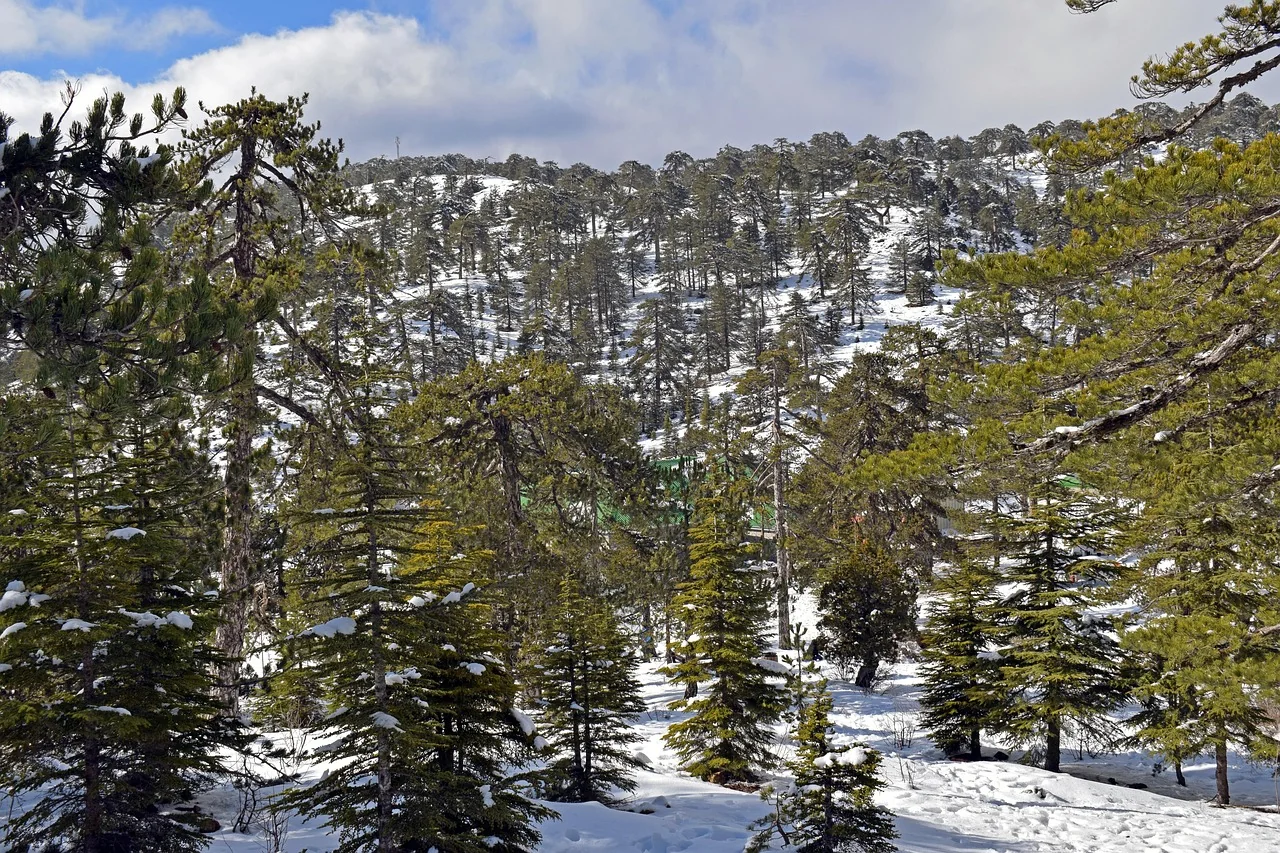
The high forest around Troodos Square and Mount Olympos: black pine, golden oak, cedar and the island's best-known nature trails. This is where you come for walks in summer, snow in winter and big views all year. Platres, just below on the southern slope, is the historic hill resort, with hotels, tavernas, the Caledonia and Millomeris waterfalls and the Monastery of Panagia Trooditissa about 5 km away. See our Platres area guide.
Marathasa valley
A deep, green valley on the north-west side, famous for cherries in early summer. Pedoulas has the UNESCO-listed Archangel Michael church (1474) and a cherry festival; Kalopanayiotis has a 16th-century Venetian bridge, sulphur springs and the UNESCO-listed Monastery of Agios Ioannis Lampadistis, with three churches painted between the 9th and 15th centuries; Moutoullas has the 13th-century Panagia church, also on the UNESCO list. Kykkos Monastery, the richest and best-known monastery in Cyprus, sits at 1,318 m at the head of the valley: see our Kykkos visitor guide.
Solea valley
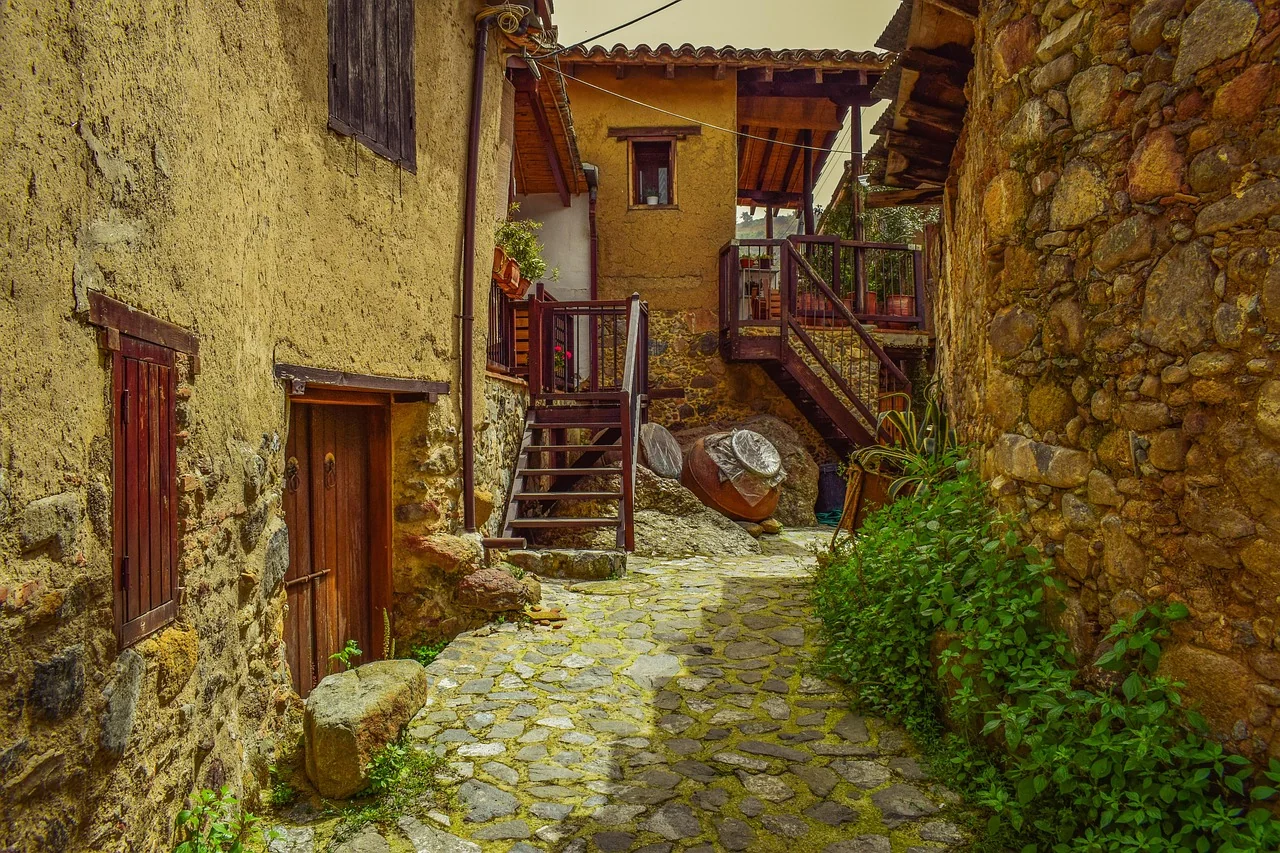
The valley closest to Nicosia, following the Klarios river. Kakopetria has one of the best-preserved old quarters in the mountains, wooden balconies leaning over the river and wonderful trout; next door, Galata has four painted churches. Agios Nikolaos tis Stegis, just outside Kakopetria, is one of the finest UNESCO churches. Our winter weekend in Kakopetria and Galata has opening hours, a short walk and where to eat.
Pitsilia
The eastern Troodos, terraced hillsides with hazelnuts, almonds and vines. Agros is the centre, known for its Damask roses: the Tsolakis family has made rose water there since 1948, and the season peaks in May, when The Rose Factory is busiest. Kyperounta, one of the highest villages, hosts a much-loved Christmas village, and Pelendri's Holy Cross church is on the UNESCO list.
The wine villages (Krasochoria)
On the southern slopes above Limassol, the krasochoria are a world of vineyards, wineries and cobbled squares. Omodos, at about 800 m, is the star: a stone-paved square around the Monastery of Timios Stavros (Holy Cross), a medieval wine press, lace makers and bakeries selling arkatena bread. Arsos, Vasa, Koilani, Lofou and Pachna each have their own wineries and grape festivals in late summer and autumn. See our wine villages guide.
What to see in the Troodos
- The painted churches. Ten Byzantine churches, nine in Nicosia district and one in Limassol district, form a single UNESCO World Heritage property, with wall paintings from the 11th to the 16th century. Most open Tuesday to Sunday and close on Mondays and major religious feasts. Our painted churches route covers all ten in two days.
- Kykkos Monastery. Free to enter, with a museum of religious treasures and the tomb of Archbishop Makarios at nearby Throni, with a sweeping view.
- Waterfalls. Caledonia (3 km one way from near Troodos Square to Psilo Dendro) and Millomeris (1.2 km from the Platres road) are the classics, best from January to May. Details in our Troodos waterfalls guide.
- Troodos Environmental Centre. At Troodos Square, with exhibitions on the geology, plants and wildlife of the range and a short botanical trail; a lovely first stop with children. Hours change with the season, so check before you go.
- Troodos Geopark and the Botanical Garden. At the old Amiantos asbestos mine, the Geopark visitor centre explains how the Troodos rose from the ocean floor, and the A. G. Leventis Botanical Garden next door has around 150 plant species.
- Village museums. Pedoulas, Omodos, Pera Pedi (vineyard museum) and Agios Therapon (olive mill) all have small museums that tell the story of mountain life.
What to do in the Troodos
Walk. The Forest Park's nature trails are well marked and suit every level:
| Trail | Length | Type | Start |
|---|---|---|---|
| Persephone | 3 km | Linear, easy | Near Troodos Square, towards the police station |
| Artemis | 7 km | Circular around Chionistra | About 300 m from the Chionistra road junction |
| Atalante | 14 km | Circular | Troodos Square |
| Caledonia | 3 km | Linear, with stream crossings | Near Troodos Square or Psilo Dendro, Platres |
Our hiking routes finder lists these and many more by length and difficulty, and our autumn walks guide picks the best for the colours of October and November.
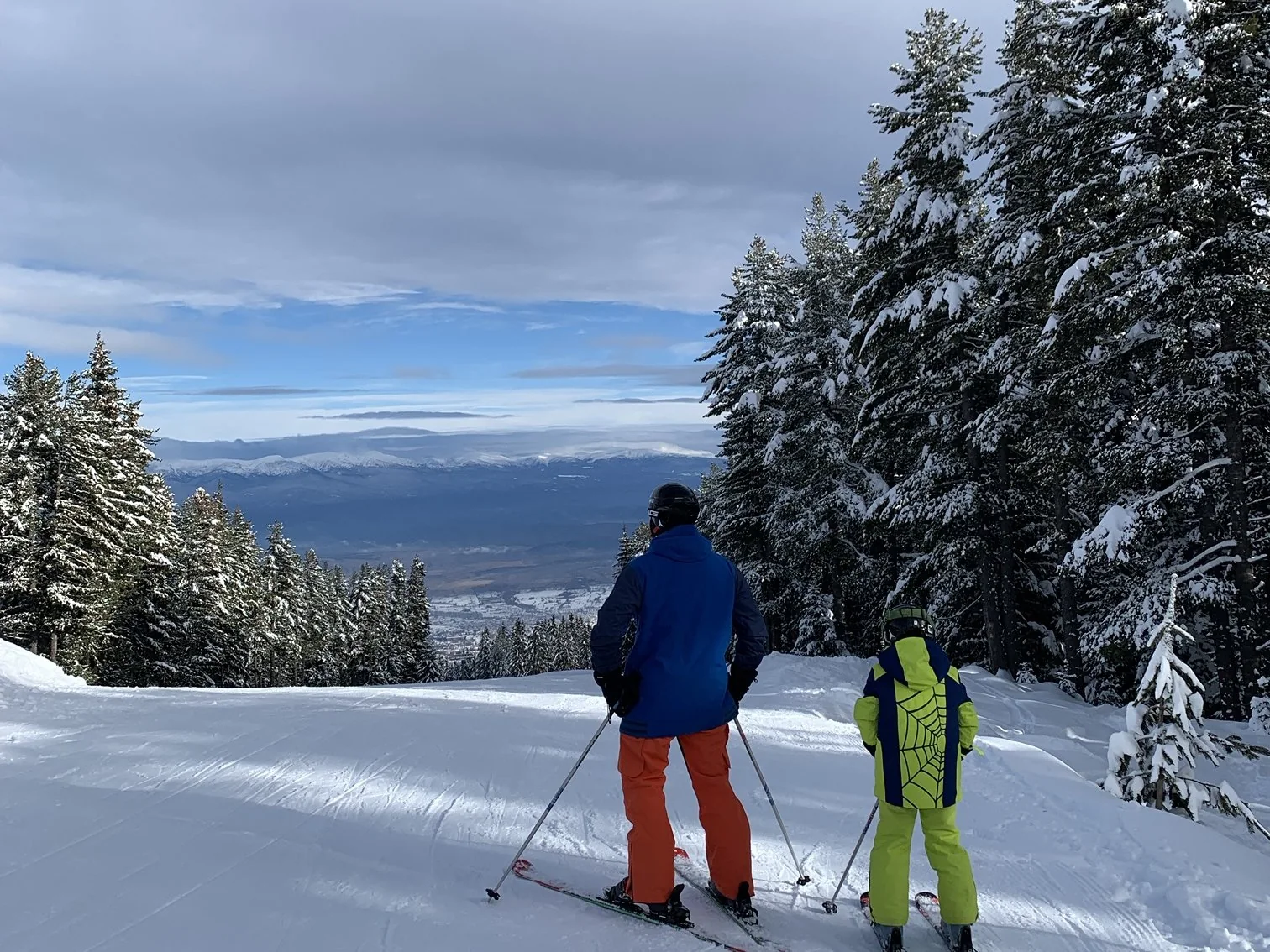
Ski and play in the snow. Cyprus's only ski area is on Mount Olympos, about 2 km from Troodos Square, with four lifts, equipment hire and a ski school. The season usually runs from early January to the end of March, depending on snow. See skiing in Troodos and, for sledging and safe driving, snow days in Troodos.
Stargaze at the Troodos Observatory. Opened in 2025 at Agridia, between Agros and Kyperounta, at about 1,250 m, the observatory is run by the Troodos Development Company with 1010 Cosmos. Day visits include a show in its Cosmotheater, solar observation and a tour of the 0.5 m telescope dome; night sessions add a short talk on the sky and observing through telescopes when the weather allows. Book on the Troodos Observatory website, bring a warm jacket for the evening, and check the forecast, as clouds can cancel observing.
Taste wine, roses and zivania. Visit a winery in the krasochoria, buy rose water and rose liqueur in Agros, and try zivania, the local grape spirit, at a village festival.
Go to a festival. The mountain calendar is full: the cherry festival in Pedoulas in early summer, the Holy Cross fair in Omodos on 14 September, grape and palouze festivals in the wine villages in autumn, and Christmas villages in December. Our Christmas villages guide has this year's dates.
Slow down. Sit by the river in Kakopetria, take the sulphur springs walk in Kalopanayiotis, or simply have a long lunch of trout and village sausages under the plane trees. That is the Troodos at its best.
Where to stay in the Troodos
A night or two in the mountains lets you see the villages in the quiet of the morning and evening. These are good bases, with a few well-known places to stay:
| Base | Best for | Places to stay |
|---|---|---|
| Troodos Square | Walking, skiing, snow | Troodos Hotel, a historic hotel on the square with a spa, gym and fireplace lounge (+357 25 420000) |
| Platres | Waterfalls, forest walks, a village with everything | Forest Park Hotel, one of the oldest hotels in Cyprus, with a pool under the pines (+357 25 421751) |
| Kakopetria | Painted churches, river walks, trout | Linos Inn (restored houses in the old quarter) and The Mill Hotel by the old watermill, both listed by the Cyprus Agrotourism Company |
| Kalopanayiotis | Marathasa, spa, a romantic weekend | Casale Panayiotis, restored village houses with a restaurant and spa |
| Agros | Pitsilia and the roses | Rodon Hotel and Resort, in Agros |
| Omodos and the wine villages | Wineries and the krasochoria | Restored village houses and small guesthouses |
Many mountain hotels open seasonally or close on some weekdays in winter, so book directly and confirm your dates. For farm stays and stone houses all over the range, see our agrotourism guide.
Where to eat
Every village has tavernas and cafés. The dishes to look for are trout (farmed in the mountain streams, especially around Kakopetria and Platres), village sausages and lountza, kleftiko from the wood oven, and in season cherries, apples, walnut spoon sweets and palouze (grape must pudding). Weekends in winter and summer are busy, so book a table for Sunday lunch, and call ahead on weekdays, when some places close.
When is the best time to go?
| Season | What to expect |
|---|---|
| Spring (March to May) | Blossom, wild flowers, full waterfalls and roses in Agros in May |
| Summer (June to August) | Cool, green forest while the coast is hot; cherries in early summer |
| Autumn (September to November) | Grape harvests, festivals, walking weather and valley colours |
| Winter (December to February) | Snow on the peaks, skiing from about January, Christmas villages and fireplaces |
Practical tips
- Bring a car. Buses reach a few villages but not the trails or churches.
- Layers, always. It is much cooler than the coast, and evenings are fresh even in summer.
- Check the roads after snow. The three roads up (from Platres, Karvounas and Prodromos) can be limited to 4x4s or cars with chains; the Cyprus Ski Club website shows the latest conditions.
- Respect the forest. Fires are only allowed at official picnic sites, and in summer fire risk is very high.
- Dress for churches. Cover shoulders and knees, and do not use flash on the wall paintings.
Plan your trip
For a first visit, pick one area and stay a night: Solea and Kakopetria from Nicosia, Platres and the Forest Park from Limassol, or Marathasa and Kykkos for a longer weekend. Then come back in another season: the Troodos in May and the Troodos in January are two completely different places, and both are wonderful.
Recommended for this guide
Contains affiliate links GetYourGuide
Frequently asked questions
How far is Troodos from Limassol, Nicosia and Paphos?
Troodos Square is roughly an hour by car from Limassol, about 1 hour 15 minutes from Nicosia and around 1.5 hours from Paphos. Platres, the nearest resort village to Limassol, is about 45 minutes away.
What is the best time to visit the Troodos Mountains?
Every season has its charm. Spring (April to June) brings blossom, roses in Agros in May and full waterfalls; summer is cool and green when the coast is hot; autumn has walks, grape harvests and valley colours; and winter brings snow, skiing from about January to March and Christmas villages.
Can you visit Troodos without a car?
Only with difficulty. There are a few buses to the main villages, but they are infrequent and do not reach the trailheads or the painted churches, so a car or an organised tour is the practical way to explore.
Where should you stay in the Troodos?
Platres and Troodos Square suit walkers and skiers, Kakopetria and Kalopanayiotis are the most charming bases for the painted churches, Agros is ideal for Pitsilia and the roses, and Omodos for the wine villages. Many stays are restored stone houses run as small hotels.
Is Troodos good for a day trip?
Yes. A good day trip from Limassol links Platres, the Caledonia waterfall walk and lunch with trout, or Omodos and a winery; from Nicosia, Kakopetria and a painted church make an easy day. With two days you can combine a valley, Troodos Square and Kykkos.
Useful links
Sources (13)
- Fast Forward – Troodos Observatory management assigned ahead of June 2025 opening
- Cyprus FAQ – Troodos Observatory: how to visit
- My Troodos – Troodos National Forest Park
- My Troodos – Marathasa valley villages
- My Troodos – Wine villages
- Deputy Ministry of Tourism – Omodos village
- Deputy Ministry of Tourism – Kalopanagiotis village
- Deputy Ministry of Tourism – Hiking guide (PDF)
- Department of Forests – Persephone nature trail (PDF)
- Department of Forests – Atalanti nature trail (PDF)
- All About Limassol – Troodos Hotel
- All About Limassol – Forest Park Hotel, Platres
- Cyprus Mail – Taking time to smell the roses (5 October 2023)