Summarise this page 10 key points · 1 minute
- Eixample: the all-rounderThe Eixample is the 19th-century extension of the city: a grid of wide streets with cut-off corners, lined with apartment blocks and Modernista buildings.
- The Gothic Quarter: the heart of the old townThe Barri Gòtic is the medieval core, between La Rambla and Via Laietana.
- The Born: stylish and livelyAcross Via Laietana, the Born (part of the Sant Pere, Santa Caterina i la Ribera area) has the Picasso Museum, the Gothic basilica of Santa Maria del Mar and the Santa Caterina market, plus many of the city's best small…
- Gràcia: a village inside the cityGràcia was a separate town until the late 19th century, and it still feels like one: small squares full of terraces, little local shops and family-run bars.
- Barceloneta: right on the beachBarceloneta is the old fishermen's quarter, a triangle of narrow streets between the port and the sand.
- Poblenou: the beach without the crowdsPoblenou was Barcelona's industrial district and is now a mix of converted factories, offices, new flats and the Rambla del Poblenou, a calm, tree-lined street of cafés and shops.
- Sant Antoni: markets and terracesSant Antoni sits on the western edge of the Eixample, just beyond the old town.
- Barcelona's tourist tax in 2026Every overnight stay in Barcelona carries a tourist tax per person per night.
- Hotel or apartment?Licensed tourist apartments still operate in 2026 and can make sense for families.
- Our quick picksTwo nights and lots of sightseeing: the Gothic Quarter or the Born.
Quick answer
For a first trip to Barcelona, Eixample is the easiest all-round base: central, well connected and close to Gaudí's Passeig de Gràcia. The Gothic Quarter and the Born put you inside the old town, Gràcia and Sant Antoni feel more local, and Barceloneta and Poblenou are by the beach. Since 1 April 2026 Barcelona's tourist tax is about €12 a night per person in five-star hotels, €8.40 in four-star hotels, €9.50 in tourist apartments and €7 in most other hotels, for up to seven nights; under-17s don't pay.
- Eixample suits first-timers and families: central, on a grid, with three metro lines and the trains to Sitges and Girona at Passeig de Gràcia.
- The Gothic Quarter and the Born are the most atmospheric, but busy and noisy at night; pick a room on a quiet street or high up.
- Gràcia and Sant Antoni feel the most local, with squares, markets and neighbourhood bars.
- Barceloneta and Poblenou are for beach lovers; Poblenou is calmer and more residential.
- Tourist tax from 1 April 2026: about €7 to €12 per person per night depending on where you stay, for the first seven nights, with under-17s exempt.
Where you sleep shapes a Barcelona trip more than in most cities. The old town is all narrow lanes and late nights, the Eixample is elegant and orderly, and the beach districts feel like a different town. Here is how the seven most popular neighbourhoods compare, who each one suits, and what you will pay in tourist tax on top of the room in 2026.
If you are coming from Cyprus, Wizz Air flies direct from Larnaca and the flight takes about four and a half hours. There are no direct flights from Paphos, so from there you would connect, for example via Athens. Check the airline for current days. Our Barcelona destination page and getting around guide cover the Aerobús, the metro and taxis.
Barcelona's neighbourhoods at a glance
| Neighbourhood | Best for | Feel | Metro |
|---|---|---|---|
| Eixample | First-timers, families, shoppers | Central, elegant, grid streets | Passeig de Gràcia (L2, L3, L4), Diagonal (L3, L5) |
| Gothic Quarter | Sightseeing on foot, short stays | Medieval lanes, lively, busy | Jaume I (L4), Liceu (L3) |
| The Born | Couples, food and nightlife | Old town, stylish, bars | Jaume I (L4), Arc de Triomf (L1) |
| Gràcia | Repeat visitors, a local feel | Village squares, small local shops | Fontana (L3), Joanic (L4) |
| Barceloneta | Beach lovers, seafood | Seaside, crowded in summer | Barceloneta (L4) |
| Poblenou | Families, longer stays, beach without crowds | Residential, modern | Poblenou, Llacuna, Bogatell (L4) |
| Sant Antoni | Food lovers, a local base near the centre | Markets, terraces | Sant Antoni (L2) |
Eixample: the all-rounder
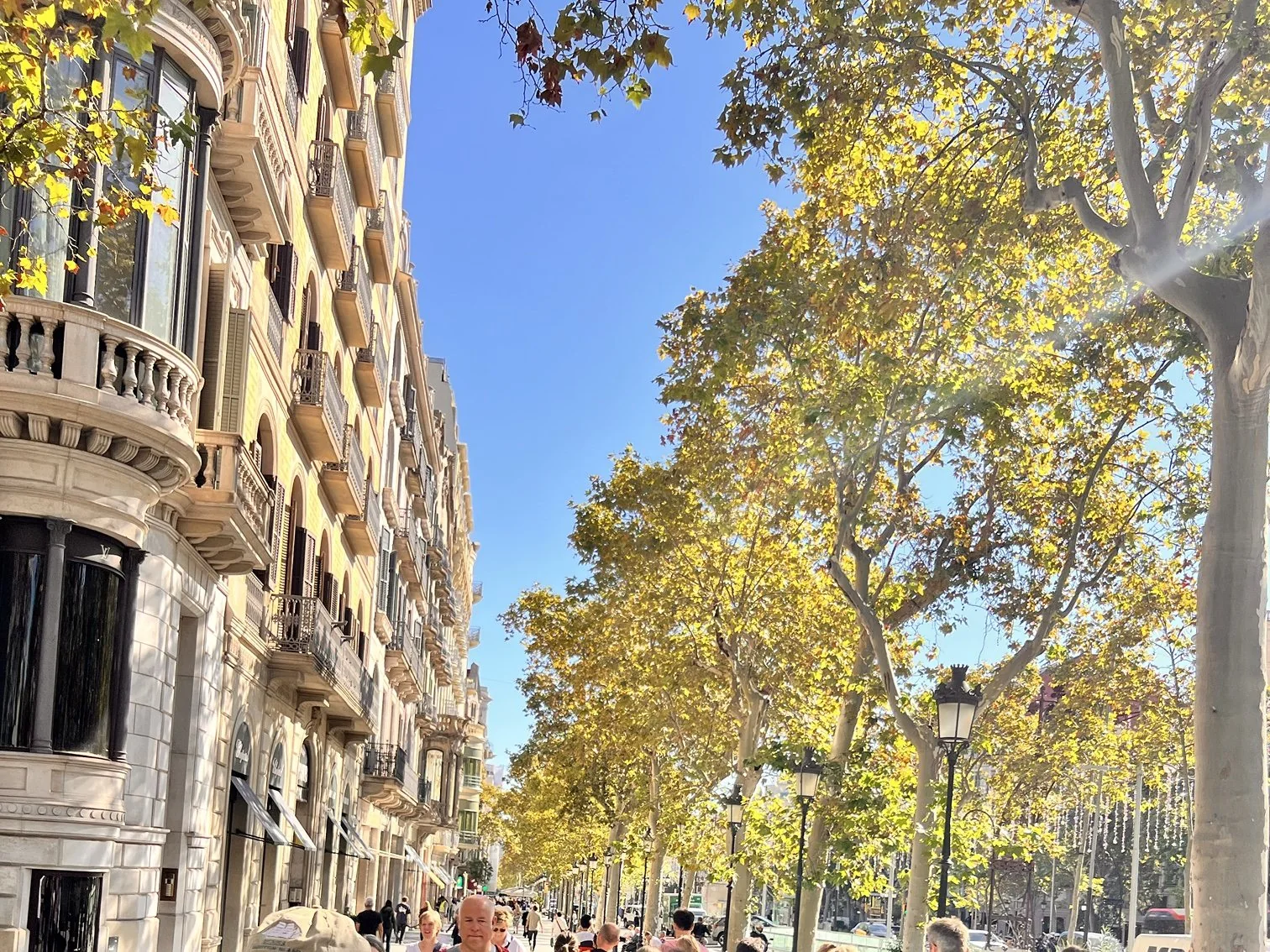
The Eixample is the 19th-century extension of the city: a grid of wide streets with cut-off corners, lined with apartment blocks and Modernista buildings. For a first visit it is the easiest choice. It is central, flat, safe-feeling at night and close to most sights.
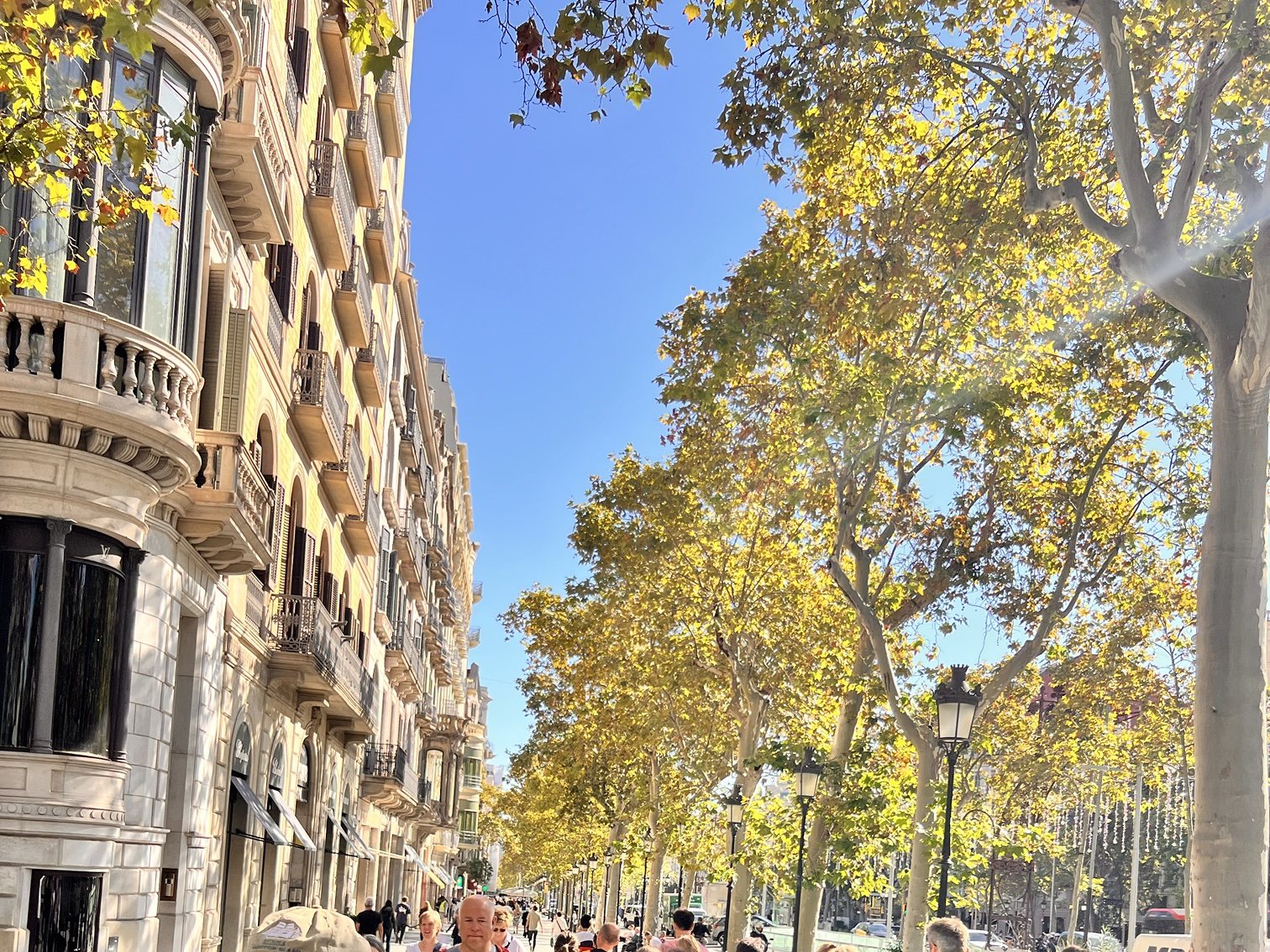
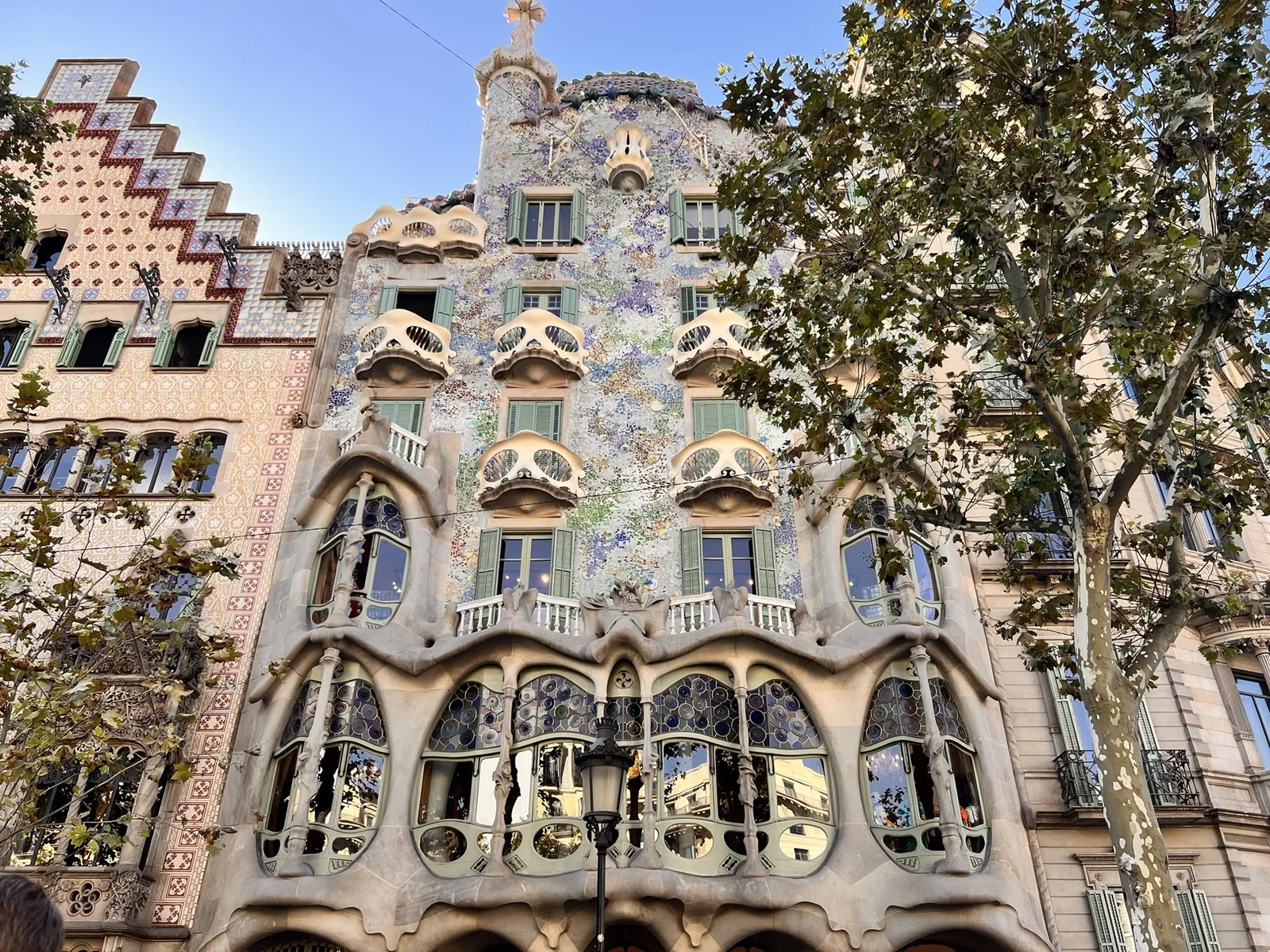
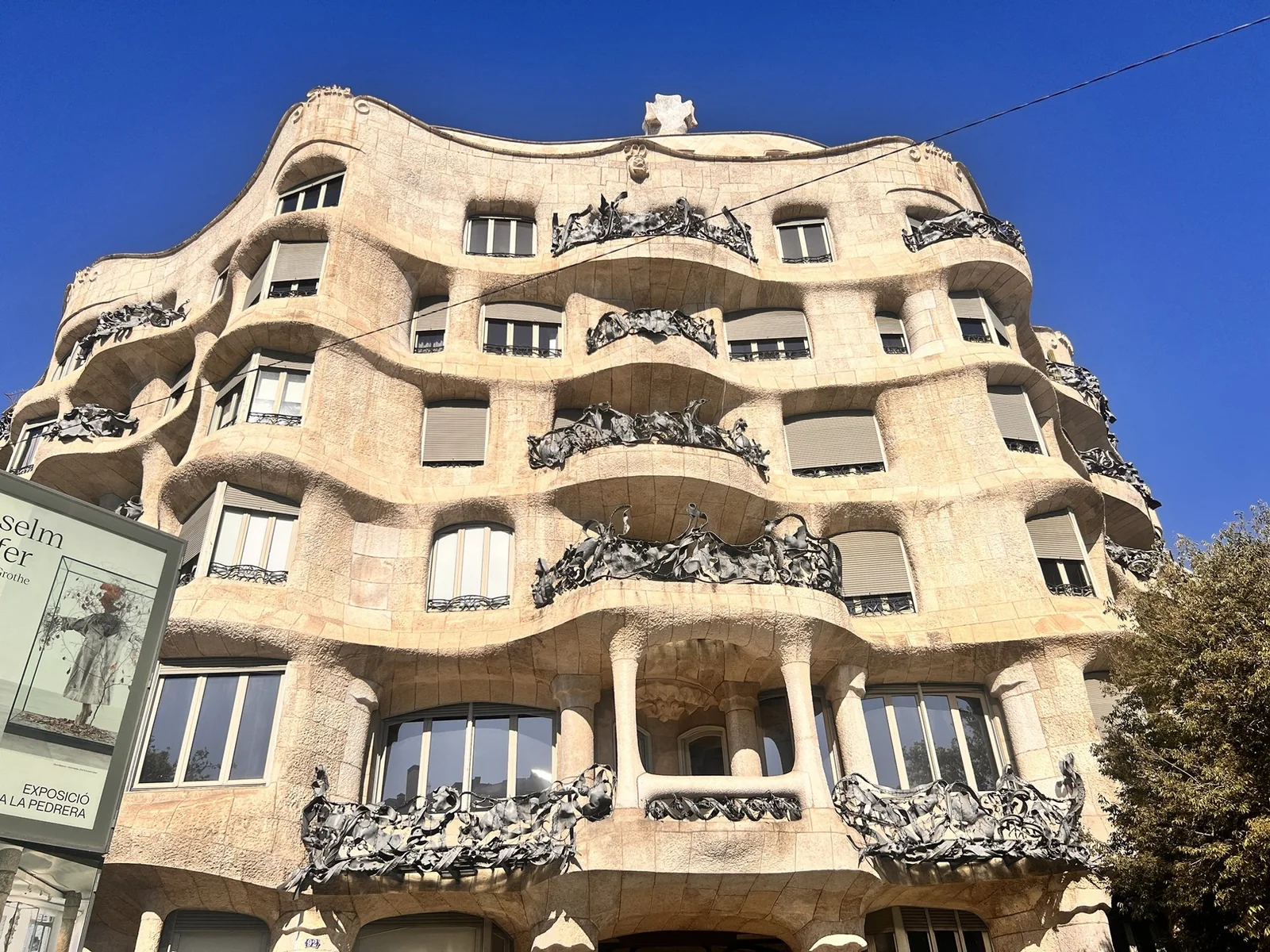
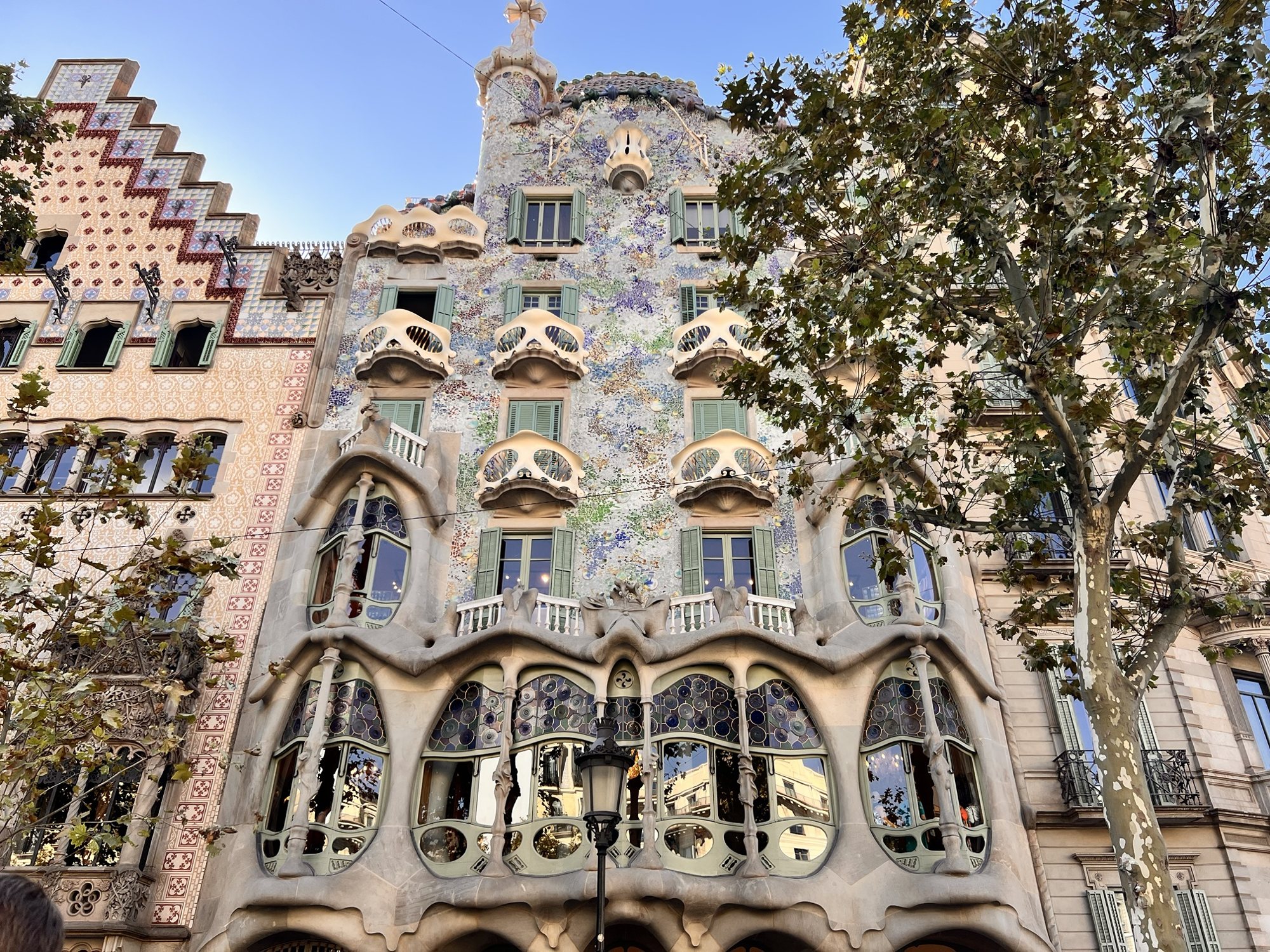
Its spine is Passeig de Gràcia, with Gaudí's Casa Batlló and La Pedrera a few minutes' walk apart and the city's big fashion names in between. Passeig de Gràcia station has three metro lines (L2, L3 and L4) and is also where you catch regional trains to Sitges and Girona, which helps if you plan day trips from Barcelona.
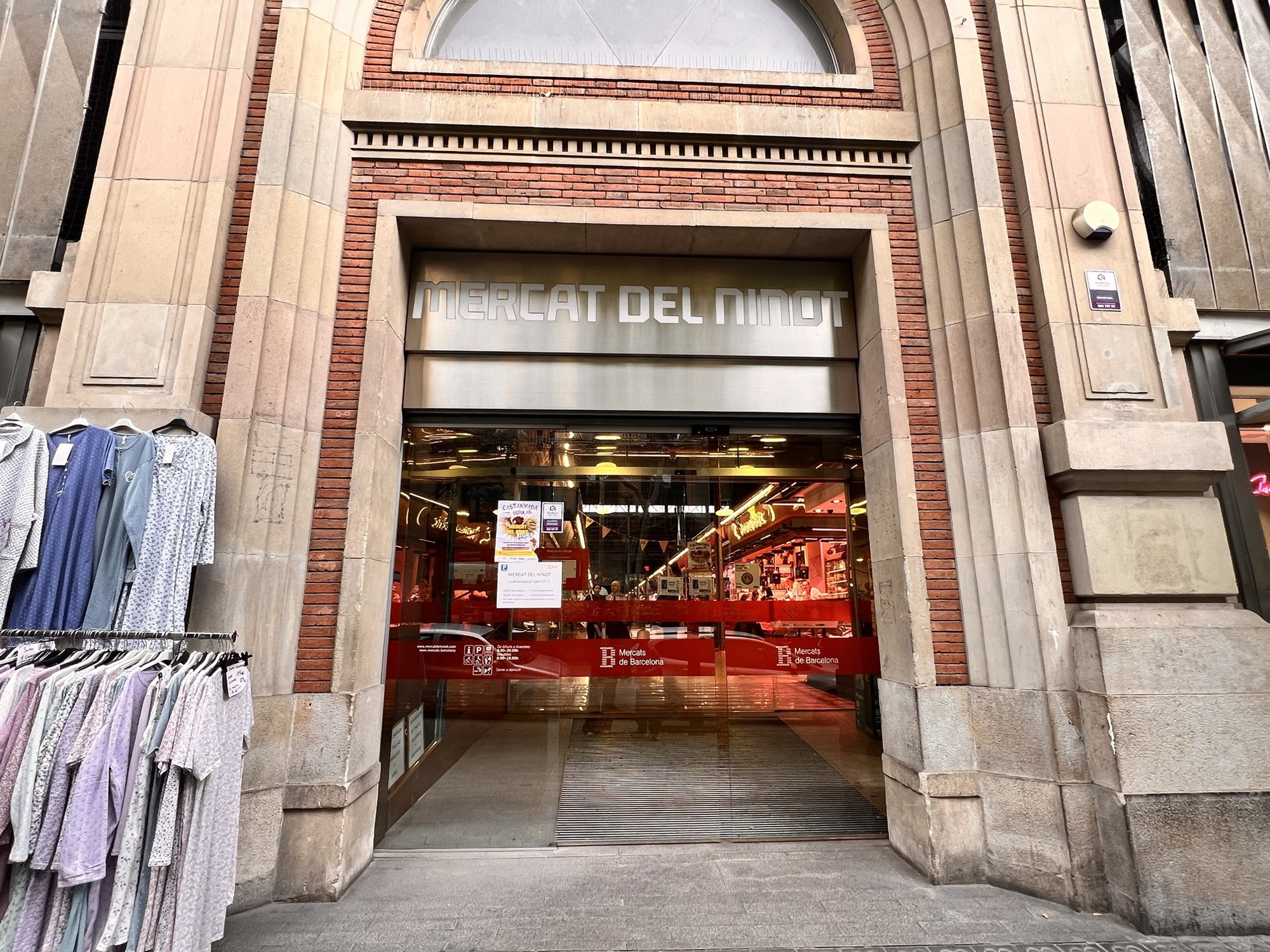
The Eixample is big, so it pays to know the two halves. The Dreta (right) holds Passeig de Gràcia and many of the grander hotels. The Esquerra (left) is more residential, with the Mercat del Ninot, a real neighbourhood food market.
Who it suits: first-timers, families, shoppers and anyone who wants a quiet night's sleep. Watch out for: the main avenues carry heavy traffic, so ask for a room at the back or on an inner courtyard. See our Passeig de Gràcia walk and shopping guide.
The Gothic Quarter: the heart of the old town
The Barri Gòtic is the medieval core, between La Rambla and Via Laietana. Barcelona Cathedral, Plaça Sant Jaume and the arcaded Plaça Reial are all here, and you can walk to La Boqueria market in minutes.
Who it suits: short stays where you want to be out of the door and sightseeing at once. Watch out for: crowds by day, noise at night and the pickpockets that busy areas attract. Choose a room on a side street or on an upper floor, and check whether the building has a lift, as many don't.
The Born: stylish and lively
Across Via Laietana, the Born (part of the Sant Pere, Santa Caterina i la Ribera area) has the Picasso Museum, the Gothic basilica of Santa Maria del Mar and the Santa Caterina market, plus many of the city's best small restaurants and cocktail bars. It is a short walk to the Ciutadella park and the beach.
Who it suits: couples and food lovers who want the old-town atmosphere with a little more polish. Watch out for: like the Gothic Quarter, it is noisy late at night at weekends. Our food markets guide and where to eat guide have ideas for the area.
Gràcia: a village inside the city
Gràcia was a separate town until the late 19th century, and it still feels like one: small squares full of terraces, little local shops and family-run bars. Park Güell is uphill from the neighbourhood, and the top of Passeig de Gràcia is a short walk down.
In mid-August, Gràcia's Festa Major fills the streets with decorations made by residents; in 2026 it ran from 15 to 21 August. It is a wonderful sight, but it means crowds and late nights all week.
Who it suits: repeat visitors and anyone who prefers neighbourhood life to sights on the doorstep. Watch out for: it is further from the old town and the beach, so you will use the metro more. Our Gaudí guide explains Park Güell tickets.
Barceloneta: right on the beach
Barceloneta is the old fishermen's quarter, a triangle of narrow streets between the port and the sand. You can be in the sea five minutes after breakfast, and seafood restaurants line the waterfront.
Who it suits: beach lovers in the warmer months, and couples who want a seaside break with the city close by. Watch out for: it gets very busy in summer, and some streets are noisy at night. Out of season it is quieter, but the beach is less of a draw.
Poblenou: the beach without the crowds
Poblenou was Barcelona's industrial district and is now a mix of converted factories, offices, new flats and the Rambla del Poblenou, a calm, tree-lined street of cafés and shops. Bogatell and the beaches further north are a few minutes' walk away and usually less crowded than Barceloneta.
Who it suits: families, longer stays, and people who want beach mornings and evenings in a local neighbourhood. Watch out for: you will take the metro (line L4) to most sights.
Sant Antoni: markets and terraces
Sant Antoni sits on the western edge of the Eixample, just beyond the old town. Its centrepiece is the Mercat de Sant Antoni, an iron market hall from the 1880s that reopened in 2018 after nine years of works. The fresh food market runs Monday to Saturday, and on Sundays a market selling books, magazines, trading cards and video games sets up around the outside of the building. The surrounding streets are full of terraces, vermouth bars and brunch spots.
Who it suits: food lovers and anyone after a local base within walking distance of the Raval, the Gothic Quarter and Montjuïc. Watch out for: weekend evenings around the market are busy, so look at rooms a few blocks away.
Barcelona's tourist tax in 2026
Every overnight stay in Barcelona carries a tourist tax per person per night. It combines a Catalan tax and Barcelona's own city surcharge, which rose to €5 on 1 April 2026. The totals per person per night are:
| Where you stay | Tax per person per night (from 1 April 2026) |
|---|---|
| Five-star and grand luxe hotels | about €12 |
| Four-star hotels | about €8.40 |
| Licensed tourist apartments | about €9.50 |
| Other hotels and establishments | about €7 |
| Youth hostels | about €6 |
- Seven nights maximum. The tax applies only to the first seven nights of a stay.
- Children: under-17s are exempt.
- How you pay: it is not usually in the room price. You pay the hotel or apartment, before arrival, at check-in or before you leave.
- More rises are planned. Barcelona City Council has approved raising its surcharge by €1 a year until it reaches €8 in 2029.
As an example, two adults spending four nights in a four-star hotel pay about €67 in tourist tax (2 × 4 × €8.40) on top of the room.
Hotel or apartment?
Licensed tourist apartments still operate in 2026 and can make sense for families. The city plans not to renew its roughly 10,000 tourist apartment licences in November 2028, and Spain's Constitutional Court upheld the rules behind that in 2025, so expect fewer apartments over the next two years. If you book one, check that the listing shows its official registration number.
Our quick picks
- First visit or with children: Eixample.
- Two nights and lots of sightseeing: the Gothic Quarter or the Born.
- A local feel: Gràcia or Sant Antoni.
- Beach first: Poblenou, or Barceloneta in summer.
Planning the rest of the trip? Read our Barcelona weekend plan, Barcelona with kids and Barcelona at Christmas. If you are deciding between cities for a family break, our half-term trips from Cyprus compares Barcelona with closer destinations.
Recommended for this guide
Contains affiliate links GetYourGuide
Frequently asked questions
What is the best area to stay in Barcelona for a first visit?
Eixample. It sits between the old town and Gràcia, it is easy to find your way around its grid, and Passeig de Gràcia station has metro lines L2, L3 and L4 plus regional trains. Casa Batlló and La Pedrera are both on Passeig de Gràcia.
How much is the tourist tax in Barcelona in 2026?
Since 1 April 2026, per person per night, it is about €12 in five-star hotels, €8.40 in four-star hotels, €9.50 in tourist apartments, €7 in other hotels and establishments, and €6 in youth hostels. It combines the Catalan tax and Barcelona's city surcharge of €5, is charged for up to seven nights, and under-17s are exempt.
Is the tourist tax included in the room price?
Usually not. It is normally paid to the hotel or apartment, either before arrival, at check-in or before you leave, and the accommodation passes it on to the Catalan Tax Agency. Check your booking confirmation.
Where should families stay in Barcelona?
Eixample and Sant Antoni are practical, with wide pavements, supermarkets and good metro links. Poblenou suits families who want the beach without the crowds of Barceloneta.
Can I still rent a holiday apartment in Barcelona?
Yes, licensed tourist apartments still operate in 2026. Barcelona City Council plans not to renew its roughly 10,000 tourist apartment licences in November 2028, and Spain's Constitutional Court upheld the rules behind that plan in 2025.
Useful links
Sources (11)
- Catalan News – New tourist tax comes into force in Barcelona (1 April 2026)
- Associació Catalana de Municipis – Note on Law 2/2026 amending the tax on stays in tourist establishments (March 2026)
- 3Cat – Parliament approves the tourist tax increase (25 February 2026)
- Apartment Barcelona – What is the tourist tax in Barcelona? (updated 2026)
- Catalan News – Barcelona mayor welcomes Constitutional Court ruling on tourist apartments (March 2025)
- Wikipedia – List of Barcelona Metro stations
- Visit Sitges – Getting to Sitges from Barcelona (train stations)
- Catalan News – Historic Sant Antoni market reopens after nine years of works (May 2018)
- Ajuntament de Barcelona – Dominical de Sant Antoni
- Barcelona Secreta – Festa Major de Gràcia 2026 dates and programme
- Barcelona.com – Mercat del Ninot, a neighbourhood market in the Eixample