Summarise this page 8 key points · 1 minute
- The five day trips at a glanceOur guide to getting around Barcelona explains how to reach Sants, Passeig de Gràcia and Plaça d'Espanya by metro.
- Montserrat: the mountain monasteryMontserrat is a jagged ridge of rock about an hour from the city, with a Benedictine monastery and basilica tucked into its side.
- Sitges: a seaside town half an hour awaySitges is the easy option: a whitewashed old town, a promenade and long sandy beaches, close enough that you can go just for lunch.
- Girona: walls, a cathedral and a riverside old townGirona is a compact medieval city with colourful houses along the River Onyar, and it is very quick to reach by high-speed train.
- Tarragona: Roman Tarraco by the seaTarragona was Tarraco, one of the main cities of Roman Spain, and its ruins have been a UNESCO World Heritage Site since 2000.
- Figueres: the Dalí Theatre-MuseumSalvador Dalí was born in Figueres, and he turned the ruins of its burnt-out municipal theatre into his own museum.
- Tips for a smooth day tripThe first trains out are the quietest, and it gets you back for a late Barcelona dinner.
- More Barcelona guidesWhere to stay in Barcelona, neighbourhood by neighbourhood
Quick answer
Five day trips are easy from Barcelona without a car. Montserrat is about an hour on the FGC R5 train from Plaça d'Espanya, then a short cable car or rack railway ride. Sitges is about 35 to 45 minutes on the R2 Sud. Girona is 38 to 55 minutes by high-speed train from Sants, Figueres-Vilafant (for the Dalí Theatre-Museum) about an hour, and Tarragona about an hour on regional trains. If you are flying in from Larnaca for a long weekend, one day trip fits well; two make a five-day stay.
- Montserrat: FGC R5 trains leave Plaça d'Espanya hourly and take about an hour; then the cable car takes about 5 minutes or the rack railway about 15.
- Sitges: R2 Sud trains from Sants, Passeig de Gràcia or Estació de França take roughly 35 to 45 minutes, and run until late.
- Girona and Figueres: high-speed trains from Sants take 38 to 55 minutes to Girona and about an hour to Figueres-Vilafant; regional trains are cheaper but slower.
- Tarragona: regional trains from Sants and Passeig de Gràcia take about an hour and arrive five to ten minutes' walk from the centre.
- The Dalí Theatre-Museum is closed on most Mondays, and tickets are for a set date and time, so book before you travel.
Barcelona is a brilliant base for day trips. Within about an hour by train you can be on a holy mountain, in a seaside town, in a medieval walled city, among Roman ruins or inside Salvador Dalí's own museum. None of them needs a car.
If you are flying in from Cyprus, remember the flight is one of the longer ones from the island: Wizz Air flies direct from Larnaca, and the trip takes about four and a half hours. There are no direct flights from Paphos, so from there you would connect, for example via Athens. Check the airline for current days before you book. A long weekend leaves room for one day trip; stay five days and you can comfortably fit two. Our Barcelona destination page and our weekend plan from Cyprus cover the flights and the city itself.
Timetables change, and Catalonia's regional trains can be disrupted at short notice, so check the operator's updates on the morning you travel.
The five day trips at a glance
| Day trip | Best way from Barcelona | Leaves from | Approximate journey |
|---|---|---|---|
| Montserrat | FGC R5 train, then cable car or rack railway | Plaça d'Espanya | About 1h 15m in total |
| Sitges | Rodalies R2 Sud train | Sants, Passeig de Gràcia, Estació de França | About 35–45 min |
| Girona | Renfe high-speed (AVE or Avant) | Sants | 38–55 min |
| Tarragona | Renfe regional train | Sants, Passeig de Gràcia | About 1h |
| Figueres (Dalí) | Renfe high-speed to Figueres-Vilafant | Sants | About 55 min–1h |
Our guide to getting around Barcelona explains how to reach Sants, Passeig de Gràcia and Plaça d'Espanya by metro.
Montserrat: the mountain monastery
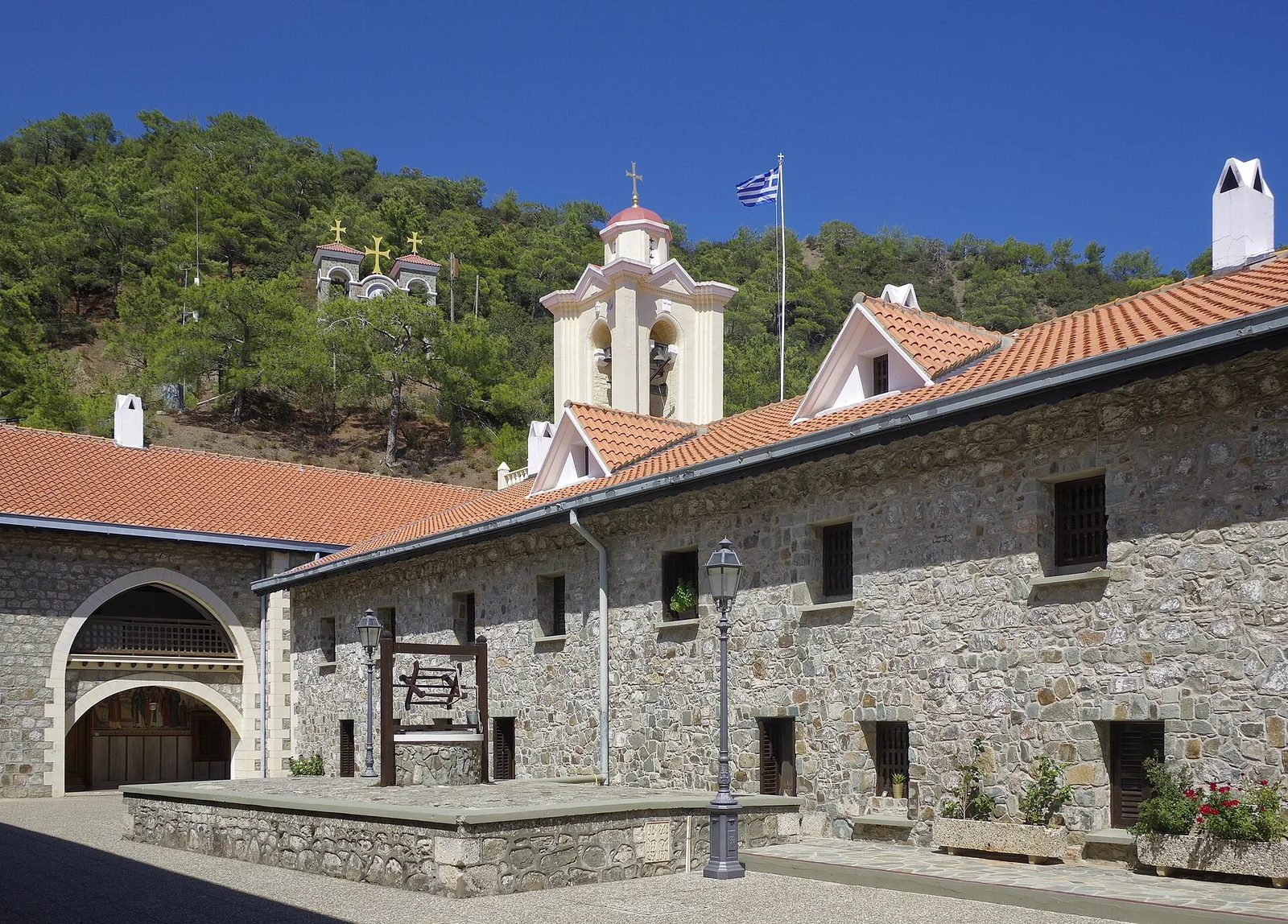
Montserrat is a jagged ridge of rock about an hour from the city, with a Benedictine monastery and basilica tucked into its side. It is the most dramatic of the five trips, and the journey up is part of the fun.
How to get there
- Train: FGC (the Catalan government railway) runs the R5 line towards Manresa from Plaça d'Espanya, with trains about every hour. The ride to the foot of the mountain takes about an hour.
- Cable car: get off at Aeri de Montserrat for the Aeri, a cable car that has run since 1930. The ride up takes about five minutes.
- Rack railway: or stay on one more stop to Monistrol de Montserrat for the Cremallera. It climbs more than 600 metres over 5 km in about 15 minutes, with departures every 20 minutes.
- Combined tickets: FGC sells packages that bundle the train with your choice of cable car or rack railway. You must use the same one up and down, so decide before you buy.
- Bus: Autocars Julià runs one morning coach at 09:15 from Carrer de Viriat, next to Sants station, returning from Montserrat at 17:00 between October and May (18:00 from June to September). Check with the operator before you rely on it.
What to see
- The basilica: home to the image of Our Lady of Montserrat, which most visitors queue to see.
- The Escolania boys' choir: in October 2026 it sang the Salve and Virolai at 13:00 on weekdays, but not every Saturday; seats need booking through the abbey. Check the choir's calendar for your date.
- Sant Joan funicular: a seven-minute ride up to about 1,000 metres, with views over the monastery and, on clear days, the Pyrenees. A small nature centre at the top explains the mountain's plants and wildlife.
- Santa Cova funicular: it goes down towards the spot where legend says the image of the Virgin was found, but it was out of service in 2026 with no reopening date, so check before you go.
Montserrat is cooler and windier than the city. Bring a jacket, even in spring and autumn.
Sitges: a seaside town half an hour away
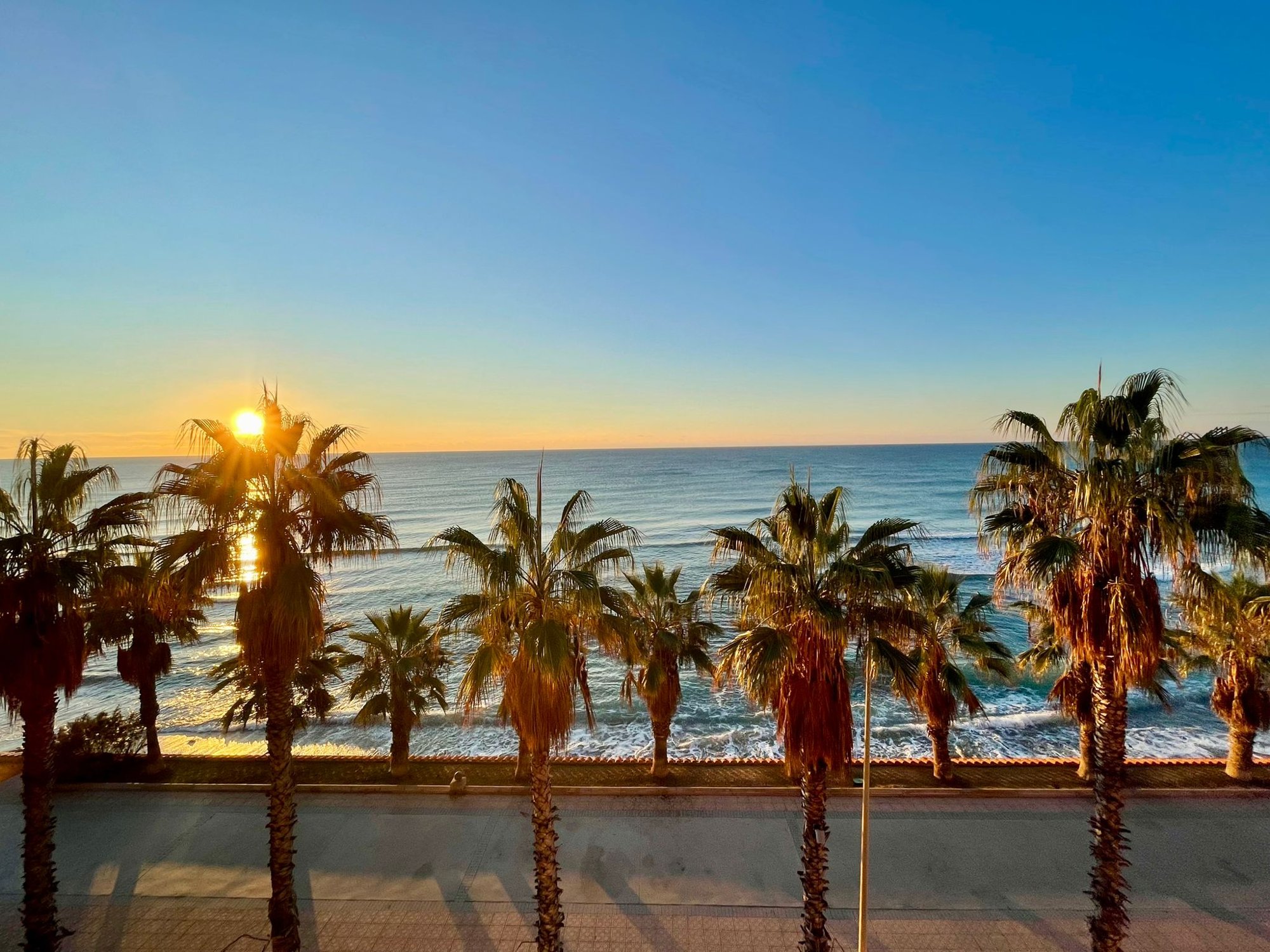
Sitges is the easy option: a whitewashed old town, a promenade and long sandy beaches, close enough that you can go just for lunch.
How to get there
- Train: Rodalies line R2 Sud, towards Vilanova i la Geltrú or Sant Vicenç de Calders, from Sants, Passeig de Gràcia or Estació de França. From Sants it takes roughly 35 to 40 minutes, from Passeig de Gràcia a little longer.
- Bus: Busgarraf (Monbus) coaches run from Ronda Universitat, near Plaça de Catalunya, also stopping on Carrer de Sepúlveda and at Plaça d'Espanya. The ride takes 45 to 55 minutes, and a night service runs when the trains don't.
What to see
- Sant Bartomeu i Santa Tecla: the 17th-century church on a rocky headland above the sea, the town's postcard view. Plaça del Baluard next to it is the best viewpoint.
- Cau Ferrat: the seaside home and studio of the Modernista painter Santiago Rusiñol, built in the 1890s and left to the town. It holds his collection of wrought iron, glass and ceramics, his own paintings and work by Ramon Casas, Picasso and two El Grecos. The Museu de Maricel next door is on the same ticket. Both are closed on Mondays.
- The beaches: Sitges has more than 20 beaches along about 4 km of coast, from Sant Sebastià by the old town to La Ribera in the centre. The seafront promenade is lovely for a slow walk in winter, too.
Girona: walls, a cathedral and a riverside old town
Girona is a compact medieval city with colourful houses along the River Onyar, and it is very quick to reach by high-speed train.
How to get there
- High-speed train: Renfe's AVE and Avant trains from Sants take 38 to 55 minutes. Book ahead for the lowest fares.
- Regional train: Rodalies R11 (and Renfe regional services) from Sants, Passeig de Gràcia or Clot-Aragó take about 1h 10m to 1h 35m, and you don't need to book.
- Bus: Sagalés runs coaches from Barcelona that take about 1h 50m.
- Girona station is about ten minutes' walk from the old town.
What to see
- Girona Cathedral: climb the 90 steps to the entrance (a Game of Thrones location) and step into a single Gothic nave almost 23 metres wide, one of the widest anywhere. The ticket includes the cloister and the treasury.
- The Banys Àrabs: the Arab Baths, a small medieval bathhouse in the old town.
- The Passeig de la Muralla: a free walk along the old city walls, with views across the rooftops and, on clear days, to the Pyrenees. Allow about 45 minutes.
- The Call: Girona's old Jewish quarter, a maze of narrow stone lanes, with the Museum of Jewish History.
- The Onyar houses and the "Eiffel bridge": the red iron Pont de les Peixateries Velles was built in 1876 by Gustave Eiffel's company and gives the classic view of the painted riverside houses.
Map it · Walking route
A walk through Girona's old town
- Pont de les Peixateries Velles
- Museum of Jewish History
- Girona Cathedral
- Banys Àrabs
- Passeig de la Muralla
Opens Google Maps with every stop in order. Opening hours can change, so check before you go.
Tarragona: Roman Tarraco by the sea
Tarragona was Tarraco, one of the main cities of Roman Spain, and its ruins have been a UNESCO World Heritage Site since 2000. It is a good choice for history lovers and older children.
How to get there
- Regional train: Renfe regional lines R14, R15 and R16 stop at Sants and Passeig de Gràcia. Regional express trains to Tarragona take about 1h 05m, and the few daily Intercity trains about 55 minutes.
- Avoid the high-speed trains: they stop at Camp de Tarragona, a station some way outside the city. The regional trains arrive at Tarragona station, five to ten minutes' walk from the centre.
What to see
- The amphitheatre: built in the 2nd century, right by the sea next to Miracle beach. It is the best photo in town.
- The Roman circus: where chariots raced in the 1st century, one of the best-preserved circuses in the western Roman world.
- The provincial forum: the remains of Roman Tarraco's provincial forum, including the Praetorium (Pretori).
- The city walls: the oldest Roman construction preserved anywhere outside Italy.
- The cathedral: a medieval cathedral built on the site of a mosque, which itself stood on a Roman temple.
Figueres: the Dalí Theatre-Museum
Salvador Dalí was born in Figueres, and he turned the ruins of its burnt-out municipal theatre into his own museum. It opened in 1974, it is topped by a glass geodesic dome, and Dalí himself is buried in a crypt at its centre.
How to get there
- High-speed train: Renfe's AVE and Avant trains from Sants reach Figueres-Vilafant in about 55 minutes to an hour. From there it is about 25 minutes on foot or 15 minutes by taxi to the museum.
- Regional train: Rodalies trains take about 1h 50m to Figueres' central station.
- Bus: several companies run coaches taking two to two and a half hours. The train is much quicker.
What to see
- The Theatre-Museum: rooms Dalí designed himself, including the Mae West Room and the Wind Palace, and the crypt where he lies.
- Dalí Jewels: a collection of 37 jewels in gold and precious stones, with Dalí's original designs, opened in 2001.
- Opening hours: from 1 October to 31 December and 1 January to 22 March, Tuesday to Sunday, 10:30 to 18:00; daily 9:00 to 20:00 in July and August. The ticket office closes 45 minutes before closing time. It is closed on 1 January and 25 December and closes at 15:00 on 24 December.
- Tickets: about €18.50 for adults and €15 reduced (2026), free for children aged 8 and under. Tickets are for a set date and time, so book online before you take the train.
Tips for a smooth day trip
- Start early. The first trains out are the quietest, and it gets you back for a late Barcelona dinner.
- Check for strikes and works. Regional trains in Catalonia can be disrupted, so look at the operator's updates the night before.
- Families: Sitges and Montserrat suit younger children best. Our Barcelona with kids guide has more ideas, and our half-term trips from Cyprus compares Barcelona with closer cities.
More Barcelona guides
Plan my trip
Want us to plan your days in Cyprus?
Tell us where you’re going, for how many days and what you love. We’ll send you a plan made for you, with places to see, where to eat and a Google Maps route for each day.
Recommended for this guide
Contains affiliate links GetYourGuide
Frequently asked questions
What is the easiest day trip from Barcelona without a car?
Sitges is the simplest. R2 Sud trains leave from Sants, Passeig de Gràcia and Estació de França, the ride takes roughly 35 to 45 minutes, and the station is a short walk from the old town and the beaches.
How do I get to Montserrat from Barcelona by train?
Take the FGC R5 line (towards Manresa) from Plaça d'Espanya. Trains run about every hour and take about an hour. Get off at Aeri de Montserrat for the cable car (about 5 minutes) or at Monistrol de Montserrat for the rack railway (about 15 minutes).
Can you visit Girona and Figueres in one day?
It is possible because both are on the high-speed line from Sants, but it makes for a rushed day. The Dalí Theatre-Museum alone deserves a good two to three hours, and Girona's old town is best on foot without watching the clock. We suggest a separate day for each if you can.
Is the Dalí Theatre-Museum open on Mondays?
Usually not. From October to June it opens Tuesday to Sunday, and from July to August every day. The museum lists a few exceptional Monday openings, for example 9 November and 7 December, so check its calendar for your date.
Should I take the high-speed train to Tarragona?
Usually no. High-speed trains stop at Camp de Tarragona, which is outside the city. Regional trains from Sants and Passeig de Gràcia take about an hour and arrive at Tarragona station, close to the centre.
Useful links
- Montserrat – getting there by train and rack railwayFGC trains from Plaça d'Espanya and the rack railway
- Escolania de Montserrat – when the choir sings
- Visit Sitges – getting to Sitges from Barcelona
- Dalí Theatre-Museum – opening hours and ticketsTickets are for a set date and time
Sources (22)
- Montserrat Visita – Cremallera and train
- Montserrat Visita – By road (Autocars Julià bus)
- Montserrat Visita – Funiculars
- Turistren – Montserrat funiculars and cable car maintenance closures (January 2026, updated May 2026)
- Escolania de Montserrat – When do we sing?
- Barcelona Hacks – Barcelona to Montserrat by train (2026)
- AroundUs – Aeri de Montserrat
- Visit Sitges – How to get to Sitges from Barcelona
- Barcelona Urbana – Which Barcelona station for faster day trips (2026)
- Barcelona Urbana – Sitges day trip from Barcelona (March 2026)
- Museus de Sitges – Opening hours
- Wikipedia – Cau Ferrat Museum
- Everyrail – Barcelona to Girona by train (September 2026)
- Barcelona Urbana – Girona from Barcelona (March 2026)
- CheckMyBus – Barcelona to Girona by bus
- Show Me The Journey – Barcelona to Tarragona by train
- Wikipedia – R16 (Rodalies de Catalunya)
- Fem Turisme (Generalitat de Catalunya) – Tarraco, Roman legacy and World Heritage
- Fundació Gala-Salvador Dalí – Dalí Theatre-Museum: hours and prices
- Fundació Gala-Salvador Dalí – Practical information and how to get there
- Fundació Gala-Salvador Dalí – History of the Dalí Theatre-Museum
- FlightMapper – Wizz Air Barcelona–Larnaca schedule 2026